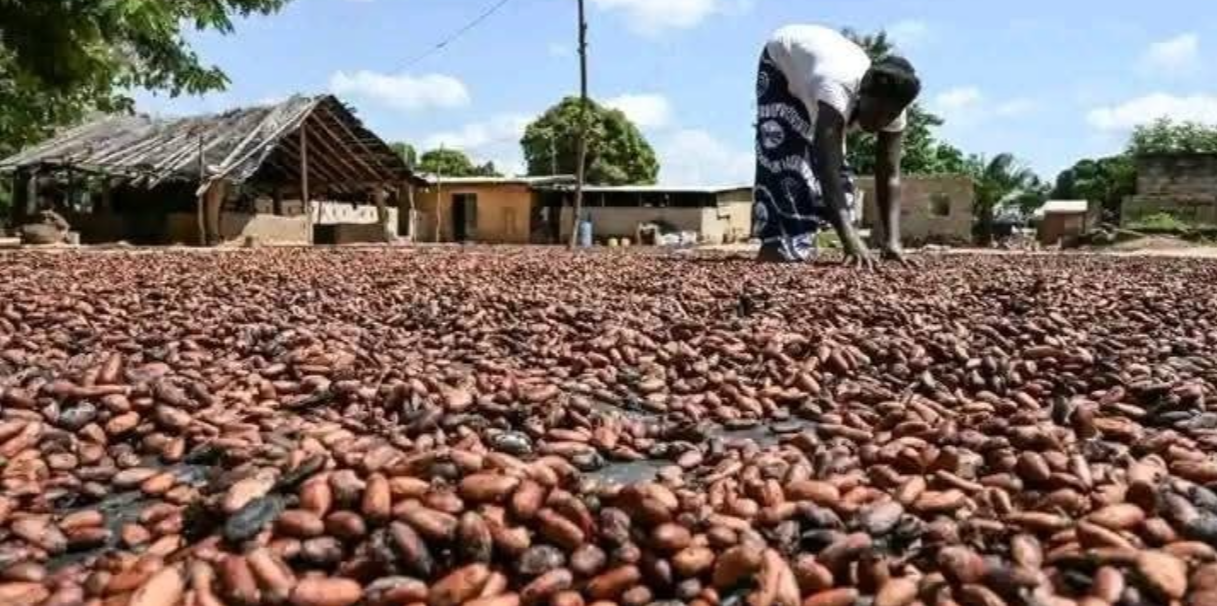
Cocoa prices settled sharply lower on Friday as signs of larger global supplies sparked long liquidation in cocoa futures. Bloomberg reported Friday that Nigerian cocoa exports in May rose 28% year-on-year to 18,034 metric tonnes.
Cocoa prices have rallied sharply this week, rising by more than 20% and hitting 5.5-month highs on Thursday.
Concerns about the upcoming West African cocoa crop pushed prices sharply higher.
Heavy rains in the Ivory Coast and Ghana have flooded roads and cut off farmers’ access to farms and ports, threatening global supplies.
Accumulated June rainfall through Monday has already reached levels near the typical average for the entire month in both countries.
Excessive moisture also increases the risk of brown rot disease on cocoa trees, reducing yields and jeopardizing the harvest.
Cocoa prices also have underlying medium-term support from future weather concerns.
On June 10, Japan’s Meteorological Agency confirmed an El Niño weather pattern had formed across the equatorial Pacific.
An El Niño typically brings warmer, drier conditions to West Africa, reducing soil moisture, stressing cocoa trees, and lowering yields. The US National Oceanic and Atmospheric Administration (NOAA) estimates a 67% chance of a “Super El Niño” this year, one of the strongest ever recorded.
Cocoa prices also have support from early surveys of the 2026/27 West African cocoa crop, which show below-average cherelle formation on cocoa trees, signaling a weak outlook for the main cocoa harvest, which begins in October.
Cocoa prices were under recent pressure amid signs of abundant supply.
On June 11, the Ivory Coast boosted its estimate of cocoa that has reached its ports by more than 260,000 metric tonnes so far this season. Cumulative data from the Ivory Coast now show that farmers shipped 1.95 million metric tonnes of cocoa to ports in the current marketing year (October 1, 2025, through June 7, 2026), up 18.9% from the same period a year ago.
The Ivory Coast recently said its cocoa production in 2025/26 would fall 10.8% year-on-year to 1.65 MMT from 1.85 million metric tonnes in 2024/25.
Rising cocoa inventories are bearish for prices.
ICE cocoa inventories rose to a 1.75-year high of 2,948,286 bags on Thursday.
Weak global cocoa demand is bearish for prices.
The National Confectioners Association reported April 23 that North American first quarter cocoa grindings fell 3.8% year-on-year to 106,087 metric tonnes.
Also, the European Cocoa Association reported that first quarter European cocoa grindings fell 7.8% year-on-year to 325,895 metric tonnes, a bigger decline than expectations of 6% year-on-year and the lowest for a first quarter in 17 years.
Conversely, the Cocoa Association of Asia reported that first quarter Asian cocoa grindings unexpectedly rose 5.2% year-on-year to 223,503 metric tonnes, stronger than expectations of a decline of 6.7% year-on-years.
Smaller cocoa supplies from Nigeria, the world’s fifth-largest cocoa producer, are supportive for prices.
Nigeria’s Cocoa Association projects that Nigerian cocoa production in 2025/26 will fall by 11% year-on-year to 305,000 metric tonnes, from a projected 344,000 metric tonnes for the 2024/25 crop year.
In February, Ghana cut the official price it pays its cocoa farmers by nearly 30% for supplies for the 2025/26 growing season.
In March, the Ivory Coast also said it would cut cocoa farmers’ pay by 57%, effective for the mid-crop harvest that began in March. The Ivory Coast and Ghana produce more than half of the world’s cocoa.
The outlook for a smaller global cocoa surplus is supportive of cocoa prices.
On April 29, StoneX cut its 2026/27 global cocoa surplus estimate to 149,000 metric tonnes from a January forecast of 267,000 metric tonnes, citing risks to the West African cocoa crop from an expected El Niño weather event.
StoneX also cut its 2025/26 global cocoa surplus forecast to 247,000 metric tonnes from a January estimate of 287,000 metric tonnes.
Barchart.com