The Government has announced that there will be no major renegotiation of conditions of service across the public sector in 2026, signalling that public sector workers should instead expect only targeted and modest improvements in selected areas as broader reforms to Ghana’s remuneration system are completed.
The decision means that comprehensive salary and conditions of service negotiations, which are typically expected by public sector workers and organised labour, will be put on hold next year while government finalises a new remuneration framework aimed at ensuring a more sustainable and equitable public sector pay system.
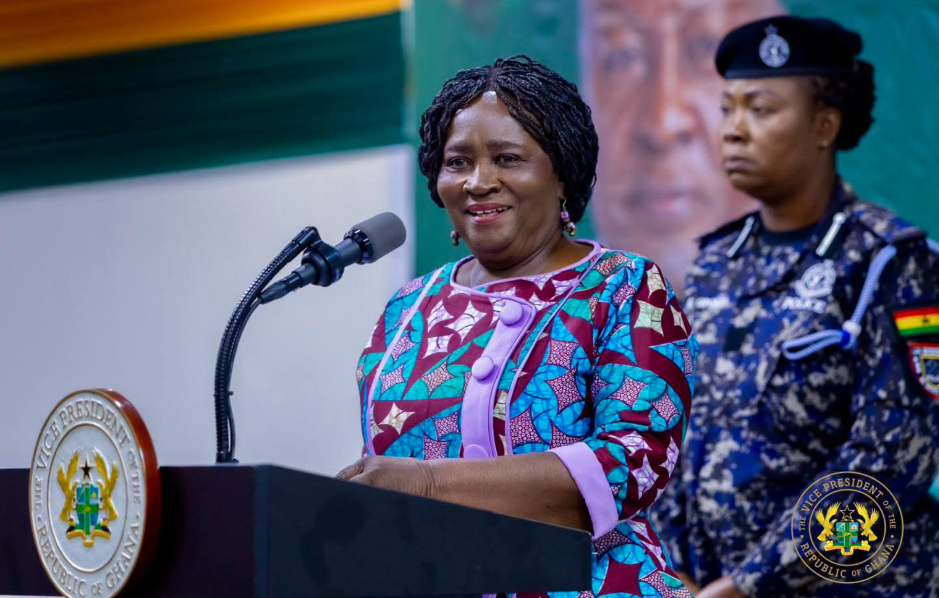
Vice-President Professor Jane Naana Opoku-Agyemang disclosed the policy direction at the 2026 National Labour Conference held in Ho on Friday under the theme, “Strengthening Industrial Harmony as a Catalyst for Accelerated Economic Growth and National Development.”
She explained that the move forms part of government’s broader strategy to reform the country’s remuneration architecture without disrupting industrial peace or undermining ongoing economic recovery efforts.
“Government has proposed that 2026 will not be a year for major renegotiation of conditions of service across the public sector. Instead, targeted and modest improvements in selected areas will be implemented while the foundational reforms to our remuneration systems are completed,” she stated.
The announcement suggests that public sector workers should not anticipate the usual large-scale negotiations covering salaries, allowances and other employment benefits next year.
Rather, any adjustments will be limited to specific sectors or areas identified by government as requiring immediate attention.
According to the Vice-President, the proposal is intended as a temporary measure to allow the new remuneration framework to be completed and implemented effectively.
She disclosed that organised labour had appreciated the rationale behind the decision, recognising the need to manage expectations, preserve industrial harmony and create the necessary space for the comprehensive reforms to take shape.
Prof. Opoku-Agyemang stressed that maintaining industrial peace remains critical to sustaining Ghana’s economic recovery and accelerating national development.
She noted that a stable labour environment would help government implement key economic policies while creating conditions for increased investment, productivity and job creation.
Addressing concerns about retirement security, the Vice-President reaffirmed government’s commitment to protecting the welfare of pensioners by safeguarding pension assets and ensuring that statutory obligations are fulfilled promptly.
“The provision of decent pensions for retired workers is of utmost importance. Government remains committed to safeguarding the integrity and value of pension fund assets for the benefit of Ghanaian workers,” she said.
She assured workers that government would continue to meet its financial obligations to the Social Security and National Insurance Trust (SSNIT) as well as Tier Two pension schemes, stressing that preserving the value of pension funds remains a priority.
Prof. Opoku-Agyemang also highlighted government’s determination to accelerate economic growth through strategic initiatives, particularly the proposed 24-hour economy policy.
She explained that the policy is designed to maximise the country’s productive capacity by encouraging businesses, factories and service providers to operate multiple shifts around the clock.
According to her, the initiative is expected to transform Ghana into a fast-growing, export-driven economy by increasing production, creating more employment opportunities and improving national productivity.
The Vice President said the success of the government’s economic transformation agenda would depend largely on continued cooperation between organised labour, employers and the state.
She therefore called on all stakeholders to deepen collaboration, maintain industrial harmony and work together to build a resilient economy capable of delivering sustainable economic growth, higher productivity and improved living standards for Ghanaians.
The announcement comes at a time when many public sector workers have been anticipating negotiations over improved conditions of service amid rising living costs.
Government’s decision effectively postpones broad-based negotiations until the ongoing remuneration reforms are completed, while promising limited interventions in selected areas to address pressing concerns during the transition period.