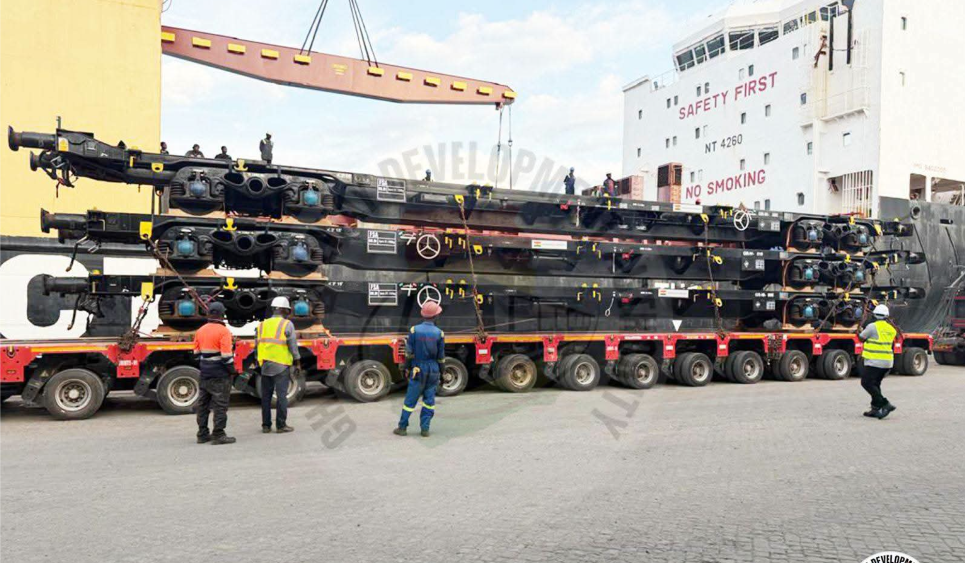
The Minority Transport Policy Committee of the New Patriotic Party (NPP) has raised questions over the reported ages of two refurbished diesel locomotives said to have been manufactured between 1976 and 1983, as it calls for full transparency on their acquisition, operational history and long-term value to Ghana’s railway sector.
In a detailed statement issued on June 25, the Committee said it supports government efforts to revitalise rail transport, improve freight movement and ease pressure on the country’s road network, but insisted that the absence of key information on the procurement makes it difficult for the public to assess whether the deal represents value for money.
The Committee described the locomotives as “toys fit for the museum,” arguing that while refurbished rail assets can still be useful under proper maintenance regimes, Ghanaian taxpayers deserve clarity on what exactly has been purchased and at what long-term cost.
According to information cited by the Committee, the locomotives are refurbished British Rail Class 56 diesel-electric engines originally built in the United Kingdom between 1976 and 1983 and previously operated by Colas Rail.
The Minority noted that only a limited number of the original fleet remains in active service globally, raising questions about sustainability and future support.
While acknowledging that the Class 56 locomotives were designed for heavy freight and were once regarded as powerful workhorses, the Committee argued that rolling stock of such age—over four decades old—inevitably comes with higher maintenance demands, reduced efficiency, and escalating lifecycle costs compared to modern alternatives.
“While refurbished locomotives can still provide useful service life when properly maintained, Ghanaians deserve full transparency regarding the age, operational history, refurbishment scope, expected remaining service life, and total lifecycle costs associated with these assets,” the statement said.
A central concern raised by the Committee is the long-term sustainability of maintaining the locomotives, particularly given the gradual withdrawal of Class 56 units from mainstream rail operations internationally.
It warned that this trend could make sourcing spare parts increasingly difficult and expensive, potentially straining Ghana’s rail maintenance systems.
The Minority is therefore demanding disclosure of spare parts supply arrangements, the availability of critical replacement components, technical support agreements with the refurbishment contractor, and detailed plans for training Ghanaian engineers and technicians to ensure in-country maintenance capacity.
In its analysis, the Committee contrasted the current procurement with the acquisition of Diesel Multiple Units (DMUs) under the previous NPP administration from Polish manufacturer PESA.
It noted that those trains were newly manufactured and came with a five-year maintenance and technical support package, alongside structured technology transfer and capacity-building components.
According to the Committee, this model offered a more sustainable approach to railway development, combining modern equipment with institutional strengthening.
It argued that the key lesson in railway investment is that procurement cost alone is not sufficient, stressing that long-term maintenance, technical support, training and operational sustainability are equally critical.
Beyond the locomotives themselves, the Minority also questioned whether the Tema–Mpakadan railway corridor is fully prepared for sustained freight operations.
It pointed to the absence of critical cargo-handling infrastructure, including mobile harbour cranes, reach stackers, container handling systems and bulk cargo loading facilities at the Mpakadan rail terminal.
The Committee further called on government to publish freight demand projections, off-take agreements and revenue forecasts, arguing that the commercial viability of the railway depends on guaranteed cargo volumes and structured logistics partnerships.
It also raised concerns about what it described as a relatively modest allocation of about GH¢70 million to the railway sector in the 2026 Budget, suggesting that the figure appears inconsistent with government’s stated ambition to expand the national rail network, including the development of the Western Railway Line.
While reiterating its support for efforts to modernise Ghana’s rail infrastructure, the Minority maintained that transparency, sustainability and commercial logic must guide every procurement decision, particularly those involving long-term public investment in critical transport infrastructure.