
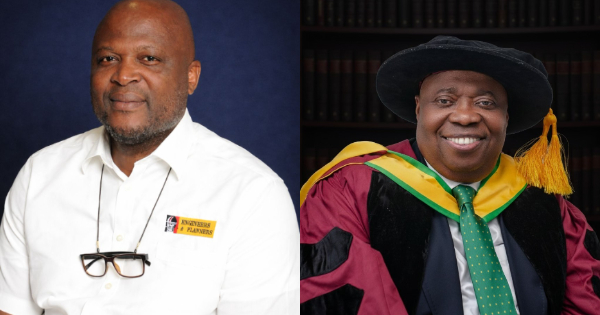
A contributor to public discourse on Kumasi’s Pure FM, popularly known as Okatakyie Afrifa, once argued that the oft-quoted declaration by Osagyefo Dr. Kwame Nkrumah, that “the Black man is capable of managing his own affairs,” was merely a political rhetoric.
While such a position may appear provocative, it reflects a broader stream of skepticism rooted in what many scholars describe as the enduring effects of colonial mentality and internalized doubt.
Within African scholarship and postcolonial studies, Nkrumah’s statement has been widely interpreted not as a rhetorical flourish but as a deliberate ideological assertion, intended to inspire confidence and challenge African nations to assume control over their political and economic destinies.
It is instructive that MTN Group remains the only African brand among the ten most admired brands on the continent, while the rest are dominated by foreign-owned global corporations.
This reality warrants critical reflection. Why does Africa, despite its abundant resources, human capital, and expanding consumer markets, continue to struggle to build competitive indigenous brands?
More fundamentally, why does public discourse so often exhibit greater confidence in foreign enterprises than in local ownership and management of strategic assets?
This question became particularly relevant amid the public uproar over the attempted acquisition of SSNIT Hotels by Ghanaian businessman Dr. Bryan Acheampong.
The resistance to the transaction was not fundamentally about whether he had the financial capacity or business competence to undertake the acquisition.
Rather, much of the criticism was rooted in politics and the discomfort that often arises when a local actor seeks to control a major national asset.
Many countries have adopted deliberate policy frameworks to protect indigenous businesses, nurture local entrepreneurs, and strengthen domestic ownership to build national wealth.
Such countries understand that economic sovereignty is not sustained by political independence alone, but by empowering citizens to participate in production, ownership, and enterprise. Ghana has also made several attempts since independence to support local entrepreneurship, but these efforts have too often been undermined by political upheaval, weak institutions, and a lack of long-term strategic commitment. (World Bank, 2020)
In the wake of the ‘Revolution,’ state-led ventures under the Ghana Industrial Holding Corporation, Abosso Glass Factory, the Ghana Match Company, Pwalugu Tomato Factory, and Nsawam Cannery were weakened by mismanagement, policy inconsistency, and eventual divestiture (Kwame Ninsin, 1991; World Bank, 1994).
At the same time, flagship firms such as Akosombo Textiles Limited, Ghana Textile Printing Company, and Juapong Textiles Limited lost their total dominance under the combined pressure of trade liberalization, smuggling, and counterfeit imports, leading to closures, layoffs, or foreign takeovers, according to Stiglitz (2002).
The cumulative effect was not merely the collapse of businesses, but a gradual erosion of confidence in Ghanaian ownership and the capacity of local entrepreneurs to sustain large-scale enterprises.
Today, the Ghanaian entrepreneur is gradually building successful businesses, managing strategic assets, and contributing meaningfully to national development. What has often failed is not the entrepreneur, but the environment within which that entrepreneur must operate.
Our politics has too often been intrusive. And our public discourse has too often treated local ownership with more suspicion than foreign domination.
Yet, even within this long history of “Smiling Assassins” and diminished confidence in indigenous enterprise, there are emerging signs that Ghana can begin to reclaim the economic philosophy envisioned by Dr. Kwame Nkrumah. A particularly compelling example is the transition of the Damang Mine into local ownership under Engineers & Planners (E&P).
At a time when debates around local participation in strategic sectors are intensifying, E&P’s entry into mine ownership should be understood not as an anomaly but as the natural progression of a company that has spent decades building capacity within the mining industry.
Founded and led by Ghanaian entrepreneur Ibrahim Mahama, Engineers & Planners has, for years, been one of the most prominent indigenous mining and construction firms in Ghana. The company has operated extensively as a contractor to major multinational mining companies, including Gold Fields Limited and other large-scale operators within the country.
Through these engagements, E&P has developed deep technical expertise in mine support services, including contract mining, earthworks, equipment management, and large-scale project execution.
Its long-standing presence in the sector means it is not a newcomer experimenting with unfamiliar terrain, but a seasoned industry player transitioning from contractor to asset owner.
This distinction is critical. For many years, Ghanaian firms have been confined to the periphery of high-value industries, serving as subcontractors while ownership and strategic control remained largely in foreign hands.
E&P’s evolution challenges that structure. It demonstrates that local companies, when given the opportunity and the enabling environment, can move up the value chain from service provision to full operational control.
The Damang transition, therefore, is not merely a business acquisition; it is a structural statement about indigenous capability.
Moreover, E&P’s track record provides a level of credibility that should anchor public discourse.
Having worked within the operational ecosystems of multinational mining firms, the company has been exposed to international standards in safety, efficiency, environmental management, and corporate governance.
This experience positions it well to manage complex mining operations, while also localizing value creation in ways that benefit the Ghanaian economy more directly.
The broader significance of this development lies in what it represents for Ghana’s economic future.
For decades, the narrative, sometimes explicit, sometimes implied, has been that Ghanaians lack the capacity to manage large-scale, capital-intensive enterprises.
Yet companies like Engineers & Planners quietly built that capacity over time, often without the spotlight, operating in the background as enablers of foreign-led operations.
What we are witnessing now is the emergence of that accumulated experience into full ownership and control.
At a time when concerns and controversies may arise around certain transactions within the mining sector, public discourse must remain grounded in evidence and historical context.
E&P’s journey is not one of sudden elevation, but of gradual growth, resilience, and proven industry participation.
If anything, its current position should be seen as a validation of a broader principle: that indigenous enterprise, when nurtured and allowed to evolve, can reach the commanding heights of the economy.
In doing so, the country would not only honor Nkrumah’s vision but also lay the foundation for a more inclusive and self-reliant economic future, one in which the Black man is not merely capable of managing his own affairs but actively does so at the highest levels of industry.
Congratulations, Engineers and Planners!
Damang signals new era of Ghanaian ownership
The takeover of the Damang Mine by Engineers and Planners Company Limited is more than a corporate milestone; it represents a defining moment in Ghana’s economic journey—one that challenges long-standing assumptions about the limits of indigenous enterprise and redefines what local companies can achieve.
For decades, Ghana’s mining sector has been dominated by multinational corporations, with indigenous firms largely restricted to support roles.
The transition of a major asset such as Damang from Gold Fields Ghana Limited to a wholly Ghanaian-owned company disrupts that pattern in a meaningful way.
It signals confidence in local capacity, leadership, and ambition, and marks a shift toward greater domestic participation in managing the country’s natural resources.
At the centre of this development is Ibrahim Mahama, whose vision for Damang goes far beyond mining.
His plans to transform the enclave through investments in roads, healthcare, sports infrastructure, and even an airport reflect a broader philosophy—one that sees resource extraction as a catalyst for inclusive development.
It is a model that integrates industrial activity with community advancement, ensuring that the benefits of mining extend beyond the pits.
While some may view such ambitions as bold, what sets this effort apart is the depth of preparation behind it.
The takeover is the result of years of strategic engagement, regulatory processes, and sustained negotiations.
From early discussions in 2022 to securing government approvals and participating in the transition framework, E&P demonstrated persistence and long-term vision.
The scale of financial commitment further reinforces the seriousness of the undertaking.
With financing arrangements reportedly exceeding $1.2 billion, the company has shown its readiness to match ambition with capital.
This is crucial, as the real test of indigenous participation lies not only in acquiring assets but in managing and expanding them sustainably.
Government’s role in facilitating the transition also deserves recognition.
The intervention that enabled negotiations and ensured regulatory compliance reflects a deliberate policy direction to deepen local participation in the extractive sector.
The acknowledgment by Nana Addo Dankwa Akufo-Addo, as referenced by Mr Mahama, underscores the importance of political will in creating opportunities for indigenous businesses.
However, as Emmanuel Armah-Kofi Buah cautioned, E&P is “carrying a nation’s confidence.”
This moment is both an achievement and a test.
Success at Damang will not only validate the capabilities of one company but will shape broader perceptions of Ghanaian enterprise.
The implications extend far beyond mining. E&P’s success has the potential to inspire a new generation of local businesses to think bigger, invest more boldly, and compete at higher levels.
For too long, many indigenous firms have operated within perceived limits, constrained by access to capital and cautious ambition.
Damang challenges that mindset and demonstrates that Ghanaian companies can move from the margins to the centre of major economic activity.
Yet, inspiration must be matched with action. To sustain this momentum, Ghana must create an enabling environment that supports other indigenous players.
This includes improving access to long-term financing, ensuring regulatory clarity, and fostering partnerships that build capacity over time.
It also requires a cultural shift within the business community—one that embraces innovation, resilience, and long-term thinking.
Ultimately, the Damang story is about belief—the belief that Ghanaian companies can rise to global standards and lead in managing strategic national assets.
If Engineers and Planners Company Limited delivers on its vision, it will set a powerful precedent for indigenous participation and economic transformation.
The challenge now is to ensure that this achievement is not an isolated success, but the beginning of a broader movement—one in which more Ghanaian companies step forward, aim higher, and redefine what is possible for the nation’s economy.
By Kwame Adinkrah (PhD)


Lawerence
The article is good and meaningful. The site is
useful and clear.