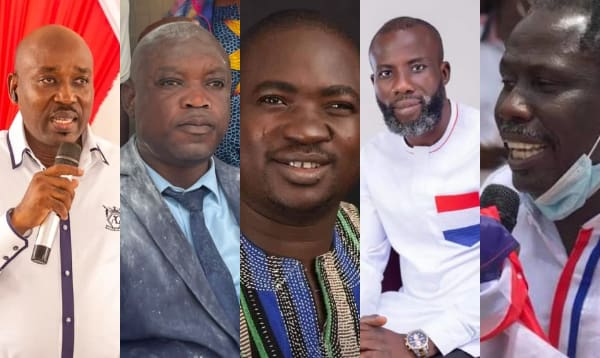
Newly elected and re-elected regional chairmen of the New Patriotic Party (NPP) have pledged to unite the party, rebuild its grassroots structures and embark on sustained mobilisation to return the party to power in the 2028 general elections.
The chairmen, speaking after Saturday’s regional executive elections, acknowledged the scale of the task ahead following the NPP’s defeat in the 2024 presidential and parliamentary elections. Their messages centred on unity, internal discipline, listening to the grassroots, rebuilding public confidence and working continuously rather than celebrating their victories.
While some chairmen set specific electoral targets for their regions, others called for a fundamental restructuring of the party and a stronger focus on presidential votes as the NPP seeks to reverse its electoral fortunes.
The regional elections, held on August 15, 2026, formed part of the party’s wider reorganisation ahead of the 2028 elections, with the Western North Region scheduled to complete its exercise on Sunday, August 16.
COKA: Learn from 2024 defeat (Ashanti Region)
In the Ashanti Region, newly elected Regional Chairman Odeneho Kwaku Appiah, popularly known as Asanteman COKA, said the NPP must confront its weaknesses and learn from the mistakes that contributed to its 2024 defeat.
In his acceptance speech in Kumasi, COKA said members had every reason to be proud of the party’s achievements while in government but must equally acknowledge where things went wrong.
“As NPP members, we must be proud of our achievements in government and protect them. Yes, some things did not go well when we were in government, which led to our defeat. We must admit this and take stock in order to correct it for the future,” he said.
He identified listening to the concerns of party members as one of the major lessons from the 2024 election.
According to him, the rebuilding process must be anchored on unity, warning that internal disagreements could undermine efforts to regain power.
“Our party faces a challenge: to stay united, focused, and determined to build a stronger and better future together. In times like this, unity becomes a must,” he said.
COKA also urged members to stop pulling one another down and instead support each other.
“From today, the election is over. Let us stop pulling each other down. Let us push each other up. Let us help one another,” he said.
Addressing delegates after his election, he was even more emphatic about the need for unity.
“Now, the election is over, family. As we are done with the election, we need to now unite. If we don’t come together, we will not be able to win power. Let’s unite to win power,” he stated.
In a subsequent social media message, COKA expressed gratitude to delegates and supporters who backed his candidature, declaring that the focus must now shift from the internal contest to rebuilding the party.
“By the grace of God, I am now the Ashanti Regional Chairman of the NPP. I am deeply grateful to the delegates, supporters, and everyone who believed in me. The work begins now — together, let us unite, rebuild, and prepare the NPP for victory in 2028,” he wrote.
Okoe Boye targets 21 seats in Greater Accra
In Greater Accra, former Ledzokuku MP Dr Bernard Okoe Boye said his election reflected the desire of delegates for renewed energy, unity and a determined effort to restore the NPP’s political fortunes.
He pledged to practise what he described as servant leadership rather than leadership based on authority.
“In the 21st century, it is not lordship leadership; it is servant leadership. That is what I am going to do for you,” he said.
Dr Okoe Boye acknowledged that rebuilding the party in Greater Accra would be a difficult undertaking but insisted that the challenge could be overcome through unity, grassroots mobilisation and hard work.
“I am not afraid of hard work. I admit that it is a very heavy task, but I also know it can be done,” he said.
He pledged to work closely with constituency executives under what he described as a “24-hour campaign” to strengthen the party from the grassroots.
The new chairman set an ambitious target of reclaiming 21 parliamentary seats in Greater Accra, the number the NPP won in the region in 2016.
He pointed to the political comeback of former President John Mahama as evidence that electoral fortunes could change and urged party members not to become discouraged by defeat.
“Anything can happen. The only thing is a lot of hard work and belief. I have the belief; what is left is the hard work,” he said.
He called for unity and discipline as the party seeks to regain lost seats and restore what he described as “real hope” to Ghana’s youth.
Awonekai: No time for jubilation (Upper East)
Newly elected Upper East Regional Chairman Elvis Figo Awonekai, called on members of the party to put aside their differences and unite immediately to help wrestle power from the ruling NDC.
According to him, there was little time to waste ahead of the 2028 general election and stressed the need not to waste time on activities that would divide the party.
“Time is not on our side. We have an election to win in 2028,” he said in his victory speech.
Mr Awonekai said although the candidates contested different positions during the elections, the outcome had given them a collective responsibility to work together to reunite the party’s rank and file.
He said ending divisions within the party was one of his major campaign pledges and expressed confidence that the newly elected executives had the experience and capacity to rebuild the party and strengthen its structures.
He said the new executives would, within the shortest possible time, complete the necessary meetings and commence work in accordance with the party’s constitution.
Mr Awonekai also paid tribute to his predecessor, Mr Anthony Namoo, for his eight years of service to the party in the region.
“For eight years, I have worked under him. For eight years, I have worked shoulder to shoulder with him. He has sacrificed himself for the region. He has laid the foundation,” he said.
He pledged to build on that foundation with the newly elected executives to strengthen the party’s grassroots structures, reclaim the Upper East Region and secure more parliamentary seats for the NPP in 2028.
The new chairman cautioned supporters against prolonged celebrations following the victory, stressing that the party had significant work ahead.
Upper West chairman reserves celebration for 2028
Mr Abdul Aziz Abdul-Rahman, newly elected Upper West Regional Chairman, has pledged to unite all factions within the party and position it for victory in the 2028 general election.
He said his immediate priority would be to reconcile members and supporters who participated in the regional executive elections and ensure that the party moved forward as a united force.
Mr Abdul-Rahman made the pledge while addressing the media after he was sworn into office together with other newly elected regional executives at the end of the party’s Regional Delegates Conference.
“As the Regional Chairman, I will make sure to bring everyone together so that coming 2028, we can secure victory for the former Vice President, His Excellency Dr Mahamudu Bawumia, the NPP’s Flagbearer.”
He explained that during the counting of votes, he instructed his supporters not to engage in excessive jubilation because the contest was an internal election.
“That is why when they were counting the results, I told my supporters not to shout in jubilation because this is an internal election and already, we are in opposition, so there is no need for celebration now,” he explained.
Mr Abdul-Rahman said although he was pleased with the outcome of the election, he was not surprised by the result because he had been confident of victory.
He expressed concern about the party’s performance in the 2024 general election but voiced confidence that the NPP would secure at least five parliamentary seats in the Upper West region in the 2028 polls.
Mr Eric Nana Amankwa Ntor, Chairman of the Upper West Regional Elections Committee, who administered the oaths of office, urged the newly elected executives to work diligently to help the party win the 2028 general election.
Ahafo: Rebrand and restructure NPP
Newly elected Ahafo Regional Chairman Robert Sarfo-Mensah said the NPP needed to rebrand and restructure itself if it was to regain its appeal, particularly among young voters.
Sarfo-Mensah won the regional election at Goaso with 65 votes out of 157.
He said the NPP’s performance in the 2024 elections, when it secured only one of the region’s six parliamentary seats, demonstrated the urgency of rebuilding its support base.
The party previously held four of the six parliamentary seats but lost three in Asutifi North, Asunafo North and Tano South during the 2024 elections.
Sarfo-Mensah attributed part of the poor performance to divisions within the party and pledged to work with the new executives to prevent such divisions from recurring.
He said his immediate priority would be to reposition the NPP, make it more attractive to voters and reconnect with communities, especially young people.
According to him, unity, effective organisation and deliberate grassroots engagement would be essential to restoring the party’s electoral strength.
Northern Region: Strong grassroots needed
Northern Regional Chairman Samba, in his acceptance speech, said delegates had given him a clear mandate to continue leading the party in the region towards the 2028 general election.
He expressed gratitude for the confidence reposed in him and said the mandate came with the responsibility to work harder to strengthen the party.
Samba identified an active grassroots organisation as critical to rebuilding the NPP’s support base and winning more parliamentary seats in 2028.
He also stressed the importance of internal cohesion, promising to bring together factions and supporters despite their differences.
He pledged to work with regional and constituency executives, parliamentary candidates, grassroots supporters and other stakeholders to strengthen the party and improve its prospects at the next election.
Volta NPP targets NDC votes
Newly elected Volta Regional Chairman Makafui Woanya placed unity and an aggressive electoral strategy at the centre of his plans.
He pledged to unite the party and build greater synergy among members while warning the governing NDC that the NPP intended to make significant gains in the region.
“We are going to put our house in order. We are going to unite the Volta Region. By doing this, we are sure that we will make a lot of inroads into the votes of the NDC. I can assure the NDC that in December 2028, victory will be the NPP’s,” he declared.
Woanya said the NPP would place greater emphasis on the presidential election rather than parliamentary contests because presidential votes contribute directly to the national presidential tally.
“Having studied the Volta Region for a very long time, I think we will concentrate now on the presidential votes more than the parliamentary votes,” he explained.
He said the regional and constituency structures, down to electoral area executives, would be mobilised largely around the presidential campaign.
Woanya also criticised the government’s performance, particularly on its 24-hour economy promise, and argued that dissatisfaction with the NDC could create an opportunity for the NPP to increase its support in the region.
“The 24-hour economy, this time around, is dumsor, dumsor, dumsor, dumsor,” he said, adding that he believed voters would reconsider their support for the NDC.
Konadu: Unite for victory (Eastern Region)
In the Eastern Region, re-elected Regional Chairman Jeff Konadu Addo said the immediate task after the internal elections was to unite the party and prepare for electoral victory.
“The next step is to unite the party for victory,” he said.
His message reflected a broader theme emerging from the regional elections: that internal contests must give way to collective work if the NPP is to rebuild successfully.
Esibu: Work starts now (Central Region)
In his acceptance speech, Central Regional Chairman Mr Joseph Esibu called for unity among the party and appealed to members at all levels to rally behind a common programme of revival.
“This victory is not mine alone, it belongs to every member of the NPP in the Central Region. We must close ranks, rebuild our structures, energise the grassroots and present a credible alternative to the people of the Central Region in 2028,” he said.
He outlined plans to strengthen constituency operations, intensify membership engagement, and roll out targeted campaigns to win back lost supporters.
Mr Esibu also promised to work closely with national leadership, constituency executives, and party stakeholders to implement training for organisers, improve fundraising, and ensure consistent communication with the rank-and-file.
Expressing appreciation to delegates and party supporters, Mr Esibu thanked his competitors for a peaceful contest and urged them to join the unity drive.
“Our task now is to unite, mobilise and deliver results for our party and the people,” he said
Afrifa vows to recover lost seats (Western Region)
In the Western Region, newly elected Chairman Ignatius Kwesi Afrifa framed his victory around the NPP’s need to regain parliamentary ground lost in the 2024 election.
“All the seats we lost, we are going to recover them,” he declared.
His pledge places electoral recovery at the centre of the new regional administration’s agenda as the NPP seeks to reverse its fortunes in the region.
Oti Region
Dr Frank Yirenkyi, Oti Regional Chairman, in his acceptance speech, pledged to provide united and effective leadership to enable the Party to achieve its objectives in the Region.
He said the election was over and there was now the need for all members and supporters to come together as one family and work towards victory in the 2028 general elections.
He appealed to members who contested the various positions but were unsuccessful in supporting the new regional executives to build a stronger party in the region.
New leadership, old challenge
The messages from the regional chairmen point to a common challenge facing the NPP: translating internal reorganisation into a credible electoral comeback.
While the chairmen differ in emphasis—ranging from servant leadership and grassroots mobilisation to rebranding, presidential vote targeting and the recovery of lost parliamentary seats—they broadly agree that unity and sustained work will be decisive.
For several of them, the 2024 defeat is not simply an electoral setback but a source of lessons that must shape the party’s next phase.
COKA’s call to acknowledge past mistakes, Okoe Boye’s emphasis on hard work, Awonekai’s warning against jubilation, Sarfo-Mensah’s call for rebranding and Woanya’s strategy for expanding the presidential vote all point to a party attempting to move beyond the immediate aftermath of defeat.
The newly elected and retained chairmen will now be expected to translate those commitments into functioning regional structures, stronger constituency organisations and sustained grassroots engagement.
For the NPP, the internal elections may have ended, but as several of the chairmen themselves stressed, the real work towards the 2028 electoral battle has only begun.