
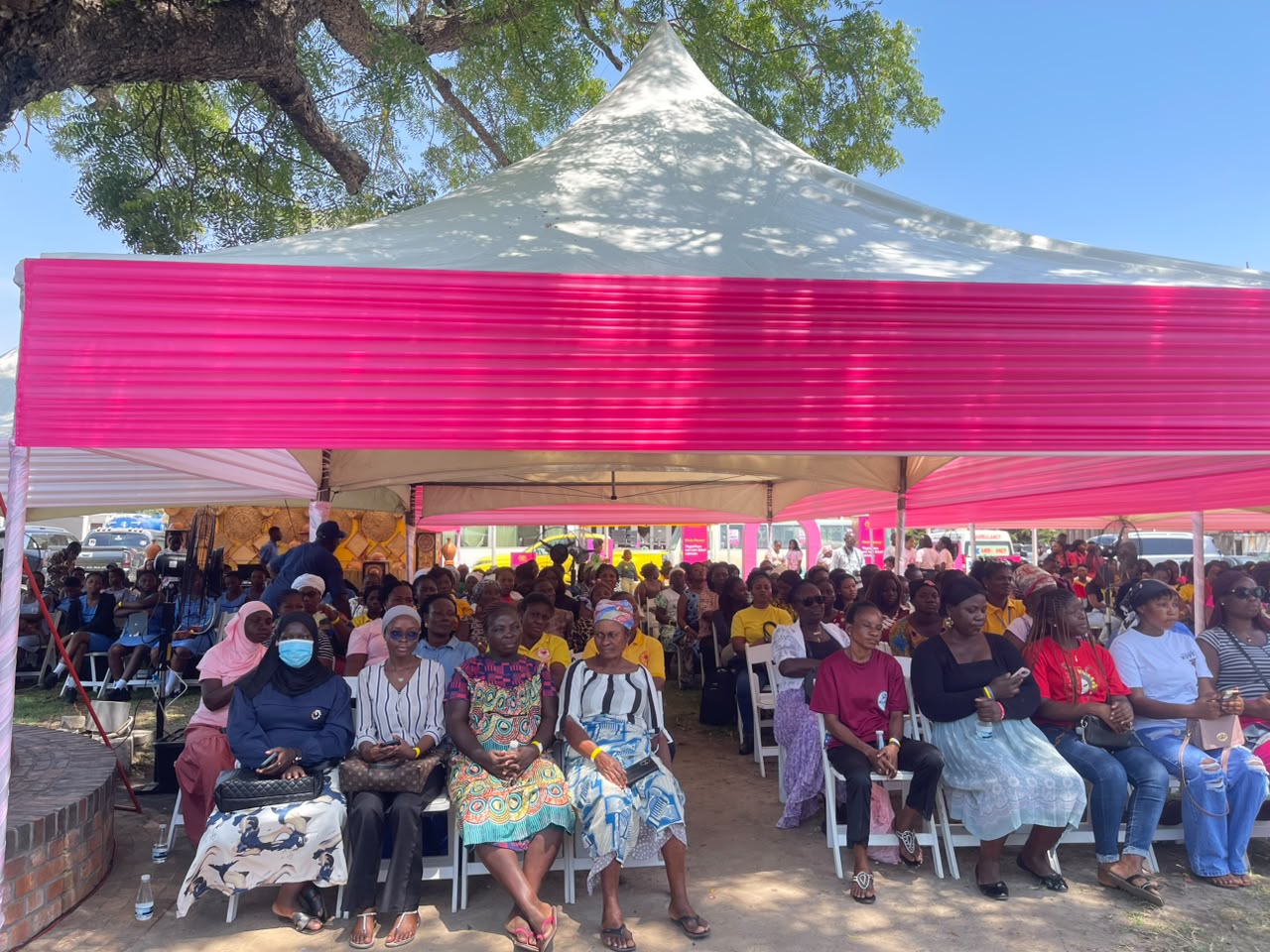
The MTN Ghana Yellow Ladies Network has intensified efforts to combat breast cancer through a community outreach programme that educates women, promotes early detection and offers free screening to market women and other members of the public.
Organised as part of the annual Pink October breast cancer awareness campaign, the programme brought healthcare professionals to the marketplace to provide breast health education, screening and guidance on seeking prompt medical attention.
Held under the theme “Early Action, Better Outcomes”, it sought to address the challenges that prevent many women, particularly those engaged in daily trading and other economic activities, from accessing regular health screenings.
Chief Finance Officer of MTN Ghana, Antoinette Kwofie, said the initiative reflected the network’s commitment to extending its impact beyond the company’s workforce to communities where women often put their families’ welfare ahead of their own health.
She explained that the decision to take the campaign to the marketplace was informed by the need to make breast cancer education and screening more accessible to women who might otherwise struggle to find time to visit healthcare facilities.
Ms Kwofie emphasised that breast cancer awareness should extend beyond October and become a continuous priority in homes, workplaces and communities.
She encouraged women to take advantage of the free screening and to share the knowledge with their families, friends and colleagues.
She added that the initiative also sought to reduce the fear and stigma associated with breast cancer by encouraging open conversations, timely medical consultations and support for people living with the disease.
As part of its breast cancer awareness activities last year, she said, the network donated GH¢150,000 to the Breast Cancer Unit of the Korle Bu Teaching Hospital and GH¢50,000 to Breast Care International to support awareness creation.
She noted that in March 2026, the network marked its first anniversary with mentorship and coaching sessions organised in partnership with the Executive Women’s Network.
This year’s campaign, she said, seeks to deepen those efforts by taking screening and education directly to communities, particularly women whose daily responsibilities may limit their access to healthcare.
Ms Kwofie stressed that the success of the initiative would ultimately be measured by its impact on people’s lives rather than the number of activities organised.
Call for corporate support
President and Founder of Breast Care International, Dr Beatrice Wiafe Addai, called on corporate organisations to strengthen their support for breast cancer awareness campaigns to reduce stigma, promote early detection and improve treatment outcomes for women in Ghana.
She noted that some people still attribute breast cancer to witchcraft and spiritual causes, leading patients to seek spiritual interventions instead of reporting promptly to health facilities. Such misconceptions and delays, she said, reduce patients’ chances of timely diagnosis and treatment, particularly because breast cancer may not cause pain in its early stages.
Dr Wiafe Addai disclosed that more than 5,000 Ghanaian women are diagnosed with breast cancer annually, while more than 2,300 die from the disease.
She stressed that many of these deaths could be prevented through early reporting, diagnosis and appropriate treatment.
She urged women to examine their breasts monthly to become familiar with their normal appearance and feel, so they can identify unusual changes and seek medical attention promptly.
Early detection, she said, improves treatment outcomes and increases the possibility of breast-conserving surgery, allowing patients to retain their breasts where medically appropriate.
She expressed concern that between 60 and 70 per cent of breast cancer patients report to health facilities at advanced stages, making treatment more difficult.
When untreated, she explained, the disease can spread to the liver, lungs, bones and brain, reducing the chances of successful treatment.
Dr Wiafe Addai cautioned, however, that not every breast lump is cancerous, and encouraged women to seek professional evaluation rather than allow fear to delay care.
Lifestyle choices and breast cancer risks
Dr Wiafe Addai said that although the exact cause of breast cancer is unknown, several risk factors have been identified, some of which can be reduced through lifestyle changes.
She identified excessive alcohol consumption, cigarette smoking, physical inactivity and unhealthy diets as factors women should consider in managing their health.

She also cautioned against the indiscriminate use of skin-lightening products and hair-straightening chemicals, particularly those whose ingredients and safety standards cannot be verified.
She advised consumers to buy regulated products with clear labels and to exercise caution when applying chemicals to their skin and hair.
Non-modifiable risk factors, she added, include being female, having a family history of breast cancer and having previously experienced breast lumps.
She stressed that public education is important in helping women understand their risk factors and make informed health decisions.
Financial barriers hamper early treatment
Dr Wiafe Addai raised concerns about financial challenges preventing some women from completing screening, diagnosis and treatment.
She explained that, although treatment costs remain a major concern, access to diagnostic services is also difficult because essential procedures, including biopsies, are not covered by the National Health Insurance Scheme (NHIS).
Consequently, some women who report suspicious breast changes cannot afford further investigations and return home without completing the diagnostic process.
She called on the government to extend social protection support to vulnerable breast cancer patients through the Livelihood Empowerment Against Poverty (LEAP) programme.
Under her proposal, eligible patients would receive temporary financial assistance during treatment and exit the programme after completing their care, allowing other vulnerable patients to benefit.
She added that similar assistance could support vulnerable prostate cancer patients, who also face significant financial difficulties in accessing treatment.
Dr Wiafe Addai stressed the need for a stronger social support system to ensure that financial constraints do not prevent patients from receiving essential healthcare.
She appealed to individuals, philanthropists, corporate organisations and other stakeholders to support breast cancer patients and improve access to diagnosis and treatment.
Collective action, sustained public education and improved healthcare access, she said, are essential to reducing breast cancer deaths and ensuring that affected women receive the support they need.

