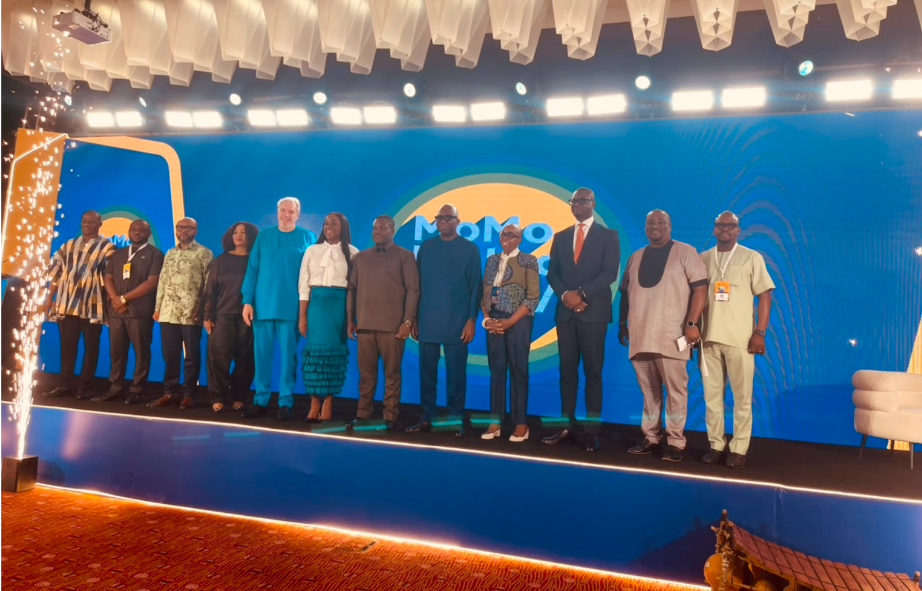
Mobile Money FinTech Limited (MMFL) has launched the MoMo FinTech Lab, a three-month national innovation programme designed to identify, equip and nurture Ghana’s next generation of financial technology (FinTech) talent, with a deliberate effort to extend opportunities beyond Accra.
The initiative seeks to create a practical pipeline through which promising ideas can move from early concepts and prototypes into viable, scalable FinTech businesses capable of solving real financial and community challenges.
At the heart of the programme is a recognition that Ghana’s FinTech ecosystem has significant untapped talent outside the capital.
While Accra remains the country’s major hub for technology start-ups and digital innovation, the MoMo FinTech Lab is designed to give young innovators in other parts of the country access to the same opportunities, expertise and networks needed to participate in the digital economy.
Chief Executive Officer [CEO] of MMFL, Shaibu Haruna, said the initiative was intended to democratise access to FinTech skills and ensure that geography did not prevent talented young people from developing their ideas.
He explained that a university student in Kumasi, for instance, could develop a digital solution to address a problem on campus, but might lack the mentorship, technical expertise, industry connections and investment required to transform that idea into a commercially viable product.
The MoMo FinTech Lab, he said, would provide the platform to help such an innovator refine the idea, develop a prototype, understand the regulatory requirements, connect with industry experts and potentially scale the solution to other universities and communities facing similar challenges.
How the lab works
The programme will begin with an open call for ideas, with young innovators submitting their concepts through the MoMo app.
Applicants will be assessed and promising innovators selected from Ghana’s three broad zones for participation in regional boot camps in Accra, Kumasi and Tamale.
The boot camps will provide participants with intensive practical exposure to FinTech development, including opportunities to test and improve their ideas, understand customer needs and develop solutions around actual financial and community problems.
Participants will subsequently receive mentorship from experienced professionals and established FinTech companies partnering with MMFL.
The mentorship component is intended to bridge the gap between technical creativity and the commercial, operational and regulatory knowledge required to build sustainable businesses.
The strongest ideas emerging from the regional programmes will proceed to a national Demo Day, where participants will present their solutions to industry stakeholders and have their innovations assessed and recognised.
Shaibu stressed that the initiative was not primarily about cash prizes.
Rather, its central objective was to equip young innovators with practical skills, mentorship, industry networks and opportunities that could help them turn promising ideas into sustainable businesses.
For innovations considered bankable and scalable, MMFL intends to explore opportunities to provide further exposure through its platform and assess how appropriate solutions could potentially be developed or integrated into the wider MoMo ecosystem.
That approach could give innovators an important bridge between developing a prototype and reaching a large customer base.
Linking talent to investment
The Minister of Communications, Digital Technology and Innovations, Samuel Nartey George, challenged stakeholders to use the programme to build homegrown financial technology solutions instead of depending largely on innovations developed elsewhere.
He said the MoMo FinTech Lab presented an opportunity to demonstrate whether Ghana was serious about building the future of finance around its own talent, ideas and businesses.
He urged universities, developers, start-ups, investors, regulators and financial institutions to remain actively involved throughout the three-month programme.
According to him, Ghana had no shortage of ideas or talented young people but needed stronger connections between innovation and investment to enable promising businesses to survive and grow.
He therefore appealed to banks and investors to provide patient capital to FinTech start-ups, stressing that technology businesses often required time and appropriate financial backing before they could achieve scale.
The Minister also emphasised that FinTech innovation had to develop alongside strong regulation, cybersecurity, consumer protection and data privacy.
He said government’s broader digital transformation initiatives, including the One Million Coders programme, digital public infrastructure, affordable connectivity and digital identity reforms, were intended to provide the skills and infrastructure needed to enable more Ghanaians to participate meaningfully in the digital economy.
He challenged stakeholders to ensure that the MoMo FinTech Lab produced measurable outcomes, including viable businesses, quality mentorship and investment commitments by the end of the programme.
The ultimate measure of success, he said, should be whether the innovations emerging from the Lab could improve lives, create employment and solve practical problems facing Ghanaians.
Innovation with responsibility
The Head of FinTech and Innovation at the Bank of Ghana, Owureku Asare, urged participants to place customer protection, compliance, data security and cybersecurity at the centre of their innovations.
He said the rapid expansion of Ghana’s FinTech ecosystem made it necessary to maintain public confidence and protect customers from losing their money or personal information as new digital financial products entered the market.
The Bank’s regulatory sandbox, he noted, provided a pathway for innovators seeking guidance on new products and services, while its fintech innovation platform offered opportunities for young developers to engage directly with the regulator.
He urged innovators to look beyond the technical features of their products and pay equal attention to governance, compliance, cybersecurity and data protection.
Such considerations, he said, were essential if new FinTech products were to operate safely, sustainably and within Ghana’s regulatory framework.
Mr Asare cited recent regulatory developments, including the Virtual Asset Service Providers Act, open banking, digital credit services and the growing use of artificial intelligence, as part of efforts to create a more secure and sustainable environment for financial innovation.
Building a lasting talent pipeline
The MoMo FinTech Lab is expected to serve as more than a three-month competition.
MMFL says it intends to develop the initiative into a long-term platform for discovering and nurturing FinTech talent, while expanding partnerships with industry players, universities, investors and other stakeholders.
Its regional structure is particularly significant because it seeks to widen participation in Ghana’s digital economy by taking FinTech opportunities to innovators outside Accra.
Through the combination of idea selection, regional boot camps, mentorship, incubation, industry exposure and a national Demo Day, the initiative provides a pathway for young innovators to progress from identifying a problem to developing, testing, refining and pitching a potential solution.
The broader ambition is to create a sustainable pipeline of Ghanaian FinTech talent capable of producing solutions that can move beyond local problems and compete in wider markets.
If sustained, the initiative could also strengthen the links between Ghana’s universities, technology communities, financial institutions, regulators and investment ecosystem, while creating opportunities for young developers to build businesses and generate employment.
For MMFL, the long-term objective is to ensure that the growth of Ghana’s digital financial economy is matched by the development of the people and businesses capable of driving it.
The MoMo FinTech Lab therefore positions young innovators not simply as beneficiaries of a technology programme, but as potential creators of Ghana’s next generation of financial products, digital businesses and employment opportunities.