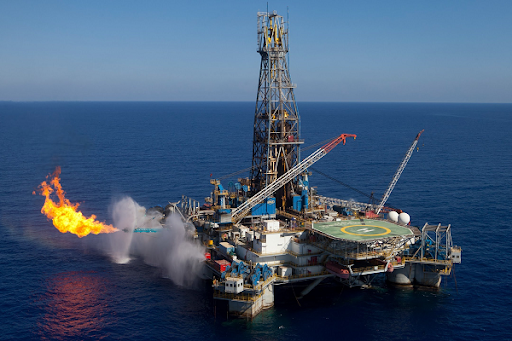
Ghana’s petroleum revenue increased by 52% to US$561.41 million in the first half of 2026, supported by higher crude oil prices and an 11.7% rise in production.
This is according to the 2026 Semi-Annual Report of the Public Interest and Accountability Committee (PIAC).
Total petroleum receipts rose from US$370.34 million in the first half of 2025 to US$561.41 million in the same period this year.
PIAC attributed the increase mainly to higher achieved crude oil prices, which supported a 37% rise in Corporate Income Tax collections.
The Ghana Group recorded an average crude oil price of US$92.81 per barrel, exceeding the government’s benchmark of US$76.22 by about 22%.
The improved revenue performance coincided with a recovery in crude oil production across Ghana’s three producing fields.
Total crude oil output increased from 18.42 million barrels in the first half of 2025 to 20.58 million barrels in the corresponding period of 2026.
The Jubilee Field accounted for the largest share, producing 12.82 million barrels. The SGN Field followed with 5.07 million barrels, while the TEN Field produced 2.68 million barrels.
Cumulative crude oil production since commercial operations began reached approximately 714.56 million barrels by the end of June 2026.
Gas production also rose by about 4.4% to 136,151.09 million standard cubic feet. Higher output from SGN offset declines in the Jubilee and TEN fields.
PIAC further reported substantial reductions in gas flaring during the period. Flaring declined by 74.02% at Jubilee, 40.79% at TEN and 79.73% at SGN compared with the first half of 2025.
Despite the stronger performance, the report cautioned that petroleum revenue remains exposed to fluctuations in global oil prices and the timing of crude oil liftings.
It also highlighted outstanding surface rental payments of approximately US$2.41 million at the end of June 2026. This excludes a further US$1.73 million owed under terminated petroleum agreements.
In addition, the Ghana Revenue Authority, the Ghana National Petroleum Corporation, the Ministry of Energy and Green Transition, and international oil companies had yet to agree on the payment of Additional Oil Entitlement, despite continued benchmark assessments.
PIAC’s findings also point to the need to sustain investment in Ghana’s maturing petroleum sector.