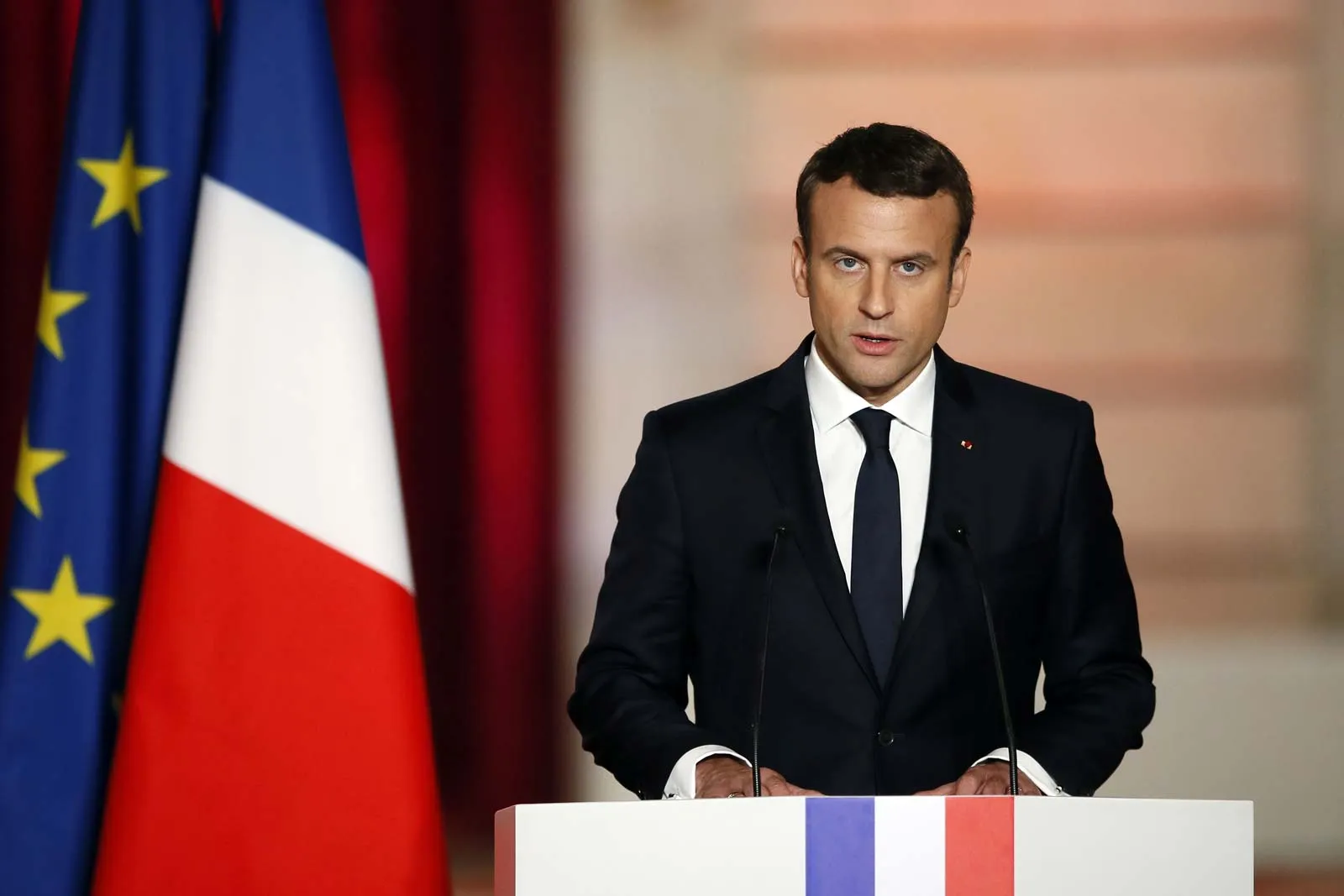
French President Emmanuel Macron and Kenyan President William Ruto opened a new chapter in Euro-African relations this week in Nairobi, as Macron pledged a landmark 23 billion euro (GH₵ 391.5 billion) investment package to signal a strategic shift toward “sovereign equality.”
The Africa Forward Summit served as a high-stakes platform for France to pivot its continental strategy away from decades of aid-based relations and its historical role in former colonies toward a broader, mutual engagement with English-speaking nations. This massive commitment, which Macron detailed as a “partnership of equals,” is designed to fuel critical advancements in energy, artificial intelligence, and agriculture while creating 250,000 direct jobs across both France and Africa.
Massive Financial Commitments Across Strategic Sectors
Of the total capital pledged, Macron detailed that 14 billion euros (GH₵ 237.8 billion) will originate from French public and private entities, while African investors will contribute the remaining 9 billion euros (GH₵ 152.2 billion). These funds are earmarked for energy transition, the maritime economy, and high-tech sectors. High-profile attendees included Nigerian industrialist Aliko Dangote and executives from TotalEnergies and Orange, reflecting the heavy private-sector interest in the summit. Among the specific deals, shipping giant CMA CGM committed 700 million euros (GH₵ 11.9 billion) to modernize the port of Mombasa.
A Departure from the Era of Dependency
President Ruto emphasized a clean break from traditional donor-recipient dynamics. He used the word “sovereignty” eight times during his address to signal a new standard for cooperation. Ruto stated that new partnerships “must not be built on dependency but on sovereign equality, not on aid or charity but on mutually beneficial investment, and not on extraction or exploitation but on win-win engagements.”
He further noted that “we should no longer think in terms of aid and loans, but rather in terms of investment and what Africa has to offer.” The summit concluded with a joint declaration signed by all 30 heads of state and government.
New Strategic Focus: Ghana as a Digital and Health Hub
The summit’s agenda specifically resonates with West Africa’s English-speaking powerhouse, Ghana. In April 2026, President Macron and President John Dramani Mahama solidified a historic healthcare partnership. France selected Ghana as the first nation to host its new National Health Platform.
This digital healthcare system aims to revolutionize telemedicine and service delivery across the country. Discussions also focused on major infrastructure projects, including the Accra-Kumasi Expressway and the Accra Reset Initiative. These projects reflect a pivot toward high-impact infrastructure and digital innovation. Ghanaian delegates in Nairobi highlighted the “one-million-coders” program as a key area for French technical support.
Macron Calls for Reciprocal Investment
President Macron urged African capital to flow toward Europe to ensure a “partnership of equals.” “We are not simply here to come and invest on the African continent alongside you—we need the great African business leaders to come and invest in France,” he told the delegation. Macron described the current state of affairs as “now entirely free of hang-ups.” He insisted that “sovereignty and autonomy is shared, and your success is our success.” This approach is intended to replace the “assistance” model with a focus on “co-investment.”
Navigating the Legacy of Colonialism
The summit took place against a backdrop of declining French influence in its former West African colonies, known as Françafrique. Following years of local criticism and military coups, France has withdrawn troops from Mali, Niger, Burkina Faso, and completed its exit from Senegal in July.
In contrast, Kenya is hosting an increased presence, with 800 French soldiers arriving via navy ship just one month prior to the summit. Macron addressed this history by stating that “the days of offering assistance are behind us.” He also addressed cultural heritage, noting that the return of looted African artworks has become “unstoppable” following recent French legislation.
Accountability and Governance in the Post-Independence Era
Macron challenged the narrative that historical colonialism is the sole cause of current regional struggles. “We must not exonerate from all responsibility the seven decades that followed independence,” he told The Africa Report.
He called on African leaders to focus on improving internal governance. Macron asserted that Europe’s former colonial powers were not “the predators of this century.” He contrasted Europe’s approach with that of China, which he claimed “operates according to a predatory logic” by processing materials at home and creating “dependencies with the rest of the world.”
France Positions Itself as a Reliable Global Partner
By hosting the summit in Kenya, France is diversifying its diplomatic footprint. Macron described the continent as a “whole” and positioned Europe as a champion of “effective multilateralism, the rule of law, free and open trade.” Regarding the military withdrawals from the Sahel, he maintained that the exit “wasn’t a humiliation but a logical response to a given situation.”
He expressed hope for a “new era” where the Sahel regains democratic governance under leaders who “genuinely care about their people.” To support this, he emphasized an overhaul of international finance to create a system of “financial guarantees” that encourages private capital.
From Paternalism to Partnership
This summit marks a definitive transition from paternalistic aid to strategic co-investment. It signals that France views Africa’s “energy and youth” as the primary drivers of the next global economic era. By seeking a “third way” between Chinese extraction and American influence, Paris and Nairobi have set a high bar for future diplomatic engagements. For nations like Ghana, this shift represents an opportunity to leverage sovereign digital and health reforms into long-term global prosperity.