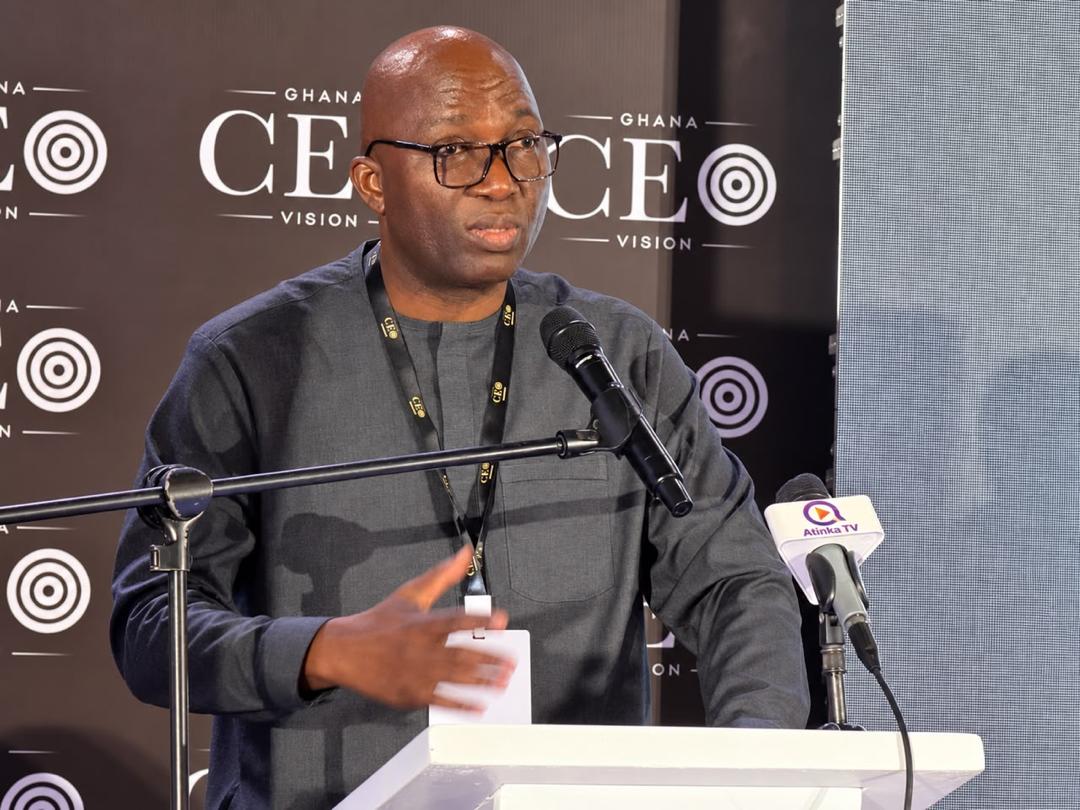
Ghana must move beyond expanding access to mobile money and digital wallets to using digital financial services to drive enterprise growth, access to credit and economic empowerment, the Chief Executive Officer of MobileMoney FinTech LTD (MMFL), Mr Shaibu Haruna, has said.
He said although Ghana had made significant progress in digital financial inclusion, the next phase must focus on turning the digital financial footprints of individuals and businesses into opportunities for savings, responsible borrowing, investment and wealth creation.
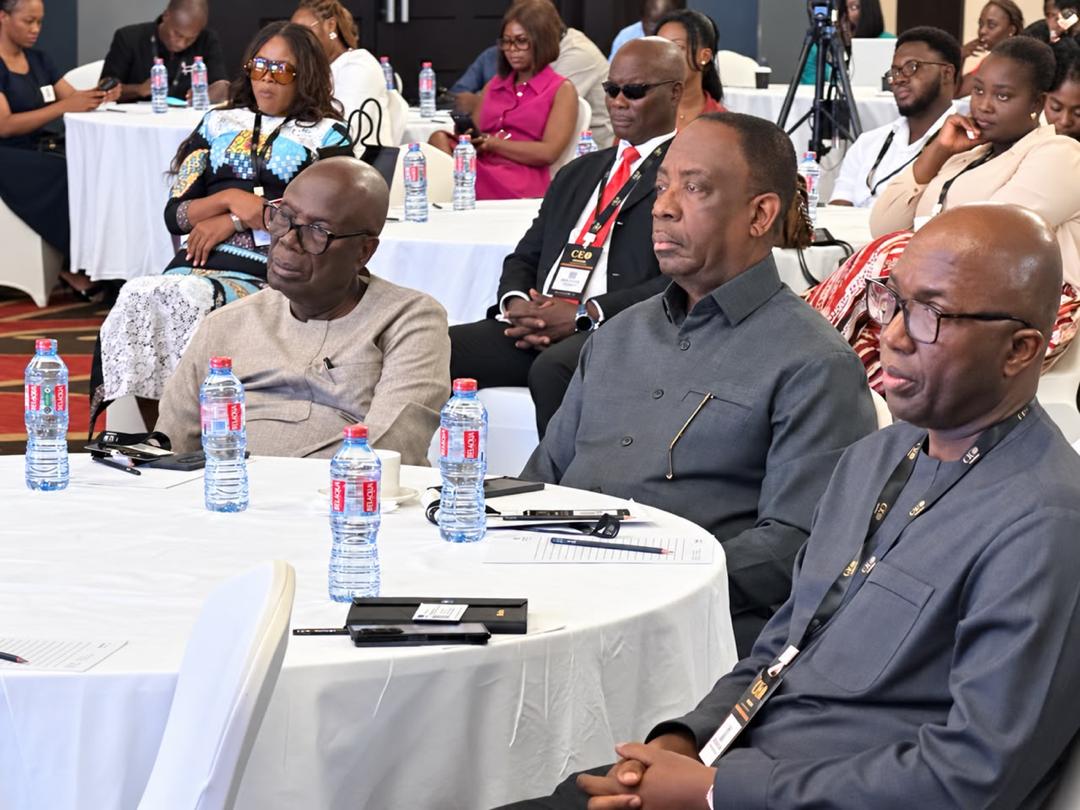
Speaking at the fifth Ghana CEO in Accra, Shaibu said digital finance had already transformed the way Ghanaians conducted transactions, but its potential to support the productive sector remained largely untapped.
He said the mobile phone, which once primarily enabled people to send and receive money, had evolved into a tool through which traders and other small business operators could receive customer payments, pay suppliers, save, access credit and obtain insurance.
“We have built the infrastructure. Now, we must use that foundation to drive economic growth and prosperity,” he said.
Shaibu said the critical question for businesses and policymakers was no longer simply whether people had access to mobile money but whether that access was improving their livelihoods.
He asked whether a young entrepreneur could use his or her digital transaction history to access working capital, whether a woman operating a small business could obtain credit without collateral and whether a farmer could use digital payment records to demonstrate the cash flow required to secure a loan.
He said such interventions were necessary to move Ghana from financial inclusion to what he described as “economic empowerment and enterprise growth”.
Digital finance and 24-hour economy
Shaibu said digital finance could also play a critical role in supporting Ghana’s 24-hour economy by ensuring that payments and financial services remained available whenever businesses and consumers needed them.
“A merchant cannot operate continuously if payments stop at certain hours. Payment flows must be available whenever businesses and customers need them,” he said.
He said digital transactions generated records that could be used to develop financial products tailored to the needs of customers and businesses.
Shaibu said the objective should be to help customers progress from transactions to savings, from savings to responsible borrowing and ultimately to investment.
“That is the journey we are on with our customers,” he said.
Focus on microenterprises
Shaibu identified microenterprises as the next frontier in Ghana’s digital financial development, saying many small business owners continued to mix their personal and business finances.
He said the practice made it difficult for lenders to assess the performance and financial health of such businesses and limited their ability to access appropriate credit.
He therefore urged microenterprise owners to separate their personal and business finances and develop clearer financial records.
He said the focus should not merely be on formalising businesses but on helping them establish financial structures that would allow banks and other financial institutions to understand their digital transaction histories.
“That will make it easier to offer solutions that address their most pressing business needs,” he said.
According to Shaibu, MobileMoney FinTech was working with banks and other financial institutions to use its platform to facilitate credit for millions of Ghanaians.
He said while partner financial institutions provided the capital, the platform supported loan disbursement and repayment collection.
He said the opportunity now was to build on that foundation and ensure that digital finance resulted in lasting improvements in livelihoods and business performance.
Women, rural communities
Shaibu said despite Ghana’s progress in financial inclusion, gaps remained, particularly among women, persons with disabilities and people living in rural communities.
He said those groups must remain at the centre of discussions on the future of digital finance.
He said access should not be limited to providing people with wallets but should enable them to access credit, savings, insurance and other financial products.
“Financial literacy is at the heart of this effort,” he said.
He said customers must be equipped with the knowledge to understand how money worked, how to manage it and how to use digital financial services safely.
Shaibu said trust was also critical to the development of the digital financial ecosystem, particularly at a time when cybersecurity threats were increasing.
He said FinTech companies had a responsibility to protect customer trust and educate users on how to safeguard themselves against digital fraud and other cyber threats.
Three commitments
Shaibu outlined three key areas in which MMFL would contribute to strengthening Ghana’s digital financial ecosystem.
The first, he said, was to unlock opportunities for microenterprises by working with partners to improve their financial footprints and expand access to appropriate credit.
The second was talent development, through the identification and nurturing of FinTech talent capable of developing solutions to address Ghana’s local challenges.
He cited the MoMo Fintech Lab, which he said had been established to promote FinTech innovation and develop talent across the country.
He said similar activities were being undertaken in Kumasi to extend the initiative to the middle belt.
The third commitment, which he described as perhaps the most important, was investment in financial literacy.
Shaibu said financial literacy should not be taken for granted, explaining that even highly educated people could have significant gaps in their understanding of money and financial management.
“We must build that understanding from the grassroots and make financial education accessible to every Ghanaian,” he said.
The Founder of the Ghana CEO Awards, Mr Latif Abubakar, also noted that the private sector had a critical role to play in Ghana’s economic transformation, stressing that government alone could not drive investment, create jobs and stimulate innovation.
He said the decisions taken by business leaders and the businesses they built had implications beyond their individual companies and could transform lives and shape generations.
“Government cannot do it all. The private sector has a critical role to play in driving investment, creating jobs, stimulating innovation and building an economy that works,” he said.
Mr Abubakar urged CEOs to look beyond the success of individual businesses and focus on creating opportunities, building strategic partnerships and empowering the next generation. He said Africa’s future would be shaped by the ability of its leaders to create opportunities rather than simply inherit them.
He urged business leaders to remain relevant through innovation, stay connected by building meaningful partnerships, stay ahead by embracing technology and emerging opportunities, and build credibility through trust, integrity and demonstrated achievement.
The Chairman and Founder of Ishmael Yamson & Associates, Dr Ishmael Evans Yamson, also challenged Chief Executive Officers (CEOs) to take an active role in Ghana’s economic reset, saying they could not remain on the sidelines of the country’s development.
Dr Yamson, who chaired the National Economic Dialogue, said the reset agenda belonged to all Ghanaians and required responsible leadership from the business community. He said CEOs had to recognise the influence of their decisions on production, employment, taxation and the treatment of workers and customers.
“You cannot watch the reset agenda from the sidelines. Its success will depend on the choices you make: what you produce, whom you hire, the taxes you pay, and how you treat your employees and customers,” he said.
He urged CEOs to increase production in Ghana, saying this should go beyond manufacturing to include developing technology, creating new ideas and finding innovative solutions. He also called on business leaders to uphold integrity and ethics and invest in developing the next generation of leaders, saying the choices made today would determine the Ghana inherited by future generations.