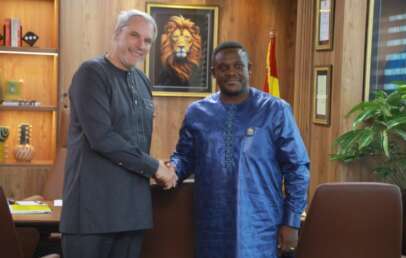
Damang Mine Limited, a subsidiary of Dzata Holdings Limited, has significantly expanded its gold deliveries to the Ghana Gold Board (GoldBod), increasing total sales to 224 kilogrammes, equivalent to 7,202 ounces of gold, in a development that underscores growing alignment between domestic mining output and Ghana’s broader reserve accumulation strategy.
The latest transaction follows two earlier deliveries by the company owned by businessman Ibrahim Mahama, beginning with its first full production sale in April.
103kg first full production
At that time, Damang Mine Limited sold 100% of its initial output of 103 kilogrammes of gold, equivalent to 3,311 ounces, directly to GoldBod.
121kg second full production
The company subsequently followed up with a second delivery of its entire production of 121 kilogrammes of gold, equivalent to 3,890 ounces, bringing its cumulative sales under the arrangement to 224 kilogrammes (7,202 ounces).
The sustained deliveries are being viewed as a major boost to GoldBod’s mandate to retain more value from Ghana’s mineral resources within the domestic financial system, while strengthening the country’s external reserve position.
Under the framework, all gold is assayed, valued and purchased by the Ghana Gold Board on behalf of the Bank of Ghana (BoG). The bullion is then refined and added directly to the central bank’s official gold holdings, reinforcing Ghana’s reserve accumulation strategy.
GANRAP
The arrangement plays a critical role in supporting the Accelerated National Reserve Accumulation Policy (GANRAP), which targets an increase in Ghana’s import cover to 15 months by the end of 2028.
The policy is anchored on a gold-based reserve accumulation model, complemented by structural reforms aimed at expanding non-traditional exports, boosting productivity in the cocoa sector, mobilising remittances, developing new oil fields, reducing foreign exchange leakages—particularly in the energy sector—and maintaining strict fiscal discipline.
To move from the current estimated 5.7 months of import cover to 15 months, Ghana must accumulate approximately 9.3 additional months of import cover, which translates into an average net reserve build-up of about US$9.5 billion annually, after accounting for external debt service obligations, foreign exchange market interventions, energy sector payments, and other statutory outflows.
As part of the operational framework, GANRAP has set a weekly gold purchase target of approximately 3.02 tonnes, which is expected to generate annual gross inflows of about US$25.3 billion, providing a strong buffer for reserve accumulation and macroeconomic stability.
The BoG is also expected to negotiate an increase in the proportion of gold output that large-scale mining companies are required to sell to the central bank—from the current 20 per cent to 30 per cent—with all allocations to be delivered in doré form. This policy adjustment is intended to further deepen domestic gold retention and enhance the country’s foreign exchange resilience.
GoldBod commends Damang Mine leadership
Receiving the latest 121 kilogrammes (3,890 ounces) on behalf of GoldBod, the Director for Technical Affairs, Michael Arko, commended the management of Damang Mine Limited and its leadership for what he described as sustained confidence in the institution and commitment to national economic transformation.
“This is a refreshing moment for us at the Ghana Gold Board and indeed a very significant development for the country,” he said during the latest gold delivery ceremony.
He noted that the transaction marked another milestone in Ghana’s efforts to strengthen local participation in the mining value chain while ensuring that mineral wealth contributes more directly to national development priorities.
“This is the second time that Damang Gold Mine has delivered its gold production to the Ghana Gold Board, and we are highly encouraged by this commitment,” Arko added.
He further commended Ibrahim Mahama, Chairman of the group behind Damang Mine Limited, describing the gesture as a strong demonstration of patriotism and belief in Ghana’s economic future.
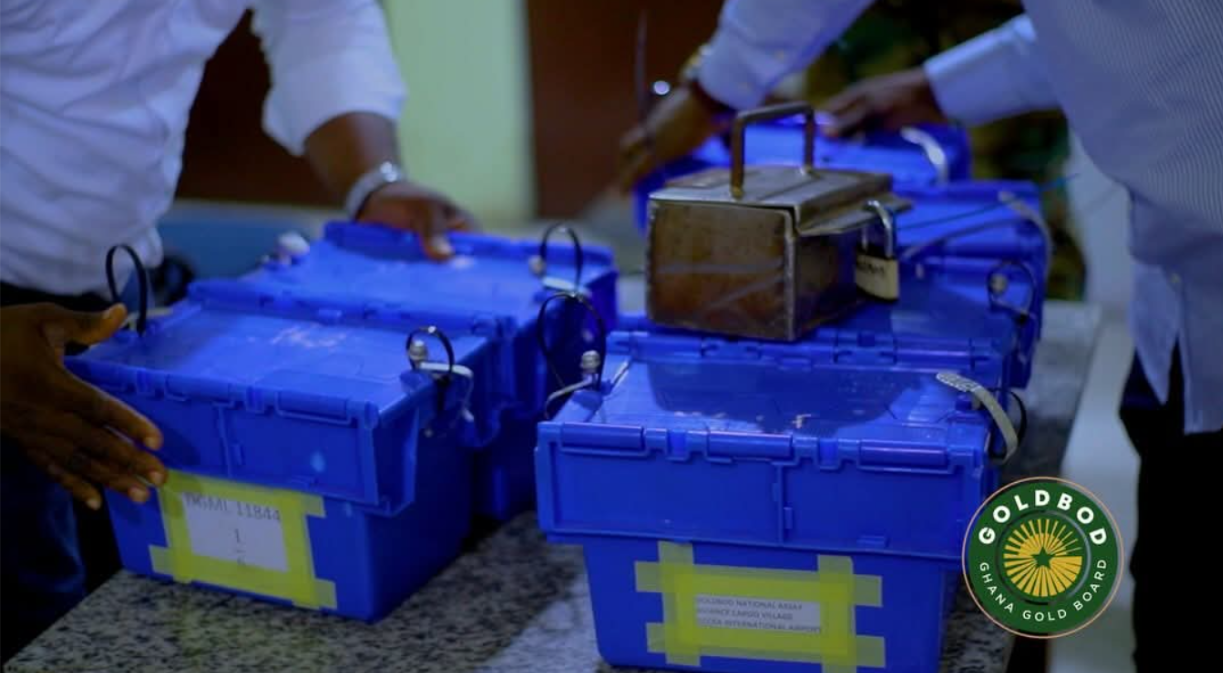
According to him, the increasing consistency in gold deliveries reflects growing confidence in GoldBod as a national institution mandated to support reserve accumulation and economic stability.
Confidence in Ghana’s economic transformation agenda
Arko noted that the increase from the initial 103 kilogrammes (3,311 ounces) to the subsequent 121 kilogrammes (3,890 ounces) was a clear indication of strengthened confidence in Ghana’s economic transformation agenda.
“We are receiving 121 kilogrammes today, compared to 103 kilogrammes during the last transaction. This shows growing confidence and commitment to supporting Ghana’s economic transformation agenda,” he said.
Arko stressed that Ghana’s long-term economic stability would depend significantly on sustained collaboration between indigenous mining companies and national institutions such as GoldBod and the Bank of Ghana.
Call for broader industry participation
Counsel for Dzata Holdings Ltd., Bobby Banson, said the Damang Mine experience demonstrates what is possible when mining companies prioritise national interest alongside commercial objectives.
He argued that if more large-scale mining firms adopted similar approaches, Ghana’s economy would experience stronger growth and more sustainable long-term development outcomes.
“For those who thought the first transaction was a one-off event or merely symbolic, today’s delivery is clear evidence of the mine’s commitment to supporting the Ghanaian economy,” he stated.
Mr. Banson further emphasised that increasing indigenous ownership and participation in the mining sector could significantly reshape Ghana’s economic trajectory.
“If all large-scale mining companies placed Ghana’s interests above excessive profit considerations, the long-term benefits to the economy would be enormous and would positively impact every Ghanaian, not just a few individuals,” he said.
He added that the consistency of deliveries from Damang Mine Limited demonstrates the importance of strengthening Ghanaian participation in the extractive sector.
“If one Ghanaian-owned large-scale mining company can make this level of contribution to the economy, one can only imagine what the situation would look like over the next three or four years if more mines were owned and operated by Ghanaians with the country’s interest at heart,” he noted.
Macroeconomic stability and reserve build-up
Mr. Banson described the arrangement as a critical contribution to Ghana’s macroeconomic stability agenda, particularly in relation to foreign exchange accumulation and reserve strengthening.
He explained that the regular inflow of gold into the central banking system would help stabilise the cedi, improve investor confidence, and support broader macroeconomic resilience.
“We all have a role to play in stabilising the economy. This effort is not for the benefit of one individual or one company, but for the collective benefit of all Ghanaians,” he said.
Officials further emphasised that partnerships between indigenous mining companies and state institutions such as GoldBod could become a cornerstone of Ghana’s long-term economic restructuring agenda.
Banson noted that by channeling more gold into official reserves, Ghana would be better positioned to withstand external shocks, manage currency volatility, and strengthen its balance of payments position.
Toward a gold-driven reserve strategy
The Accelerated National Reserve Accumulation Policy (GANRAP) is designed to position gold as a central pillar of Ghana’s external reserve management strategy.
The policy framework also seeks to diversify export earnings, reduce dependency on volatile external financing, and reinforce fiscal discipline as a foundation for sustainable macroeconomic growth.
Government officials say the combination of gold purchases, export diversification, and structural reforms is expected to provide a durable pathway toward long-term economic stability and resilience.
The latest deliveries from Damang Mine Limited, totalling 224 kilogrammes (7,202 ounces), are therefore seen as an important early signal of how private sector participation can complement national policy objectives in strengthening Ghana’s economic foundations.