Ghana is set to transition into a new era of economic management and policy credibility with plans to adopt a 36-month non-financing Policy Co-ordination Instrument (PCI) with the International Monetary Fund (IMF), a move expected to significantly reduce the country’s financial dependence on IMF resources while preserving investor confidence and macroeconomic discipline.
The proposed arrangement, which follows the successful implementation of Ghana’s Extended Credit Facility (ECF) programme, is being described as a major shift from reliance on IMF financial support towards stronger domestic policy ownership and institutional reform.
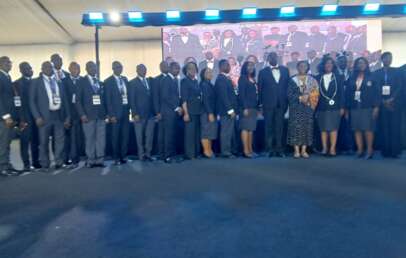
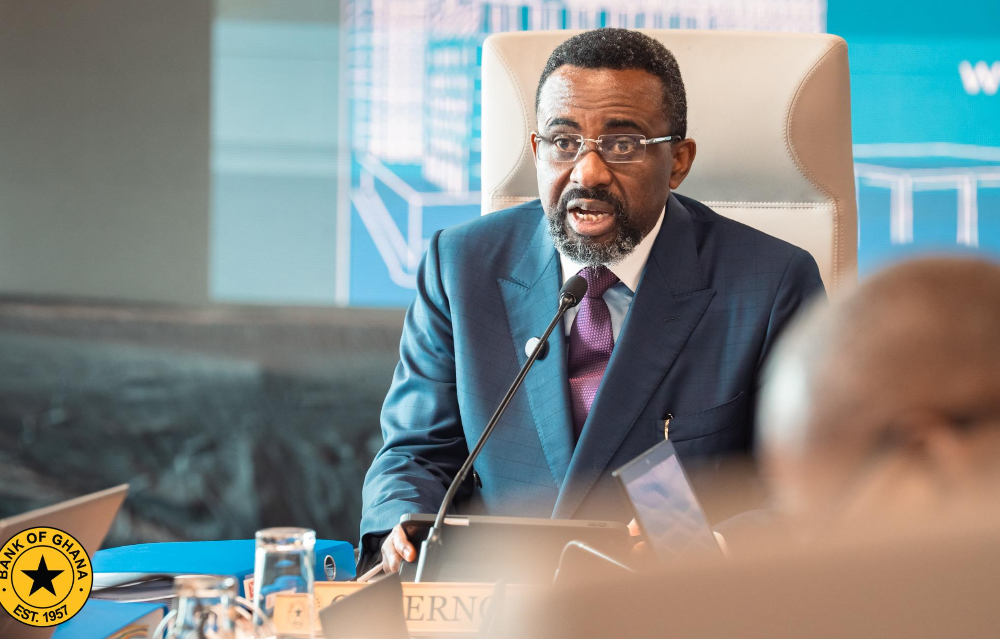
Governor of the Bank of Ghana (BoG), Johnson P. Asiama, disclosed this at the opening of the 130th Monetary Policy Committee (MPC) meeting in Accra, where he outlined the central bank’s assessment of both domestic economic conditions and mounting global risks.
According to him, the PCI represents “a considered and credible next step in Ghana’s institutional engagement with the international financial architecture.”
He explained that unlike traditional IMF support programmes, the PCI is a non-financing instrument designed for countries that no longer require direct IMF funding but still seek the signalling benefits, policy credibility and technical support associated with Fund engagement.
Dr Asiama said the arrangement would preserve investor confidence while enabling Ghana to assert greater control over its reform agenda and economic policy direction.
6 Pillars of the PCI
The Governor disclosed that the 36-month PCI would be organised around six key pillars aimed at consolidating macroeconomic stability and strengthening long-term economic resilience.
The pillars include sustaining growth-friendly fiscal adjustment, safeguarding debt sustainability, strengthening fiscal transparency and governance, enhancing monetary and exchange-rate policy frameworks, reinforcing financial sector stability, and supporting economic diversification and inclusive growth.
According to Dr Asiama, the arrangement reflects Ghana’s commitment to maintaining prudent economic management while transitioning away from dependence on external bailout financing.
Analysts believe the programme could improve Ghana’s standing with investors and international markets by demonstrating confidence in the country’s ability to sustain reforms independently after years of recurring IMF-supported interventions.
BoG reforms under PCI framework
Dr Asiama indicated that the PCI would contain several commitments directly linked to the BoG’s operations and monetary policy framework.
He explained that the programme would seek to improve the effectiveness of monetary policy transmission, enhance liquidity forecasting systems and maintain discipline around Ghana’s inflation-targeting framework.
He added that the corridor reform currently under discussion at the MPC meeting aligns directly with the PCI’s monetary policy objectives.
The Governor further noted that the programme would place emphasis on forward-looking monetary policies aimed at anchoring inflation expectations and strengthening macroeconomic stability.
The PCI will also focus on rebuilding the Bank of Ghana’s balance sheet over the medium term by limiting quasi-fiscal activities and improving transparency and oversight of the Domestic Gold Purchase Programme (DGPP).
According to him, operational constraints relating to the DGPP and broader foreign exchange intermediation architecture would form part of the reform agenda under the future IMF engagement.
He added that Ghana’s foreign exchange management framework and reserve accumulation objectives would continue to be assessed under the arrangement.
IMF concludes final ECF review
Dr Asiama revealed that an IMF staff mission which visited Accra between April 29 and May 15, 2026, concluded both the sixth and final review of Ghana’s ECF programme and an Article IV Consultation, while also holding discussions on the proposed PCI arrangement.
The IMF mission reportedly acknowledged that Ghana’s ECF programme had delivered substantial stabilisation gains, including sharply lower inflation, improved external buffers, stronger confidence in the cedi and significant improvements in debt sustainability.
However, the Fund also cautioned that the global economic environment remains highly uncertain due to escalating geopolitical tensions in the Middle East and their impact on global commodity and energy prices.
Middle East conflict raises new risks
The Governor warned that the worsening conflict in the Middle East has become the dominant external risk confronting the Ghanaian economy.
He noted that at the time of the 129th MPC meeting earlier this year, policymakers had been uncertain whether the conflict would be short-lived or prolonged.
According to him, the central bank had at the time projected different scenarios ranging from a quick resolution with Brent crude prices returning to about US$75 per barrel to a prolonged crisis sustaining prices around US$100 per barrel through the end of the year.
Dr Asiama said developments since then indicate that the conflict has intensified rather than eased.
He explained that the closure of the Strait of Hormuz has triggered a sustained increase in global energy prices, creating new inflationary and economic pressures worldwide.
The IMF, he said, has revised its global growth projection for 2026 downward to 3.1 per cent from 3.3 per cent due to the economic effects of the conflict.
He further noted that several advanced and emerging market economies are experiencing renewed inflationary pressures, forcing central banks that had begun easing monetary policy to reconsider or reverse course.
For Ghana, which exports commodities but imports significant quantities of fuel, Dr Asiama said the transmission effects are substantial through higher fuel costs, transportation expenses, import bills and consumer prices.
Signs of domestic economic recovery
Despite the difficult global environment, the Governor said Ghana’s domestic economy continues to show signs of resilience and gradual recovery.
He disclosed that inflation had recorded its first increase since December 2024, while the April 2026 IMF World Economic Outlook projected continued expansion in Ghana’s economy.
According to him, Ghana’s current account surplus for the first quarter of 2026 exceeded the corresponding 2025 figure by approximately US$652 million, reflecting improved external sector performance.
He also pointed to the successful issuance of a seven-year government bond and the resumption of domestic treasury bond issuance earlier in the year as evidence of returning investor confidence.
Dr Asiama further revealed that government intends to raise US$1 billion through local currency bonds to finance cocoa purchases for the 2026/27 crop season, in what he described as a significant policy shift aimed at reducing dependence on dollar funding and foreign lenders.
To cushion consumers against rising fuel prices, government has also announced temporary reductions in regulatory margins on petroleum products.
Inflation and financial stability concerns
The Governor said the MPC would spend the next three days examining both domestic and external risks and determining how best to sustain the gains achieved so far.
He indicated that the committee would deliberate on how to realign interest rates in the economy while ensuring inflation expectations remain firmly anchored.
According to him, the combination of domestic energy supply disruptions and external commodity price pressures could create what he described as a “dual-channel inflation expectations problem” if not carefully managed.
Dr Asiama stressed that maintaining a strong and stable banking sector would be critical to supporting economic growth and credit expansion in the coming years.
He warned that several risks remain in the outlook, including prolonged global energy price increases, current account vulnerabilities, reserve pressures, fiscal risks from reduced external revenues and lingering domestic power supply challenges.
“These risks will be central to the discussions this week,” he stated.