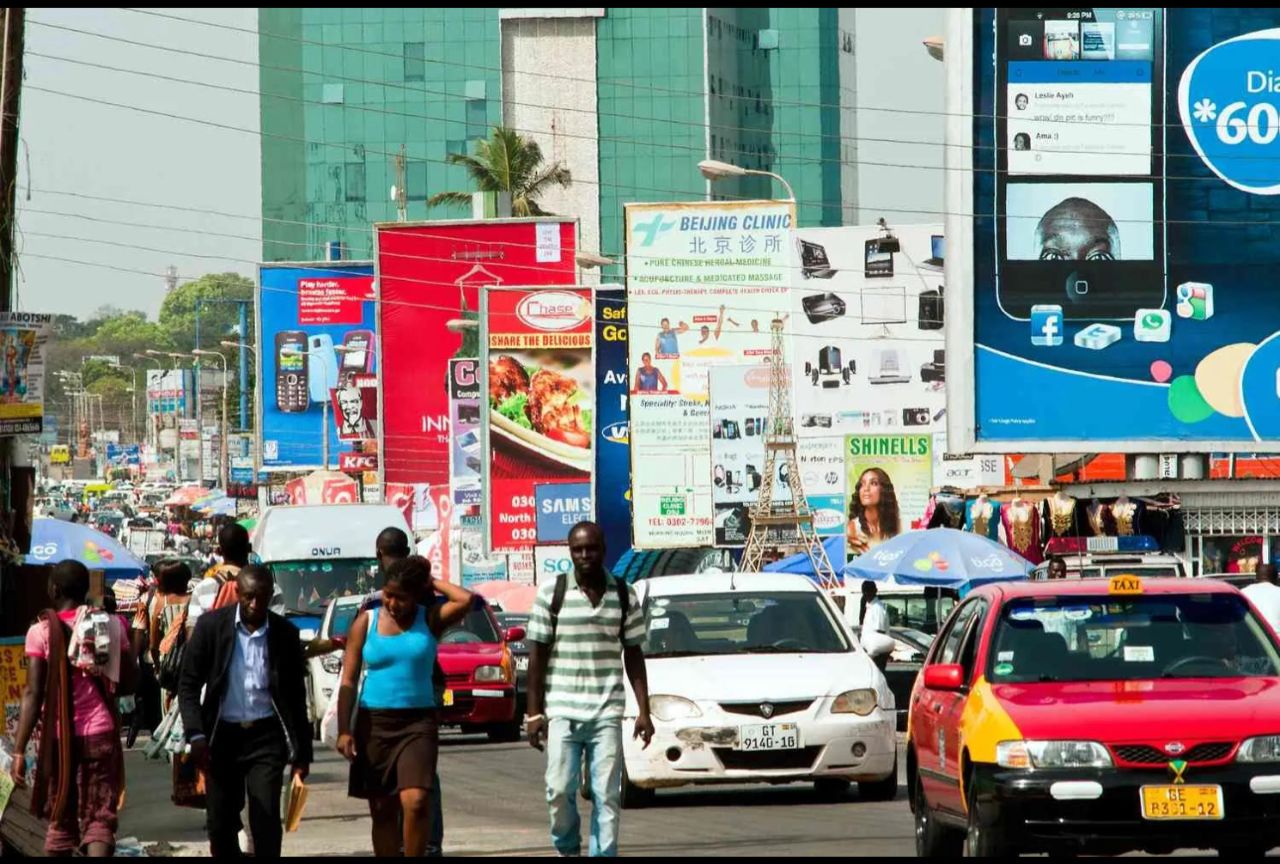
There is a quiet crisis unfolding on Ghana’s streets. One that we have grown so accustomed to that we barely question it anymore.
It is the creeping, unregulated spread of outdoor advertising: billboards jostling for attention, signages choking pavements, and structures rising without order, discipline, or regard for public safety.
A single roadside scene captures it all. Pedestrians navigating a narrow walkway.
Informal traders balancing loads. And then, planted squarely in their path, a large advertising panel; immovable, unapologetic, and entirely out of place. It is a small detail, but it speaks volumes.
This is not just poor planning. It is a failure of governance.
A question of space: Who owns the pavement?
Pavements are meant for people. That should not be a radical statement.
Yet across Accra, Kumasi, and many of our urban centres, pedestrian walkways have become prime real estate for advertisers.
Outdoor advertising panels are routinely placed on sidewalks, road medians, at junctions, and in front of shops with little regard for human movement.
The result is a daily negotiation for space between pedestrians, traders, vehicles, and now, billboards.
So we must ask uncomfortable questions:
Who is approving the placement of these structures?
What standards determine spacing, visibility, and pedestrian right-of-way?
Are Metropolitan, Municipal and District Assemblies (MMDAs) conducting proper site inspections before permits are issued or simply reacting after the fact?
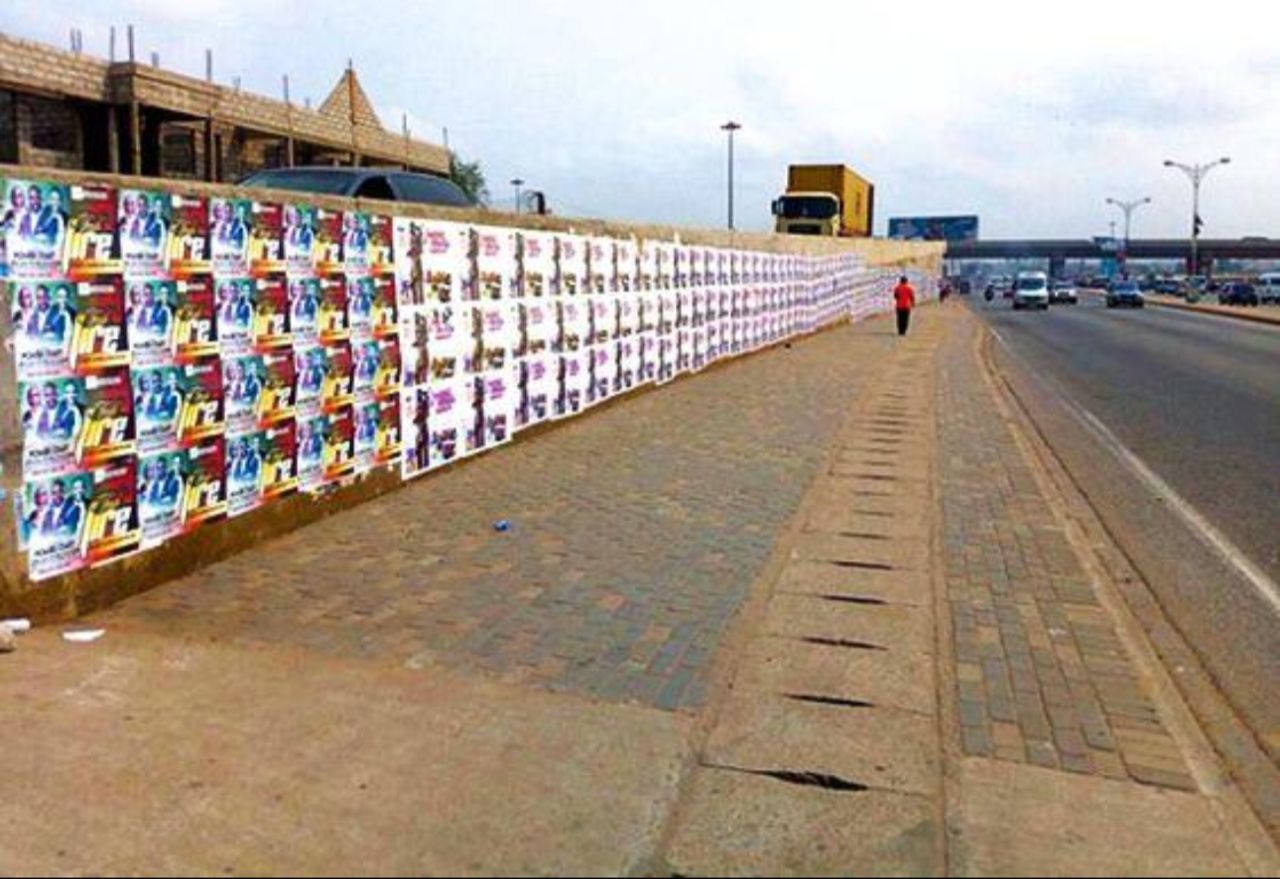
Because if what we are seeing is compliance, then the standards themselves are deeply flawed.
And if it is non-compliance, then enforcement has all but collapsed.
Construction without accountability
Beyond placement lies a more dangerous concern: structural integrity.
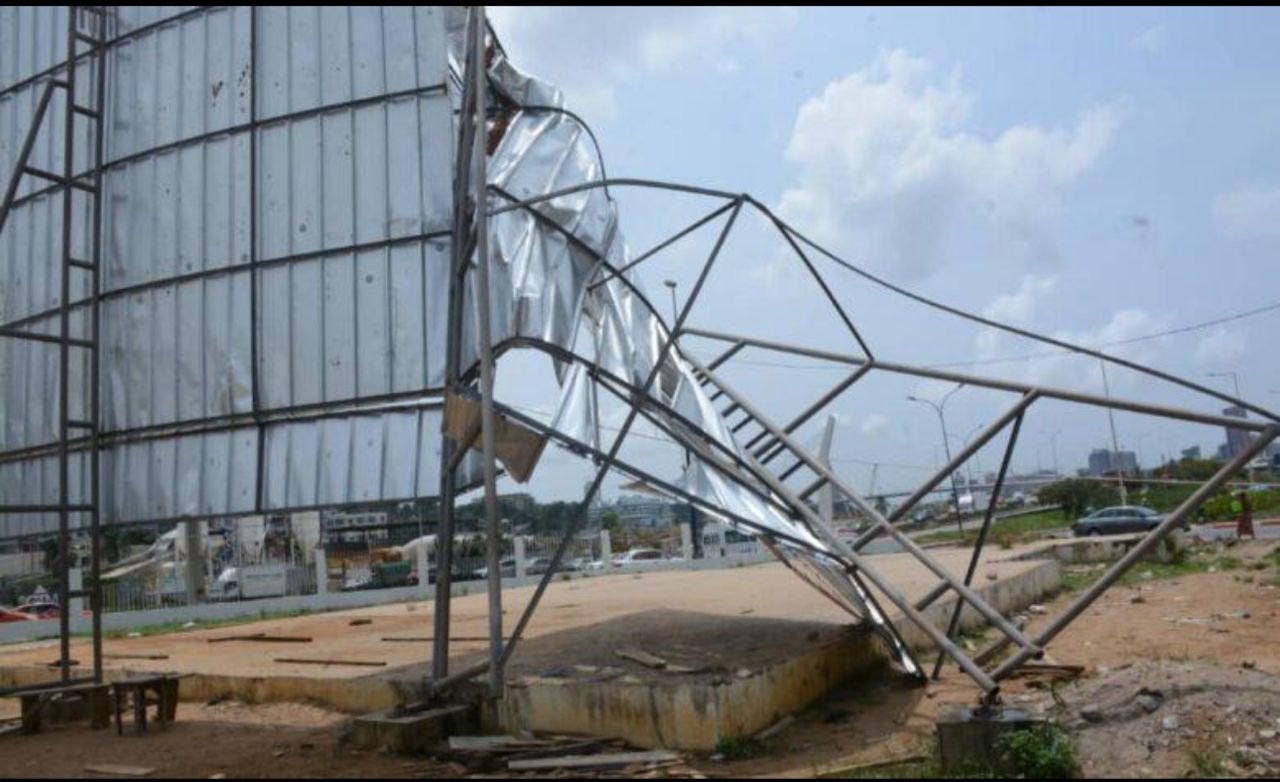
Across Ghana, it is not uncommon to see billboards that are visibly unstable—mounted on weak frames, anchored poorly, or already tilting under their own weight.
After every heavy storm, we hear of structures collapsing, sometimes narrowly missing lives, sometimes not.
Yet these incidents rarely trigger systemic review.
Are structural audits conducted before installation?
Who certifies the engineering soundness of these structures?
What penalties exist, and are actually enforced when billboards fail?
If a building collapses, there are investigations, sanctions, and public outrage.
Why then do we treat fallen billboards as routine inconveniences rather than governance failures? The silence is telling.
The aesthetic assault on our cities
There is also a quieter, but equally damaging consequence: the erosion of urban identity.
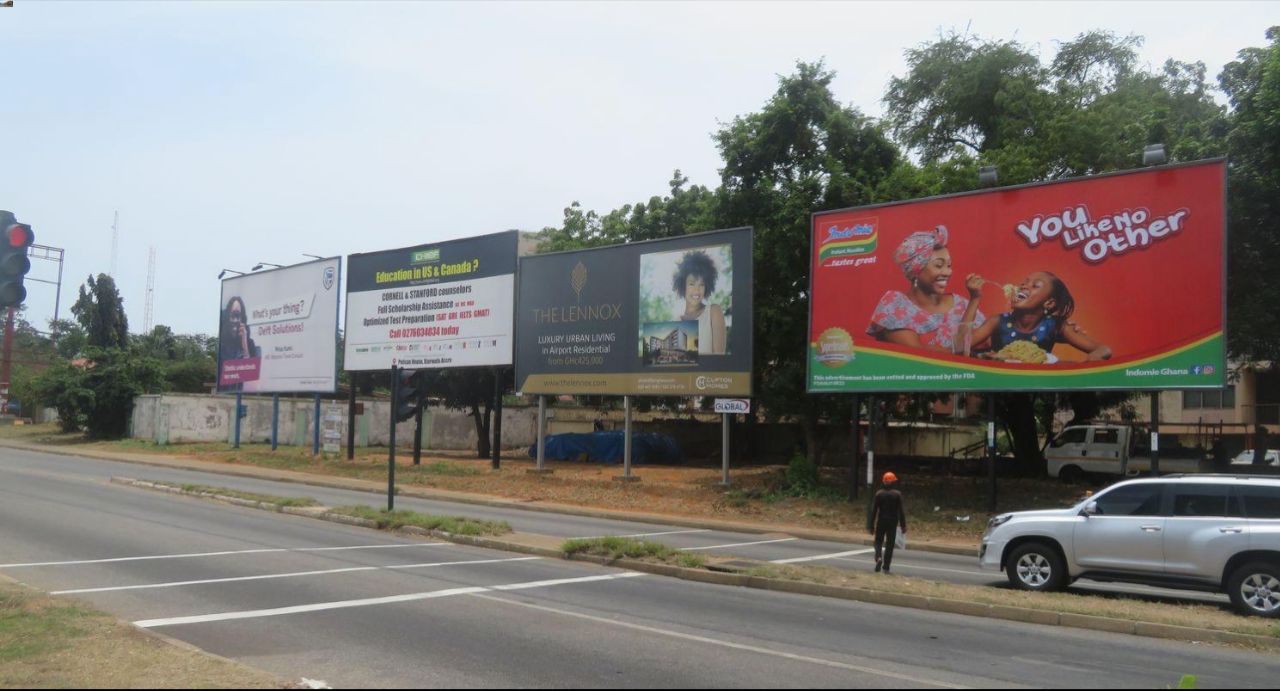
Drive through any major junction in Ghana and you will encounter a barrage of visual clutter; overlapping billboards, competing brand messages, makeshift signages jutting into roads, and shopfronts that extend far beyond their boundaries.
What should be clean, coherent cityscapes have become chaotic visual battlegrounds.
This is not just about beauty. It is about brand Ghana.
Cities communicate values. Order signals discipline. Design signals intention. Clutter signals neglect.
For a country positioning itself as a hub for investment, tourism, and innovation, the current state of our streets sends the wrong message.
It suggests a system where anything goes, where rules exist but are optional, and where short-term commercial gain overrides long-term national interest.
The law exists—So why the silence?
Ghana is not without regulation. There are existing bylaws, planning guidelines, and standards governing outdoor advertising.
On paper, the system is not broken. But on the streets, it clearly is. This raises the most difficult question of all:
Is this a failure of capacity or a failure of integrity?
Because enforcement does not require new ideas. It requires consistency, discipline, and the will to act.
If billboards are being mounted on pavements, if spacing rules are ignored, if unsafe structures remain standing, then someone is looking the other way.
Whether through negligence or complicity, the outcome is the same: disorder.
Where is Parliament? Where is the advertising bill?
For years, Ghana has discussed the need for a comprehensive national framework to regulate advertising.
Yet the much-talked-about Advertising Regulation Bill remains in limbo.
Why?
What is delaying its passage? Who benefits from the current lack of coordination?
Why is a sector with such visible public impact left fragmented across jurisdictions?
A modern outdoor advertising ecosystem cannot function effectively without a unified legal backbone.
The current patchwork of local enforcement, uneven standards, and discretionary approvals creates exactly the chaos we see today.
Policy proposals: Moving from disorder to discipline
If Ghana is serious about restoring order, then incremental fixes will not suffice.
What is required is a deliberate reset anchored in policy, enforcement, and accountability.
- Establish a national outdoor advertising authority
A central, independent regulatory body should be created to standardise approvals, enforce compliance, and coordinate with MMDAs. Fragmented oversight has proven ineffective.
- Enforce clear zoning and spacing regulations
Designated advertising zones must be clearly defined, with strict rules on:
- Minimum distances between billboards
- Absolute prohibition of structures on pedestrian pavements
- Height, size, and orientation standards
Non-compliant structures should be removed without exception.
- Mandatory structural certification and periodic audits
Every billboard must carry a certified engineering approval before installation, with mandatory annual safety audits.
Structures that fail should be dismantled immediately, with penalties imposed on operators.
- Digital registry and public transparency
A publicly accessible digital database of all approved advertising structures should be created.
Citizens should be able to verify whether a structure is authorised, and report violations in real time.
- Strict sanctions for non-compliance
Fines must be substantial enough to deter violations, not simply absorbed as a cost of doing business.
Repeat offenders should face suspension or revocation of operating licenses.
- Aesthetic guidelines for urban design
Beyond safety, Ghana must introduce urban design standards that regulate visual harmony; ensuring that advertising enhances rather than degrades the environment.
The real cost of inaction
This is not just about billboards. It is about consequences.
Unsafe structures put lives at risk. Obstructed pavements reduce mobility and dignity. Visual clutter erodes national identity.
And the normalization of non-enforcement weakens public trust in institutions.
Left unchecked, this becomes more than an advertising issue. It becomes a governance issue.
Reclaiming the street
The street is a shared space. It must reflect order, safety, and dignity.
What we see today is not inevitable. It is the result of choices; choices not to enforce, not to regulate, not to act.
The Metropolitan, Municipal and District Assemblies must decide: will they uphold the standards they are entrusted to enforce?
Parliament must act: pass the Advertising Bill and provide a unified framework for the sector.
And as citizens, we must demand better.
Because until accountability returns, the billboards will keep rising, the pavements will keep shrinking, and the silence of enforcement will continue to define our streets.
Ghana deserves better.
The author is Kwaku Nhyira-Addo, widely known as The Rainmaker; a seasoned broadcaster, thought leader, and brand development and communications specialist with a distinguished career spanning media, technology, and strategic consulting.
A compelling public speaker and entrepreneur, he operates at the nexus of influence, innovation, and storytelling.
He is the creator of Simple Conversations, a podcast that explores a broad spectrum of issues shaping humanity, reflecting his enduring commitment to elevating discourse and reframing the global African narrative.