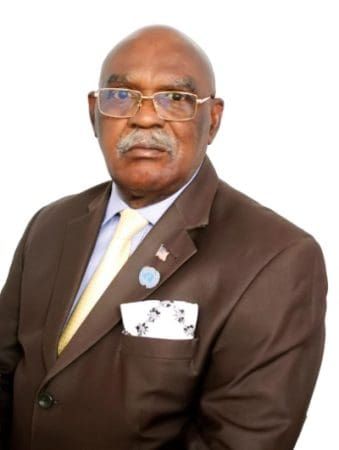
The High Commissioner and Continental Vice-President of the U.N.I.P.G.C.-USA, Amb. Prof. Dean Roberts Jnr, has called on Africans on the continent and in the diaspora to deepen unity and work towards building a common African family rather than viewing the continent as a fragmented resource base.
He said the time had come for Africans to rethink the legacy of the trans-Atlantic slave trade and transform the painful history of displacement, exploitation and division into a renewed commitment to unity, identity and development.
Amb. Roberts, a Global Humanitarian Peace Mediator and Ambassador, security and conflict resolution expert, ordained minister and recipient of a Lifetime Achievement Presidential Award from the President of the United States, made the call at the Internationally acclaimed Ibiaku Clan Development Association family retreat in Uyo, Akwa Ibom State, Nigeria.
The retreat was held under the theme, “Reclaiming Our Story — Ibiaku History, Identity and Heritage.”
His comments followed President John Dramani Mahama’s address to the United Nations General Assembly in New York to commemorate the International Day of Remembrance of the Victims of Slavery and the Transatlantic Slave Trade.
President Mahama had described the trans-Atlantic slave trade as the “gravest crime against humanity”, calling on the international community to acknowledge its devastating consequences.
Amb. Roberts said President Mahama’s intervention was significant because it represented a strong voice from Africa in confronting the historical injustice suffered by millions of Africans.
He said the international resolution received support from a majority of member states, with 123 countries voting in favour, three against and 52 abstaining.
According to him, the adoption of the resolution represented an important acknowledgement of the scale and consequences of the trafficking and enslavement of nearly 13 million Africans.
Amb. Roberts said he did not regard himself as a victim of history but as a survivor of what he described as one of humanity’s gravest crimes and as part of the African diaspora whose present circumstances were shaped by the consequences of the slave trade.
Reclaiming African identity
The humanitarian peace ambassador said the slave trade had inflicted damage that extended beyond the physical removal of Africans from the continent.
He said its consequences included the breaking up of families, loss of names and identities, weakening of traditional clans and the dispersal of African communities across the Americas, the Caribbean and other parts of the world.
According to him, the strategy of “divide, conquer and export” deprived African societies of valuable human capital while creating divisions whose effects continued to be felt generations later.
He therefore urged Africans to move beyond remembrance towards rebuilding relationships, strengthening communities and reclaiming their historical and cultural identities.
He said Africa should no longer be viewed merely as a plantation of resources but as a family whose people, regardless of where they lived, shared a common history and destiny.
Amb. Roberts said Africans in the diaspora also had an important role to play in reconnecting with their ancestral communities and contributing knowledge, resources and expertise to development on the continent.
Commitment to Ibiaku
Turning specifically to the Ibiaku community, Amb. Roberts pledged to use his international engagements to promote the community’s history, identity and interests.
He said he would “speak Ibiaku’s name at international tables”, signalling his commitment to ensuring that the community’s history and development aspirations received wider recognition.
As a professor of criminology and a security and conflict resolution expert, he said he was particularly interested in using his international experience to support initiatives that promoted peace, unity, development and responsible leadership.
He called for maximum cooperation among the people of Ibiaku, Mkpat-Enin, in Akwa Ibom State, both at home and in the diaspora, to build a stronger future for the community.
Amb. Roberts also acknowledged the role of Amb. Dennis Ufot, a United Nations Peace Ambassador, describing him as a new-generation diplomat whose integrity, leadership experience and commitment to service could contribute to the community’s development.
He urged the people to combine their collective strengths and resources to ensure that Ibiaku developed its own potential rather than exporting its destiny.
He said unity, responsible leadership and collective action were essential if African communities were to overcome the lingering effects of historical divisions and create opportunities for future generations.
The retreat, he said, should therefore serve not only as a celebration of Ibiaku’s heritage but also as a platform for reconnecting families, preserving identity and mobilising the community towards sustainable development.