
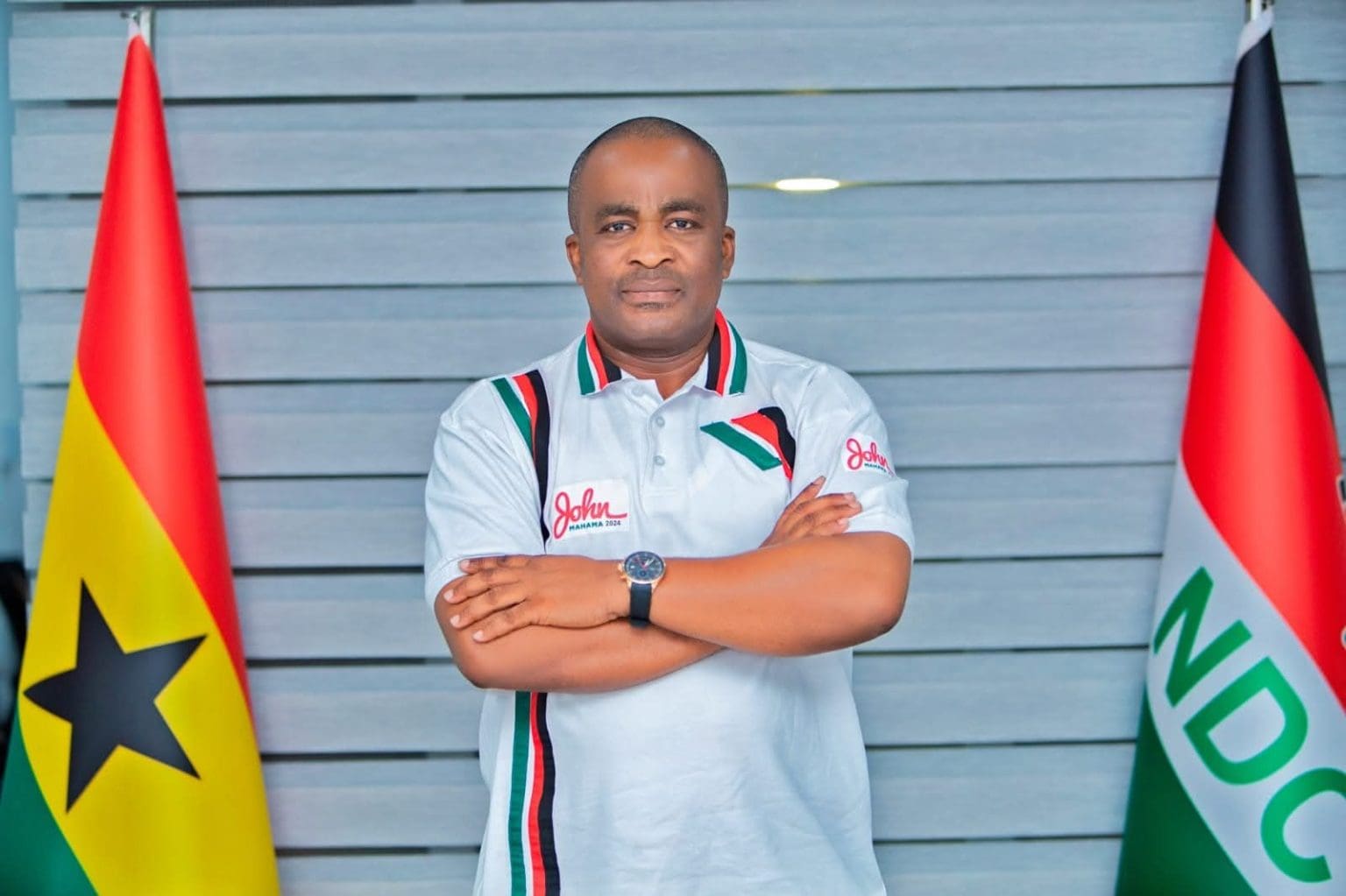
The case being made by supporters of Emmanuel Nii Ashie Moore for another term as Greater Accra Regional Chairman of the National Democratic Congress (NDC) rests largely on the party’s electoral performance in the 2024 general election, the expansion of its parliamentary representation in the region and what they describe as improved organisation and resource mobilisation under his leadership.
Since assuming office in November 2022, Mr Ashie Moore has pursued a programme built around unity, inclusion, grassroots mobilisation, constituency support and electoral victory. His supporters argue that the results achieved during his first term provide a basis for continuity, particularly as the party seeks to consolidate its gains and strengthen its presence across Greater Accra.
A businessman and entrepreneur with international business exposure, Mr Ashie Moore has interests extending beyond Ghana, according to his profile. His public service experience includes serving as Deputy Executive Director of the National Service Scheme (NSS) and Regional Coordinator of the National Youth Employment Programme (NYEP).
He also represented the Adentan Constituency in Parliament from 2013 to 2017, having served as its Member of Parliament before turning his attention to regional party leadership.
His emergence as Greater Accra Regional Chairman followed the NDC regional executive elections held on November 13, 2022, at the Tema Sports Stadium. He polled 327 votes to defeat incumbent chairman Joseph Ade Coker, who obtained 222 votes.
The first major commitment Mr Ashie Moore made to the regional party was to unite its rank and file and create an inclusive leadership structure capable of working towards a common electoral objective.
According to his supporters, he recognised that internal cohesion would be critical to the party’s prospects in the 2024 elections and consequently sought to bring elected executives, former contestants and other party stakeholders on board.
At his maiden meeting with the regional executives, he reportedly emphasised the need for collective responsibility, stressing that their mandate was not simply to occupy positions but to work together to secure victory for the NDC.
The approach was intended to reduce internal divisions, encourage cooperation among party functionaries and establish a shared sense of purpose across the region.
His supporters say this emphasis on unity provided the foundation for the organisational and campaign activities that followed.
Growth in assembly representation
Another commitment was to increase the number of assembly members aligned with the NDC across the Greater Accra Region.
The figures presented by his supporters indicate that, out of the 422 electoral areas in the region, assembly members leaning towards the NDC numbered 233 after the 2019 assembly elections.
Under Mr Ashie Moore’s leadership, they say, the party recorded an additional 74 assembly members, representing an increase of approximately 32 per cent and bringing the total to 307 out of the 422 electoral areas.
They regard the increase as an important measure of the party’s expanding grassroots presence and its ability to build relationships beyond parliamentary and presidential elections.
The assembly-level gains, they argue, helped strengthen the party’s local structures and provided a broader platform for community engagement and mobilisation ahead of the 2024 general election.
99.54 per cent endorsement for Mahama
Mr Ashie Moore’s supporters also point to the NDC presidential primary as another measure of his regional organisation and mobilisation capacity.
They credit him with deploying strategies that culminated in Greater Accra recording a 99.54 per cent endorsement for John Dramani Mahama as the party’s flagbearer for the 2024 general election.
They describe the outcome as a significant demonstration of the region’s support for Mr Mahama and an indication of the chairman’s ability to coordinate the party’s structures around a common political objective.
The endorsement, they argue, gave the regional party a strong platform from which to begin preparations for the general election.
Constituency support and campaign resources
A central feature of Mr Ashie Moore’s leadership, according to his supporters, was the provision of logistics and campaign resources to constituencies across Greater Accra.
They say he supported constituency organisations with campaign materials and other resources to strengthen their mobilisation efforts and ensure that the party’s message reached voters across the region.
T-shirts, aprons and campaign materials promoting the NDC’s 24-hour economy policy were reportedly distributed and became visible in communities throughout Greater Accra.
The supporters contend that the assistance enabled constituency executives and grassroots organisers to intensify door-to-door engagement, retail campaigning and other mobilisation activities.
They further attribute the creation of a well-structured regional collation centre to his leadership. The facility brought together representatives from constituencies across the region to facilitate the collation and transmission of election results.
The arrangement, they say, improved coordination and enabled the regional party to monitor results more efficiently as voting concluded.
29 parliamentary seats in 2024
The strongest evidence cited by Mr Ashie Moore’s supporters is the NDC’s parliamentary performance in Greater Accra in the 2024 general election.
The party increased its parliamentary representation in the region from 20 seats in 2020 to 29 in 2024, a gain of nine seats.
The Electoral Commission’s regional results dashboard records the NDC as winning 29 of Greater Accra’s 34 parliamentary seats in 2024, compared with 20 in 2020.
Election Command Center (ECC)
His supporters attribute the improvement to a combination of constituency resourcing, grassroots mobilisation, sustained campaign activities and stronger coordination among regional and constituency executives.
They also point to the presidential result in the region, where Mr Mahama secured 1,260,832 votes against 681,535 for the New Patriotic Party’s candidate, Dr Mahamudu Bawumia, giving the NDC a margin of 579,297 votes in the results announced for the 32 constituencies at the time.
For them, the outcome demonstrated the effectiveness of the regional campaign machinery and the importance of sustained investment in party structures.
Ablekuma North breakthrough
Another achievement highlighted by the chairman’s supporters is the NDC’s parliamentary victory in Ablekuma North, a constituency they describe as historically difficult for the party.
They say the party had consistently failed to win the seat since 1996 but broke that run in the 2024 election, with its candidate, Ewurabena Aubynn, emerging victorious.
The result was decided by a narrow margin of 209 votes, according to published constituency results.
The supporters regard the breakthrough as evidence of the importance of sustained constituency-level organisation, targeted mobilisation and effective campaign coordination.
The case for continuity
For those advocating another term for Mr Ashie Moore, the argument is that his first tenure has produced measurable organisational and electoral outcomes that should be consolidated rather than disrupted.
They point to the increase in parliamentary seats, the reported growth in assembly representation, the overwhelming endorsement of Mr Mahama in the regional presidential primary and the party’s performance in the 2024 general election as the principal indicators of his record.
They also argue that his experience in business, public administration, Parliament and party organisation gives him exposure to different aspects of leadership and resource management.
The re-election argument, therefore, is built around continuity, consolidation and the expectation that the structures developed during his tenure can be strengthened to improve the party’s performance in subsequent elections.
His supporters maintain that the next phase should focus on retaining the 29 parliamentary seats, pursuing further gains in constituencies where the party remains competitive, strengthening polling-station and branch structures, and sustaining the unity that underpinned the 2024 campaign.
The figures and achievements cited by his supporters provide the basis of their argument for another term. Whether delegates consider that record sufficient will ultimately be determined by their assessment of his performance, the challenges that remain and the competing visions presented in the regional chairmanship contest.

