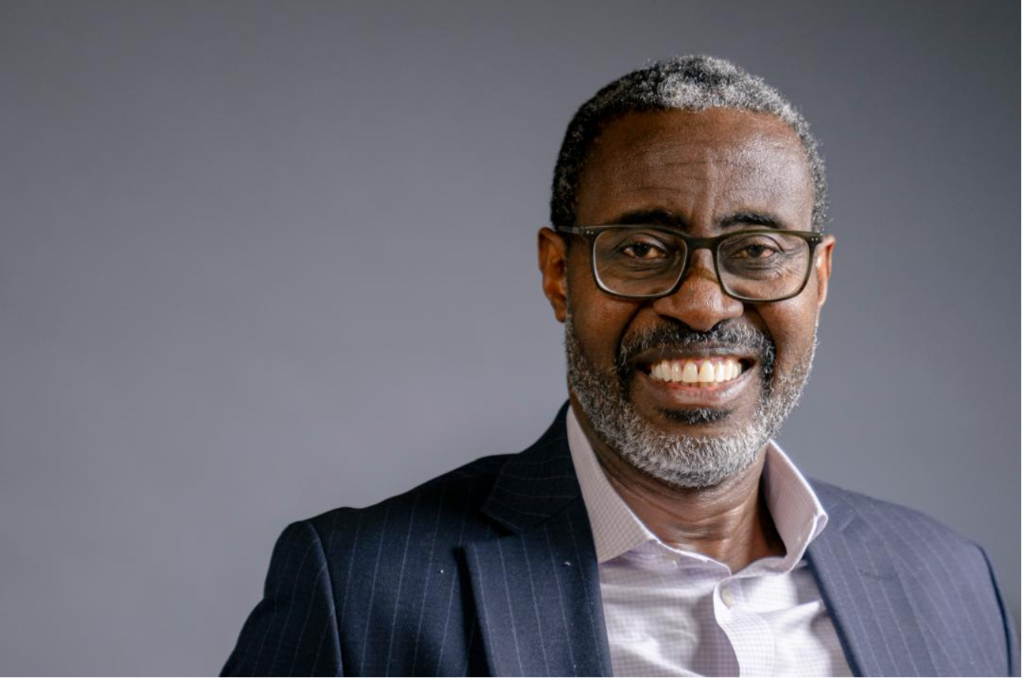
Renowned lawyer Ace Anan Ankomah has warned that the defining challenge of the Artificial Intelligence era will not be technological innovation, but the quality of human character that controls it, urging young graduates to become ethical leaders capable of shaping Africa’s role in a rapidly changing world.
Delivering the 2026 commencement address at SOS-Hermann Gmeiner International College on the theme “Shaping Ethical Leaders for an AI-Driven Future: A Pan-African Responsibility,” Mr. Ankomah said AI is already transforming economies, politics and human interaction, but cannot replace conscience, wisdom or moral judgement.
“We gather at an extraordinary moment in human history. Artificial Intelligence is transforming civilisation before our eyes,” he said. “But no machine can replace human character. Technology may amplify intelligence, but it cannot create wisdom or conscience.”
Citing global technology leaders such as Geoffrey Hinton, Bill Gates, Elon Musk, Steve Wozniak and UN Secretary-General António Guterres, he noted growing international concern about the risks of unchecked AI development.
He referenced recent warnings from AI company Anthropic that future systems could become capable of self-improvement beyond human control.
“Right now, it’s like the AI industry has a gas pedal, but it doesn’t have a brake pedal,” he quoted Anthropic co-founder Jack Clark as saying.
For Africa, he argued, the stakes are even higher.
He cautioned that the continent risks repeating historical patterns of being a late entrant in global technological revolutions unless it actively participates in shaping AI systems and governance frameworks.
“For too long, Africa has entered global revolutions late, as consumers rather than creators,” he said.
“But this time, Africa must not only participate. It must help shape the system.”
He told the graduating class that AI presents both an opportunity and a moral test: whether technology will deepen inequality or expand opportunity, and whether it will serve humanity or exploit it.
“Those questions will not be answered by machines. They will be answered by ethical leaders: you,” he said.
Drawing on his personal history as a student at Mfantsipim School, Mr. Ankomah shared a story of academic struggle and transformation, describing how he moved from being placed in a low-performing class to becoming the school’s top A-Level student in 1986.
He attributed his turnaround to discipline, consistent reading and deliberate practice, stressing that success is built through effort rather than talent alone.
“Failure finds no home where discipline and dedication live,” he said, adding that “dreams are realised through activity, not aspiration alone.”
He encouraged students to embrace hard work, sacrifice and repetition in learning, noting that he often read material “ten times” to master it.
Beyond personal discipline, Mr. Ankomah highlighted the importance of structured education and mentorship systems, contrasting his own schooling experience with modern systems that involve continuous engagement between parents and teachers.
He praised SOS-HGIC for its holistic approach to education, describing it as intentional development that shapes both academic and personal growth.
Turning to AI, he warned that while technology can write essays, draft legal documents and create art, it cannot define justice or exercise compassion.
“AI cannot define justice, feel compassion or choose conscience over convenience. Only human beings can do that,” he said.
He cautioned that innovation without ethics is dangerous, stressing that Africa needs not just engineers and coders, but principled and socially conscious professionals.
“AI makes a good lawyer better and a bad lawyer dangerous,” he said, warning that technological advancement without moral grounding could deepen inequality and injustice.
He outlined five guiding principles for the graduating class: intellectual excellence, moral courage, humility, empathy and service.
He said these values are essential for leadership in a world increasingly shaped by algorithms and automation.
“Ethics without competence is ineffective. Intelligence without humility is dangerous. Efficiency without empathy is incomplete,” he said.
Mr. Ankomah also urged Africa to pursue technological sovereignty and participate in shaping global AI governance, rather than passively adopting systems designed elsewhere.
Quoting African philosophies such as Ubuntu, he emphasised interdependence and collective responsibility as vital contributions Africa can make to the global AI conversation.
“As I often say, if you are not at the table, you are on the menu,” he said, calling for African participation in building both technology and ethical frameworks.
He concluded by challenging graduates to become leaders who combine intelligence with conscience and ambition with compassion.
“History will remember not your grades, but the kind of leaders you became,” he said.
Quoting William Tarrant, he added: “Praise we the wise and brave and strong, who helped the right, and fought the wrong.”
He ended with a personal mantra: “When others sit, stand. When others stand, stand out. When others stand out, be outstanding. And if others are outstanding, be the standard.”