Every time news breaks that someone has taken their own life, society responds in a familiar way: people revisit old conversations, scroll through old photographs, reread messages, and search for warning signs they may have missed.
Then the usual statements follow:
- “But he looked happy.”
- “She was always smiling.”
- “I just spoke to him yesterday.”
Recently, news of a young man taking his own life deeply affected me.
He was described as energetic, full of life, and full of promise—the kind of person many believed had a bright future ahead of him.
Yet he is gone. And once again, people are left trying to understand why.
Are we asking the right questions?
Perhaps we are asking the wrong question. Instead of asking why someone ended their life after it happens, perhaps we should be asking whether our families, workplaces, religious institutions, and legal systems are doing enough to support people before they reach that point.
Article 13 of the 1992 Constitution of Ghana guarantees the right to life.
In legal terms, this protection is often discussed in relation to unlawful killings, state violence, or criminal conduct that leads to death (Constitution of the Republic of Ghana, 1992, art. 13).
But suicide forces us to confront a deeper question: what does the right to life truly mean when someone feels that life itself has become unbearable?
A constitutional right means very little to a graduate who has searched for employment for years without success.
It may feel meaningless to someone drowning in debt.
It may sound hollow to a worker who loses a job and suddenly cannot provide for their family.
It may offer little comfort to a woman constantly questioned about why she has not conceived.
And it may seem distant to someone silently battling depression in a society where mental health struggles are still heavily stigmatized.
Addressing mental health as a legal and social issue
This is why mental health must be treated as both a legal and social issue.
Ghana attempted to address this through the Mental Health Act, 2012 (Act 846), which sought to improve mental healthcare delivery and protect the rights of persons living with mental health conditions (Mental Health Act, 2012 [Act 846]).
For years, Ghana also treated attempted suicide as a criminal offence under section 57(2) of the Criminal Offences Act, 1960 (Act 29).
Rather than treating survivors as individuals in need of urgent psychological support, the law exposed them to criminal sanctions (Criminal Offences Act, 1960 [Act 29], s. 57[2]).
In 2023, Parliament passed the Criminal Offences (Amendment) Act, 2023 (Act 1092), which decriminalised attempted suicide. This reform reflected an important shift in legal thinking: people battling suicidal thoughts need help, not handcuffs (Criminal Offences (Amendment) Act, 2023 (Act 1092).
The law was important. But laws can only do so much. A statute can establish institutions, create rights, and regulate treatment. But no law can force families to be supportive, guarantee compassionate employers, or undo cruel words spoken to someone already struggling to survive.
Personal reflections on life’s challenges
I understand this more than I wish I did because I have experienced seasons where life felt painfully uncertain.
At one point, I lost a well-paying job because of a mistake.
It was an error that I believe could have been handled with greater grace, but the consequence was severe—I lost my source of income.
What followed was not just financial pressure. It was embarrassment, uncertainty, and the frightening reality of having your life disrupted overnight.
In moments like that, hopelessness can become persuasive.
It convinces people that one mistake has ruined everything and that recovery is impossible. Thankfully, life taught me otherwise.
I learned the same lesson during another deeply personal chapter of my life.
For five years after marriage, I was unable to conceive.
That period came with painful questions, silent judgment, unsolicited advice, and the crushing feeling that something was wrong with me.
In many communities, infertility is treated not simply as a medical challenge but as a personal failure. Sometimes women are unfairly labeled.
Sometimes marriages are placed under pressure. Sometimes people suffer in silence.
Eventually, I was blessed with beautiful twin girls.
And every time I look at them, I am reminded that delayed blessings are still blessings.
If I had allowed temporary pain to convince me that my story was over, I would have missed one of the greatest gifts of my life.
The broader impact of suicide
According to the World Health Organization, more than 700,000 people die by suicide globally each year, making it a significant public health concern (World Health Organization, 2023).
Many people make permanent decisions during temporary seasons of pain. The job may come. Healing may happen. Businesses can recover. Dreams can be rebuilt.
Relationships can heal.
Life can surprise you in beautiful ways.
People need support while they wait for things to improve.
This means stronger mental health systems, better workplace policies, compassionate families, friends who listen, churches that pray and also encourage professional help when necessary, and a society that stops mocking vulnerability.
The law can protect life on paper. But as a society, we must create conditions that make people want to keep living.
Because sometimes the person considering giving up is only one breakthrough away from a completely different life.
And sometimes tomorrow carries the very thing today convinced you would never have.
References
- Constitution of the Republic of Ghana, 1992, art. 13.
- Criminal Offences Act, 1960 (Act 29), § 57(2).
- Criminal Offences (Amendment) Act, 2023 (Act 1092).
- Mental Health Act, 2012 (Act 846).
- World Health Organization. (2023). Suicide. https://www.who.int/news-room/fact-sheets/detail/suicide
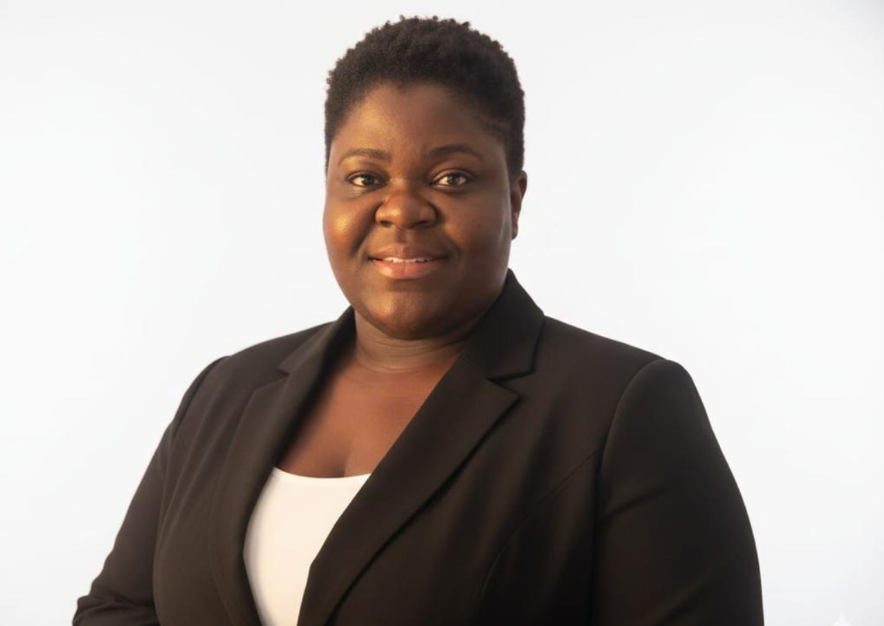
By ANGELA DARKO
The author is a student of the Ghana School of Law
Email: angeladarko243@gmail.com
Contact number: 0205611692