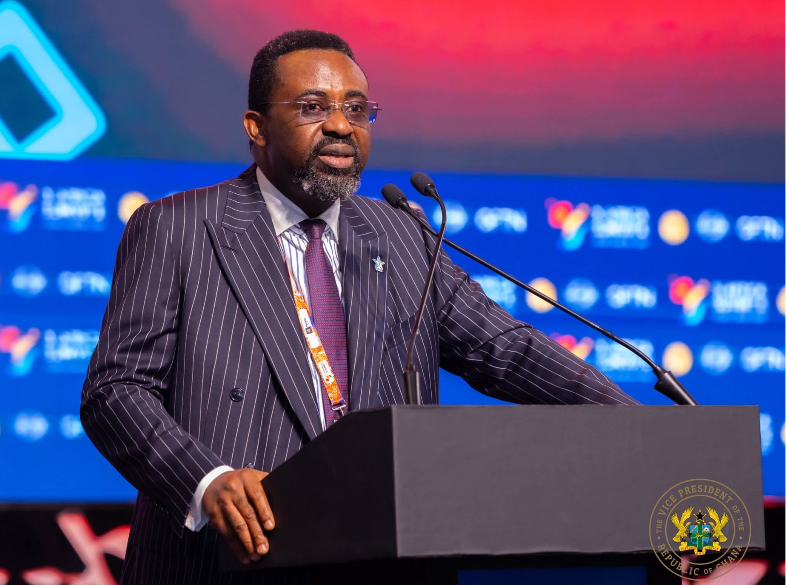
Governor of the Bank of Ghana (BoG), Johnson Pandit Asiama, has reaffirmed the central bank’s commitment to supporting cross-border fintech expansion across Africa, describing digital finance integration as critical to boosting trade, reducing transaction costs, and accelerating economic growth on the continent.
According to him, the next phase of Africa’s financial transformation must move beyond domestic payment systems and focus on building interconnected financial services capable of supporting seamless regional commerce and large-scale value creation.
Speaking at the 3i Africa Summit 2026 in Accra, Dr Asiama said financial technology had become central to Africa’s economic competitiveness, financial inclusion agenda, and broader development strategy.
“The next phase of digital finance must go beyond domestic gains and focus on enabling cross-border services that connect markets, support trade, and create value at scale,” he stated.
The three-day summit, organised by the Bank of Ghana in partnership with the Ghana Interbank Payment and Settlement Systems (GhIPSS) and the Global Finance and Technology Network (GFTN) of the Monetary Authority of Singapore, brought together policymakers, central bank governors, investors, fintech companies, and development partners to discuss the future of Africa’s integrated digital finance ecosystem.
Fragmented systems limiting growth
Dr Asiama explained that Africa’s fragmented financial systems, high transaction costs, and limited interoperability across countries continued to constrain trade and financial inclusion despite years of progress in mobile money and branchless banking.
He said expanding cross-border fintech services would help bridge those gaps by improving financial connectivity, lowering the cost of transactions, and widening access to financial services for businesses and individuals across the continent.
According to him, stronger regional financial integration would also unlock opportunities for Micro, Small and Medium Enterprises (MSMEs), which often struggle to access capital and efficient payment systems for cross-border trade.
“Africa’s financial ecosystem must not only grow; it must mature. Firms with strong potential must have access to the partnerships, capital and infrastructure required to scale sustainably across borders,” he said.
Digital finance moving beyond access
Dr Asiama noted that digital finance was no longer operating at the margins of the financial sector but had become a key driver of value creation, trust building, and economic competitiveness.
Referring to World Bank estimates showing that nearly 49 percent of adults in Sub-Saharan Africa now have access to digital financial accounts, he said the continent’s challenge was no longer simply expanding access, but ensuring that digital finance translated into tangible economic value for businesses and households.
He said Africa must now focus on building the next layer of digital financial services, including merchant payments, embedded finance, digital credit, supply chain finance, and cross-border payment systems.
“The challenge is no longer building systems. It is connecting them,” he stressed.
Call for stronger collaboration
The Governor called for greater coordination among regulators, financial institutions, fintech companies, and technology providers to create a more integrated African financial ecosystem.
He said stronger collaboration would be required to improve data quality, strengthen digital identity systems, and reinforce Know-Your-Customer (KYC) frameworks across jurisdictions.
According to him, weak authentication systems could expose digital finance platforms to fraud risks, weaken credit quality assessments, and undermine trust within the financial system.
Regulatory reforms underway
Dr Asiama further stressed the need for transparent regulatory processes and timely policy decisions to encourage innovation while maintaining stability and consumer confidence.
He disclosed that the Bank of Ghana was already implementing several initiatives aimed at supporting innovation in a structured and predictable manner.
These include advancing regulatory frameworks for virtual assets, developing digital credit guidelines, progressing open banking initiatives, and supporting cross-border fintech operations.
“These are not isolated initiatives. They are part of a coherent effort to ensure that the financial system evolves in a way that is structured, predictable, and capable of supporting innovation at scale,” he said.
AfCFTA opportunities
Dr Asiama explained that Africa’s growing digital finance ecosystem presented enormous opportunities for digital trade and regional economic integration, particularly under the African Continental Free Trade Area (AfCFTA).
He noted that cross-border fintech systems would become increasingly important in facilitating supply chain finance, embedded financial services, and seamless merchant payments across African markets.
“The question before us is whether Africa will simply adopt the next phase of finance, or help to shape it,” he said.
Balancing innovation and regulation
The Governor also highlighted the importance of balancing innovation with regulatory discipline, insisting that Africa’s digital finance growth must occur responsibly and sustainably.
He said regulation must remain “firm” even as policymakers work to encourage investment and innovation within the financial sector.
According to him, the success of the 3i Africa Summit 2026 would ultimately depend on how effectively African countries align their priorities, coordinate regulations, and build systems capable of operating at continental scale.
“On the foundations of innovation, investment and impact, our goal must be to ensure that these pillars are not only articulated, but effectively aligned through strong partnerships and sustained investment,” he stated.
Summit focuses on integration and interoperability
The summit featured extensive discussions on fintech innovation, mobile money expansion, digital identity systems, artificial intelligence, payment interoperability, and regulatory harmonisation across Africa.
Participants agreed that while the continent had made significant progress in financial inclusion through mobile money over the past decade, the next stage of development would depend heavily on deeper integration of payment systems, stronger digital infrastructure, and coordinated policy frameworks capable of supporting seamless cross-border financial activity.