…A pride we should uphold.
Currency, regardless of the country it belongs to, deserves to be handled with care and a certain level of pride.
Yet here in Ghana, the story is often different.
Welcome to Ghana, where cedi notes are squeezed, crumpled, folded, torn and sometimes stained with all kinds of substances; soap, soup, oil, water and whatever else you can imagine. And sometimes the smell! You would wash your hands over and over…I often wouldn’t like to put those notes in my purse or bag, but do I have a choice?
Interestingly, we are often quick to admire and carefully preserve foreign currencies when they come into our possession. We fold them neatly, keep them safely and sometimes treat them almost like precious possessions.
But when it comes to our own Ghana cedi, the same level of care does not always apply.
So, why don’t we treat our currency with the respect it deserves?
I started thinking about this after an experience on a trotro on my way home from work.
A heated argument broke out between a conductor and a passenger.
The bone of contention?A GHC50 note.
The conductor, dressed in a black-and-white striped shirt, a hat and dark sunglasses, was going around collecting fares. When he got to the last row, just behind me, one of the passengers handed him a GHC100 note.
Everything seemed normal until the conductor returned the passenger’s balance.
Suddenly, I heard:
“Ah, mate, why are you giving me this money?”
The conductor appeared puzzled.
“Ayɛ dɛn?” — What’s wrong with it?
The passenger, clearly unhappy with the note, responded:
“Ah, is this how the money I gave you looked?”
The conductor’s response was rather nonchalant:
“Ɛnoa na me wɔ.” — That’s all I have.
And that was the beginning of a heated exchange.
The passenger refused to accept the GHC50 note, insisting that it was in poor condition. Eventually, another passenger had to pay for him with coins so the conductor could return the passenger’s GHC100 note.
As I sat there listening, one question kept coming to mind:
How did that GHC50 note get into circulation in the first place?
It certainly did not become worn out, dirty or damaged by itself.
Someone had handled it before that moment. Someone had probably folded it, squeezed it into a pocket, stuffed it into a bag or simply treated it without much thought.
And eventually, that same note found its way into someone else’s hands.
It wasn’t the first time I had encountered such a situation.
On another early-morning ride to work, a conductor gave a passenger her balance, which included a GHC10 note that had been repaired with cello tape.
Again, an argument broke out.
The disagreement continued throughout the journey from Sowutuom to Lapaz.
By the time we arrived at Lapaz, the passenger wanted to report the conductor to his “master” ; the operator of the vehicle.
But the “master” could only explain that they also receive such notes from passengers.
I am almost certain the woman left disappointed, and honestly, I understood her frustration.
But the conductor had a point too.
Where exactly does the responsibility begin and end?
Do we blame the conductor for handing over a damaged note? The passenger who refuses to accept it? The person who first damaged it? Or the countless people who continue to pass such notes from one person to another simply because they don’t want to be stuck with them?
Perhaps the bigger issue is that we have normalised it.
Everyone seems to be passing the responsibility to someone else. The passenger doesn’t want the damaged note, the conductor says he received it from another passenger.
The next person will likely do the same, and somewhere along the line, the cycle continues.
But who started it?
More importantly, who is going to stop it?
We fold money into tiny spaces, squeeze notes into pockets, crumple them into balls, place them on dirty surfaces, write on them, tape them when they tear and continue putting them back into circulation.
Then, when someone gives us a damaged note, we suddenly become upset.
Of course, worn out currency will naturally occur through circulation. Cedi notes change hands countless times every day, and some level of wear and tear is inevitable. But there is a difference between normal wear and tear and deliberate careless handling.
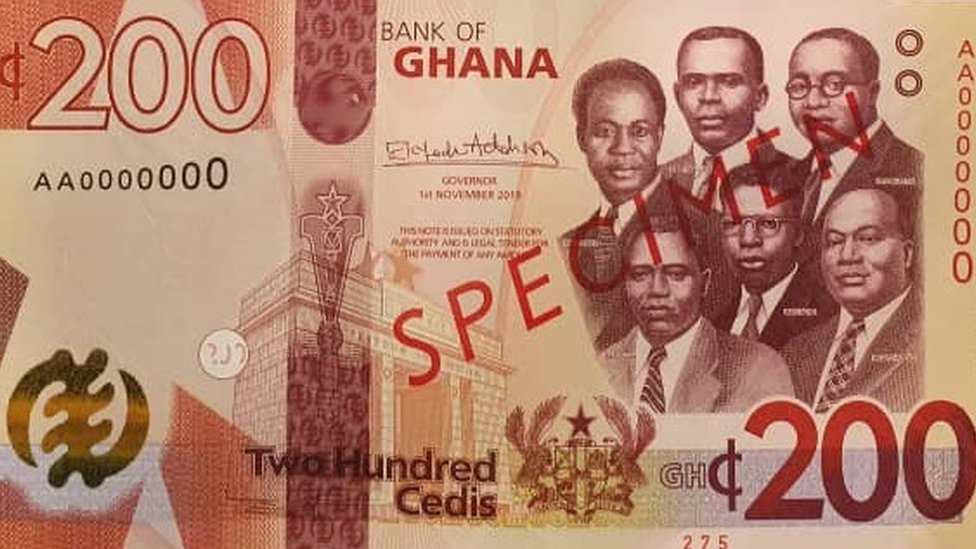
The Ghana cedi is more than a piece of paper.
It is our legal tender. It is what we use to pay our fares, buy food, settle bills, pay school fees and conduct our everyday business. It represents our economy and, in a small but significant way, forms part of our national identity.
If we can carefully preserve foreign currencies when they come into our possession, why can’t we extend the same courtesy to our own?
Perhaps this should begin with something as simple as changing our attitude towards money.
This isn’t about treating a banknote like a priceless artefact, it is simply about care.
Keep notes flat where possible. Avoid unnecessary folding and crumpling. Do not deliberately write on or stain them. And when you receive a badly damaged note, don’t simply pass it on to the next person because you don’t want it.
If a note is genuinely damaged beyond reasonable use, there are proper channels through which it can be exchanged (The Bank) We don’t have to keep passing the problem around.
Because if everyone keeps passing the problem along, who ultimately pays the price?
Perhaps it is time we stopped seeing the care of our currency as someone else’s responsibility, and own it.
The next time a clean Ghana cedi note lands in your hands, pause before squeezing it into your pocket or stuffing it into the corner of your bag.
Handle it with care.
Because pride in our country is not only demonstrated through flags, anthems and national celebrations, sometimes, patriotism exists in the seemingly insignificant things we do every day.
Sometimes, it is simply taking care of what belongs to us.
By: Hellen Grace Akomah
The Ghana cedi is ours. It is high time we treated it that way.