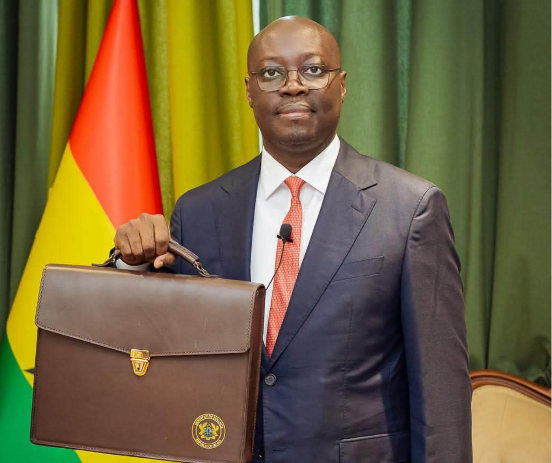
Government has accumulated GH¢15.6 billion in the Sinking Fund Cedi Account and is on course to build a GH¢30 billion war chest by the end of 2026 to fully redeem the first batch of Domestic Debt Exchange Programme (DDEP) bonds maturing in February 2027.
Presenting the 2026 Mid-Year Fiscal Policy Review in Parliament, Finance Minister Dr Cassiel Ato Forson said the strengthened Sinking Fund demonstrates government’s determination to restore confidence in Ghana’s public finances by preparing well ahead of major debt repayments rather than waiting until obligations fall due.
According to him, the Sinking Fund had accumulated GH¢15.6 billion as of July 22, 2026, putting government firmly on course to achieve its target of GH¢30 billion by the end of the year.
Dr Forson explained that the amount would be sufficient to repay GH¢30 billion worth of DDEP bonds scheduled to mature in February 2027, marking the first major repayment under the domestic debt restructuring programme.
GH¢111bn debt wall ahead
The Finance Minister warned that Ghana faces a daunting debt repayment schedule over the next two years.
He disclosed that GH¢58 billion worth of DDEP bonds will mature in 2027, while another GH¢53 billion will fall due in 2028.
Together, the two maturities amount to GH¢111 billion, representing one of the largest domestic debt repayment obligations in Ghana’s history.
“In two years alone, Ghana has to repay GH¢111 billion,” Dr Forson told Parliament.
He argued that the repayment profile exposes weaknesses in the design of the Domestic Debt Exchange Programme.
According to him, the restructuring exercise merely postponed Ghana’s debt burden instead of resolving it.
“This shows that the Domestic Debt Exchange Programme was poorly structured. It was not designed to solve Ghana’s debt problem. It was done deliberately to kick the can down the road,” he stated.
Preparing ahead
Dr Forson stressed that meeting debt obligations of such magnitude requires careful planning rather than emergency financing.
“Meeting obligations of this magnitude requires advance planning, not last-minute scrambling,” he said.
He explained that this informed government’s decision to strengthen the Sinking Fund by systematically setting aside resources to meet inherited debt obligations.
The Finance Minister noted that under the 2026–2029 Medium-Term Debt Strategy, government committed to transferring 7 per cent of non-oil tax revenues, together with proceeds from domestic bond issuances, into the Sinking Fund Cedi Account.
The accumulated resources, he said, will serve as a dedicated reserve to redeem the large DDEP maturities due in 2027 and 2028.
Building investor confidence
Dr Forson said the strategy is intended not only to ensure timely debt repayments but also to rebuild Ghana’s credibility in international financial markets.
He argued that governments strengthen investor confidence by demonstrating the capacity to prepare well in advance for future obligations.
“Countries do not build credibility by paying debt only when they fall due. They build credibility by preparing for those obligations long before they fall due,” he said.
According to him, the growing Sinking Fund sends a strong signal to investors, credit rating agencies and the Ghanaian public that the government is committed to prudent debt management.
“This is the signal the Sinking Fund sends to investors, credit rating agencies and the people of Ghana, making it clear that this Government plans ahead, honours its commitments and manages the public finances better,” he stated.
Legal reforms planned
To strengthen the credibility of the debt repayment framework, Dr Forson announced plans to amend the Sinking Fund provisions of the Public Financial Management Act.
He said government is also developing dedicated Sinking Fund Regulations aimed at improving governance, transparency, accountability and reporting in the management of the Fund.
The proposed reforms are expected to institutionalise the Sinking Fund as a permanent mechanism for managing future debt obligations and reducing refinancing risks.
The Finance Minister said the measures form part of government’s broader strategy to restore fiscal sustainability, improve debt management and reassure both domestic and international investors that Ghana will meet its obligations in a predictable and transparent manner.