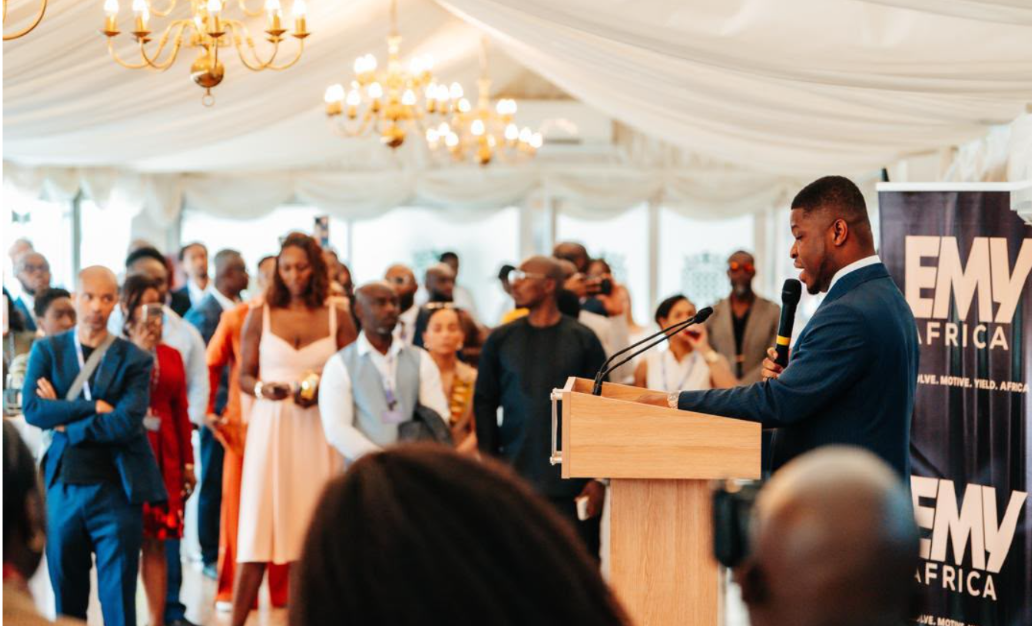
The Chief Executive Officer of the Ghana Gold Board (GoldBod), Mr Sammy Gyamfi, has issued a strong call on the global African diaspora to move beyond remittances and become strategic partners in Africa’s economic transformation by investing in enterprises, building institutions and helping the continent retain more value from its natural resources.
Delivering a keynote address at the EMY Africa — Africa Rising Symposium in London on July 30, 2026, on the theme “The growing relationship between Africa and its Global Diaspora, and why this moment matters,” Mr Gyamfi said Africa’s relationship with its diaspora must evolve from emotional connections into structured partnerships capable of creating jobs, industries and sustainable wealth.
He urged the diaspora to channel their capital into African businesses that produce, process, export, employ and scale, arguing that the continent’s future depended on Africans becoming owners of the value generated from their resources and talents.
“Let African diaspora capital finance African enterprises that produce, process, export, employ, and scale-up,” he said.
He further encouraged diaspora investors to build relationships with Africa based on mutual respect, bankable ideas, shared risks and shared rewards, while investing in productive sectors, establishing mentorship platforms and creating investment vehicles that can support long-term economic growth.
Mr Gyamfi said the diaspora could also play a critical role in helping Africa retain more value from its resources through value addition and local processing.
“Let the African diaspora help Africa keep more value from what Africa produces through value addition and value retention,” he said.
However, he stressed that African governments also had a responsibility to create the right environment for diaspora investment to flourish through policy stability, respect for contracts, strong institutions, transparency and fair treatment of both citizens and investors.
Africa’s rise must become reality
Mr Gyamfi said Africa’s economic rise could no longer remain a slogan or a theme for international conferences but must translate into tangible improvements in the lives of Africans on the continent and abroad.
According to him, the central challenge facing Africa was not whether the continent had potential, but who would control and benefit from that potential.
“Africa is rising in population, in ambition, in enterprise, and in global strategic importance. But the defining question is this: who will own Africa’s rise?” he asked.
He questioned whether Africa would continue to serve mainly as a supplier of raw materials, cheap labour and consumer markets for other economies, or whether it would emerge as a continent of producers, innovators, owners, financiers and builders.
Mr Gyamfi described the global African diaspora as one of the continent’s greatest strategic assets, containing enormous reserves of expertise, technology, capital, networks and experience that could accelerate Africa’s development.
“The Global African Diaspora is not a sentimental extension of Africa. It is one of Africa’s most powerful and strategic assets,” he said.
Youth opportunity requires investment
The GoldBod CEO said Africa’s youthful population represented both a major opportunity and a significant responsibility.
He referenced projections showing that Africa’s youth population would continue expanding in the coming decades, stressing that harnessing this demographic advantage required deliberate investment in skills, financing, technology and entrepreneurship
He warned that failure to create opportunities for young Africans could turn the continent’s demographic advantage into a crisis characterised by unemployment, irregular migration and declining confidence in Africa’s future.
“The African youth does not need pity. The African youth needs access; access to skills, financing, credit, markets, technology, mentorship and institutions that reward effort,” he said.
He argued that the diaspora could help bridge these gaps by supporting entrepreneurship, transferring expertise and creating pathways for young Africans to participate meaningfully in economic development.
From remittances to strategic investment
Mr Gyamfi acknowledged the important role remittances had played in supporting African families and communities, including funding education, healthcare and housing.
However, he said the time had come for the diaspora to complement remittances with productive investments that create sustainable economic opportunities.
“Remittances are lifelines but investment builds self-sustaining engines,” he said.
“Remittances help households survive but investment helps economies transform.”
He encouraged diaspora professionals to contribute not only financial resources but also skills, networks and institutional knowledge.
According to him, expertise from African professionals working across the world — including engineers, bankers, software developers, researchers and business leaders — represented valuable capital that could help transform African economies.
“My appeal to the global African diaspora therefore is this: do not only send money home; send systems home. Do not only build houses; build enterprises,” he said.
GoldBod driving value retention
Speaking from the perspective of Ghana’s gold sector, Mr Gyamfi said Africa’s mineral wealth had historically benefited external economies because the continent often exported raw materials while importing finished products.
He said Ghana’s establishment of the GoldBod represented an effort to change that model by creating a more organised, transparent and value-focused gold ecosystem.
According to him, GoldBod demonstrates what is possible when government moves beyond regulation and acts as a strategic architect of national value creation.
He said the institution had helped formalise Ghana’s gold supply chain, address smuggling, improve foreign exchange generation and create stronger opportunities for responsible gold trading and value addition.
Mr Gyamfi also disclosed that GoldBod would soon introduce gold-backed tokenised investment assets aimed at creating new opportunities for Africans to participate in the ownership of the continent’s mineral wealth.
He said Africa’s natural resources must no longer translate into wealth accumulation elsewhere while African communities remain trapped in poverty.
“Africa’s rise must mean African resources creating African industries, African jobs, African brands, African wealth, African reserves, and African dignity,” he said.
Building Africa on African terms
Mr Gyamfi argued that Africa’s transformation required more than speeches, conferences and investment promises.
He said capital alone was insufficient unless it was organised into institutions, businesses and investment structures capable of surviving beyond individuals and political cycles.
He outlined a vision of Africa’s future in which the continent becomes an owner, innovator, producer and market-maker rather than simply a supplier of resources and consumers for global markets.
“This will require African governments that are serious, African businesses that are ambitious, African youth that are equipped, and an African diaspora that sees itself not as distant relatives of the continent, but as stakeholders in its destiny,” he said.
Mr Gyamfi concluded by urging Africans at home and abroad to take responsibility for shaping the continent’s future.
“Let us move beyond remittances into investment. Let us move beyond speeches into action. Let us move beyond asking what Africa can become and start building what Africa must become,” he said.
He added that Africa’s youth were waiting for opportunity rather than charity, while the continent’s resources were waiting for African ownership.
“If we build it together, continent and diaspora, youth and elders, public sector and private enterprise, capital and conscience, then Africa’s rise will not be a performance staged for others. It will be a transformation owned by Africans,” he said.