The New Patriotic Party (NPP) Minority Caucus in Parliament has launched a strong attack on the National Democratic Congress (NDC) government, accusing it of systematically attempting to weaken Ghana’s anti-corruption framework and erode the independence of the Office of the Special Prosecutor (OSP).
According to the Minority, recent legal and policy developments under the NDC administration amount to a deliberate effort to “restore executive control over prosecutions,” a move they argue undermines the very foundation on which the OSP was created.
The Caucus warned that the government’s actions risk returning Ghana to a system where anti-corruption enforcement is subject to political influence, rather than insulated from it.
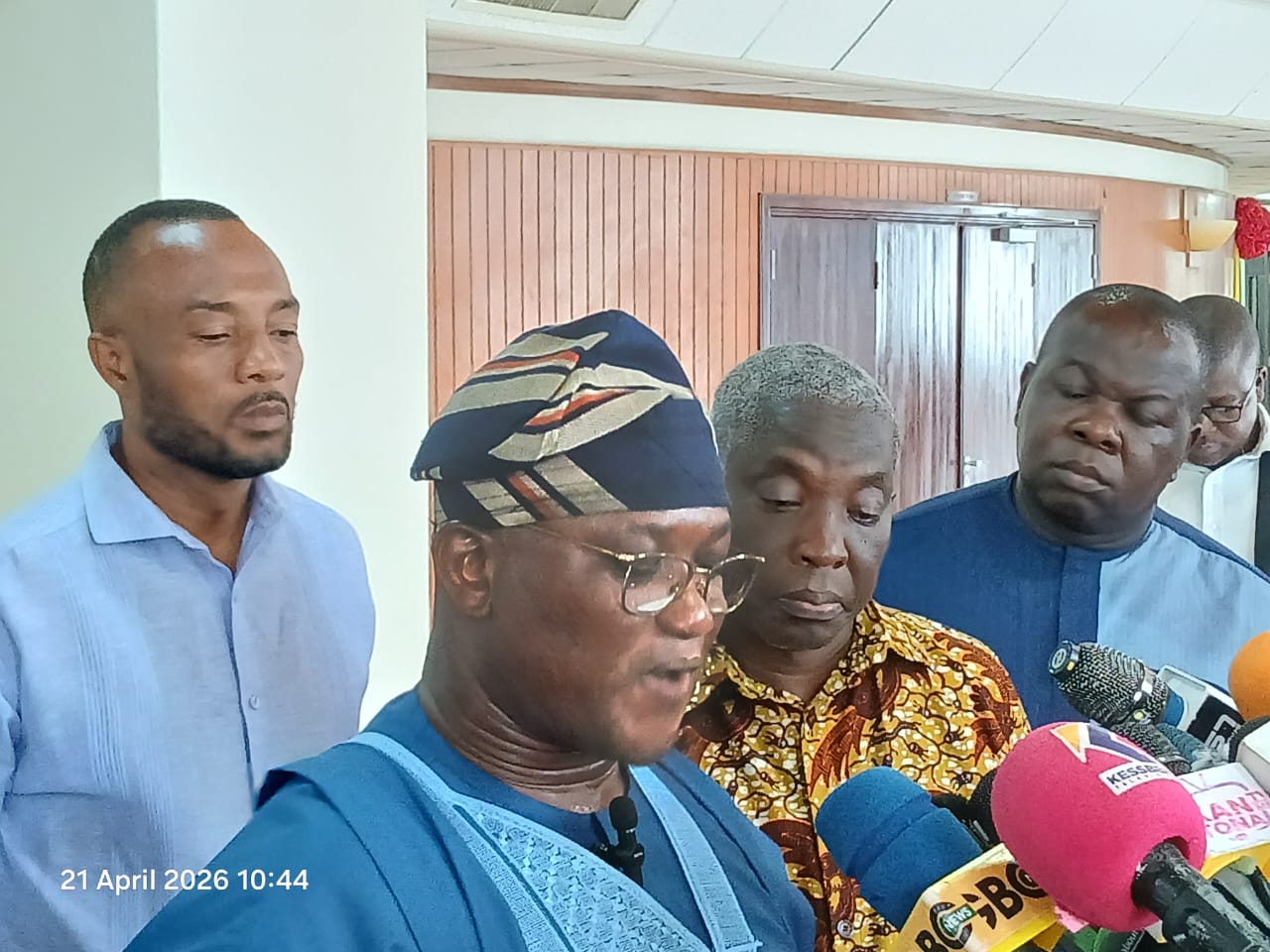
Addressing the Parliamentary Press Corps in Parliament on Tuesday, the Deputy Ranking Member of the Constitutional and Legal Affairs Committee, Mr Alhassan Tampuli Sulemana, said the OSP was established precisely because past experience showed that governments could not be trusted to prosecute themselves.
“The OSP was created because government cannot be relied upon to prosecute itself,” he said. “It was created because the Attorney-General, however distinguished, serves at the pleasure of the President.”
He argued that Ghana’s anti-corruption system was deliberately designed to remove prosecutorial discretion from the executive, in order to prevent political interference in corruption cases.
However, he alleged that recent developments—including legislative proposals, court-related processes, and policy interpretations—suggest an attempt to reverse those safeguards.
According to him, the NDC government is seeking to reintroduce a structure that allows the executive to influence or determine which corruption cases proceed and which do not.
“What the NDC government has done through the repeal bill, through petitions, and now through court processes is to attempt to restore exactly the structure of vulnerability that the OSP was designed to eliminate,” he stated.
Mr Sulemana also took issue with interpretations attributed to the Deputy Attorney-General, which suggest that the OSP should seek clearance from the Attorney-General before initiating prosecutions.
He warned that such a model would effectively place anti-corruption prosecutions under direct executive control.
“If you follow that argument, every case must go through the Attorney-General. That means every suspect, every file, every decision is subject to political approval. Is that the intention of the law?” he asked.
The Minority MP for Gushegu argued that such an arrangement would open the door to selective prosecution, where politically connected individuals could be shielded while others are pursued.
He insisted that Ghana’s anti-corruption fight would be weakened if prosecutorial independence is compromised.
“This will allow case-by-case, ally-by-ally determination of which corruption cases proceed and which die,” he cautioned.
The Minority Caucus pledged to resist any attempt to curtail the powers of the OSP, insisting that it will use parliamentary, constitutional and legal mechanisms to defend its independence.
“We will not rest until this is resisted,” Mr Sulemana declared.
He further argued that the credibility of Ghana’s anti-corruption reforms is now under threat, barely months into the new administration, warning that the country risks reversing hard-won gains.
He maintained that until the Supreme Court provides a definitive ruling, the Office of the Special Prosecutor Act (Act 959) remains valid and enforceable, and the institution must continue to operate within its mandate.
“Until the Supreme Court speaks, the OSP stands, and the principle that no one is above the law must remain intact,” he said.
Meanwhile, an Accra High Court has ruled that the OSP does not have constitutional authority to independently prosecute criminal cases and must refer such matters to the Attorney-General’s Department.
The ruling, delivered on Wednesday, April 15, 2026, by Justice John Eugene Nyadu Nyante, places ongoing OSP prosecutions in abeyance pending further legal clarification.
The Court held that while the OSP may investigate corruption-related offences, the power to initiate prosecutions lies exclusively with the Attorney-General under the Constitution.
The development has intensified political debate over the future of the OSP, with the Minority warning that any attempt to weaken its independence would undermine public confidence in Ghana’s fight against corruption.