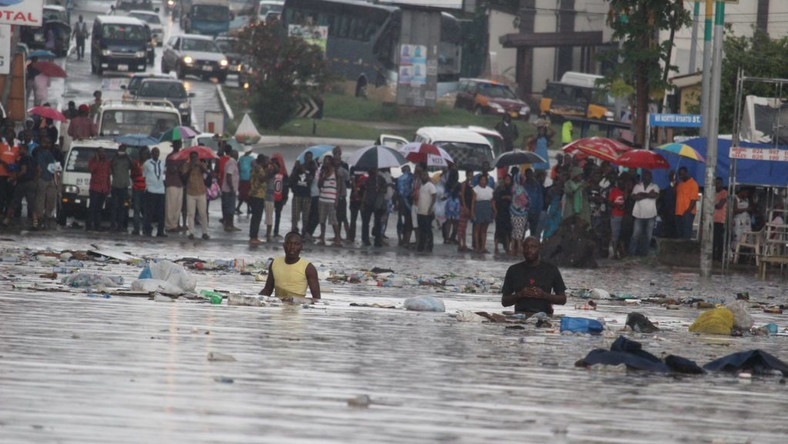
President John Dramani Mahama has disclosed that nearly 48,000 people were displaced by the devastating floods that swept through parts of the Greater Accra Region following the heavy downpour on June 29.
The President made the disclosure on Friday, July 3, during a visit by Sierra Leonean President and Chair of the Economic Community of West African States (ECOWAS), Julius Maada Bio, who travelled to Ghana to express solidarity with the country following the disaster.
Speaking to the media after bilateral talks, President Mahama said the floods had left thousands homeless, with 12 deaths confirmed and seven others still missing.
“This downpour was huge, and we estimate that about 48,000 people were rendered homeless by the downpour. Twelve are confirmed dead, and seven are still unaccounted for. We have asked the military and the joint task force to mobilise immediately and restore normalcy as quickly as possible,” he said.
The President said personnel of the Ghana Armed Forces had already begun clearing blocked waterways, removing refuse and clearing debris left behind by the floods to facilitate recovery efforts.
“The Army has started to clear waterways, clear garbage and clear debris that was thrown all over the city by the rainfall. We expect that within a week or two, things will normalise,” he added.
President Mahama further announced that the Minister for Finance, Dr. Ato Forson, had released funds from the government’s Contingency Fund to support emergency relief and flood mitigation measures.
He said the National Disaster Management Organisation (NADMO), in collaboration with other state agencies, would soon begin distributing relief items, including blankets, mattresses and other essential supplies, to affected households.
President Mahama expressed gratitude to President Bio and the people of Sierra Leone for their message of sympathy and solidarity.
“We appreciate his message of sympathy,” he said.
The June 29 downpour triggered widespread flooding across several parts of the Greater Accra Region, causing loss of life, displacing thousands of residents and destroying homes, businesses and public infrastructure. Government agencies, the military and emergency responders continue rescue, relief and recovery operations in affected communities.