The Ghana Gold Board (GoldBod) has aggregated and exported 85.4 tonnes of artisanal and small-scale mining (ASM) gold valued at US$11.6 billion between January 1 and October 20, 2026, while local refineries processed 18.7 tonnes, representing 76 per cent of the 25 tonnes aggregated since August, as the country intensifies efforts to retain more value from its gold resources.
The ASM exports exceeded the 76 tonnes of gold worth US$11.1 billion exported by large-scale mining companies over the same period, while local refining reached 95 per cent of ASM gold purchased and exported in October, with 5.4 tonnes processed out of 5.7 tonnes.
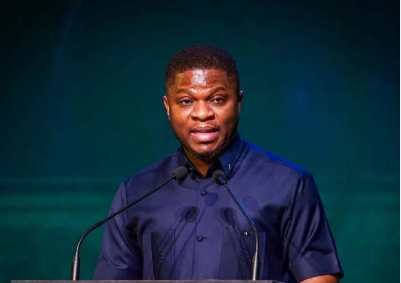
The figures reflect Ghana’s expanding capacity to formalise gold trading, increase foreign exchange inflows, strengthen national reserves and develop domestic refining, according to the Chief Executive Officer (CEO) of GoldBod, Mr Sammy Gyamfi.
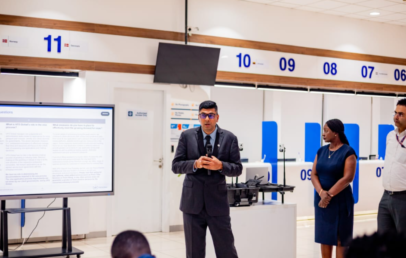
Speaking at the Mining in Motion forum in Accra on Tuesday, October 20, 2026, he said the performance formed part of a broader strategy to strengthen indigenous participation in the gold value chain and advance mineral sovereignty in Ghana and across Africa.
He said the board remained on course to surpass its 2025 performance, when ASM gold exports rose to approximately 104 tonnes from 63 tonnes in 2024, exceeding large-scale gold exports for the first time in Ghana’s history.
The sector generated US$10.8 billion in foreign exchange in 2025, helping to support foreign exchange market intermediation, strengthen reserves and improve currency stability.
Mr Gyamfi said the gains demonstrated how reforms could recover gold previously lost to smuggling and illicit trading and bring it into the formal economy, describing the process as a “production clawback”.
He argued that GoldBod had not created new gold production but had recovered into official trading channels gold that was already being mined but had escaped formal recording and export systems.
Reforms plug gold trade leakages
The reforms followed years of significant discrepancies between Ghana’s reported gold exports and the volumes recorded by its trading partners.
Mr Gyamfi cited a SWISSAID analysis of UN Comtrade mirror data that identified a 229-tonne gap, valued at approximately US$11.4 billion, between Ghana’s reported gold exports and corresponding imports declared by trading partners from 2019 to 2023.
He also cited official data showing that recorded small-scale gold exports declined from 75.7 tonnes in 2018 to 53.4 tonnes in 2019 and 39.3 tonnes in 2020.
Following the introduction of a three per cent withholding tax on unprocessed small-scale gold, recorded exports fell to 3.4 tonnes in 2021, valued at US$185 million.
He argued that the sharp decline reflected the movement of gold trading beyond official channels rather than the disappearance of the mineral or a corresponding cessation of production.
In many cases, he said, foreign exchange generated from the limited exports passing through formal channels was not repatriated to Ghana.
To address the leakages, GoldBod introduced a series of reforms aimed at formalising the sector, improving traceability and ensuring that more of the proceeds from gold exports accrued to the country.
The measures included reserving direct trading in local gold markets for Ghanaians, introducing a four-tier licensing regime and establishing a transparent aggregation system based on regular intra-day publication of uniform and competitive prices.
Official receipting and a digital stock-booking system were introduced to curb under-declaration, hoarding and smuggling, while state-funded liquidity for local gold purchases was increased and access to financing expanded under transparent arrangements.
GoldBod also established a dedicated task force and inspectorate, deploying them nationwide to monitor licensed traders, strengthen market surveillance and gather intelligence on illegal gold trading and smuggling.
Incentives were introduced for whistleblowers, while miners and traders were sensitised to the new legal framework.
Mr Gyamfi said the results were evident in the rise in ASM exports to approximately 104 tonnes in 2025, generating US$10.8 billion in foreign exchange.
He attributed part of the improvement in Ghana’s foreign exchange position to the increased inflows, which supported reserve accumulation and contributed to the cedi’s reported 41 per cent appreciation against the US dollar in 2025.
He said the 2026 performance indicated that the sector’s contribution to the formal economy was continuing to grow.
Local refining gains momentum
Beyond formalising trade, GoldBod is seeking to transform Ghana from an exporter of largely unprocessed gold into a country that captures more value through domestic refining.
Mr Gyamfi said local refining had increased significantly, with 18.7 tonnes of the 25 tonnes of ASM gold aggregated since August refined and exported.
In October alone, 5.4 tonnes of the 5.7 tonnes of ASM gold purchased and exported underwent local refining.
He said 30 per cent of the output of large-scale mining companies purchased by the Government under the Ghana Accelerated National Reserve Accumulation Program (GANRAP) was also being refined locally.
Additionally, 1.8 tonnes of large-scale gold valued at US$224 million had been purchased and delivered to the Bank of Ghana this year to strengthen the country’s gold reserves.
The GoldBod chief executive said expanding domestic refining capacity was essential to ensuring that Ghana retained more economic benefits from its mineral wealth rather than exporting gold predominantly in raw form.
He commended the management of Gold Coast Refinery and Royal Ghana Gold Refinery for developing strategies to secure accreditation from the London Bullion Market Association (LBMA) within the next three to five years, with regulatory guidance from GoldBod.
Such accreditation, he said, would support the international competitiveness and credibility of Ghana’s refining industry and strengthen the country’s ability to capture greater value from gold exports.
“Extraction without intentional policy does not automatically produce transformation. Mines do not build nations by accident,” he said, emphasising the need for deliberate policies, strategic partnerships and effective implementation.
GoldBod targets greater Ghanaian ownership
Mr Gyamfi said mineral sovereignty must extend beyond ownership of natural resources to encompass control over financing, equipment, technology, processing, trading and other high-value activities in the mining industry.
He said Ghana was addressing one of the major barriers to greater indigenous participation in mining: the high cost and risks associated with geological investigations.
Under its Mine Support Programme, GoldBod is partnering the Ghana Geological Survey Authority to conduct geological studies in selected areas to identify commercially viable deposits and attract credible international investors.
The investigations are ongoing in the Upper West and Ashanti regions, including areas around Bibiani, to develop a portfolio of investment-ready mineral assets.
According to Mr Gyamfi, the studies are expected to reduce geological uncertainty and investment risks, making the deposits more attractive to investors while strengthening Ghana’s negotiating position in future mining ventures.
He said the approach would help the country move beyond reliance on royalties and free-carried interests towards securing greater equity ownership in sustainable mining operations.
The initiative, he added, was intended to ensure that Ghana secured a more substantial share of the long-term financial returns from its mineral resources.
Call for continental cooperation
Mr Gyamfi called for stronger cooperation among African countries to tackle illicit mineral flows and address persistent constraints involving financing, technology and the retention of value from natural resources.
He said Ghana’s experience in formalising gold trading, expanding indigenous participation and increasing local value addition could contribute to a continental framework for mineral sovereignty and governance.
He cautioned, however, that Ghana’s model should not be treated as a rigid template for other African countries because national laws, mineral resources and institutional capacities differed across the continent.
He urged African governments to strengthen local ownership, refining, processing and manufacturing so that mineral wealth translated into employment, economic stability and long-term prosperity.
“Ghana’s gold must do more than glitter in global markets. It must finance Africa’s transformation, create dignified work for our young people, and ensure a fair share of benefits for mining communities,” he said.
Mr Gyamfi said GoldBod’s ultimate objective was not merely to trade gold but to ensure that every ounce produced in Ghana generated greater value for Ghanaians.
He said the board was working towards transforming the country’s mineral export model, with the ambition of moving from predominantly raw mineral exports towards eliminating raw mineral exports by the end of 2030.
The strategy, he said, would place greater emphasis on domestic processing, stronger Ghanaian ownership and the use of mineral wealth to finance national development.