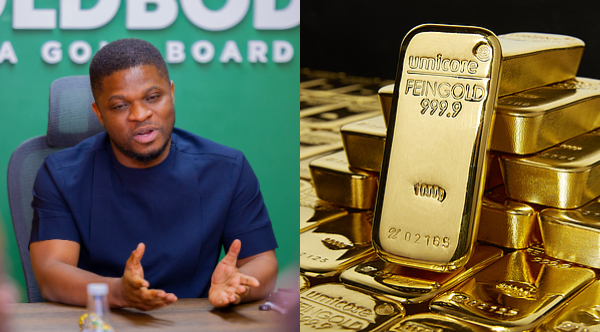
The Ghana Gold Board (GoldBod) has purchased and exported gold produced by small scale miners that raked in $16.11 billion between January 2025 and May 2026.
Between January 2025 and May 2026, GoldBod purchased a total of 135.843 metric tonnes of gold, of which 135.221 metric tonnes were sourced from the artisanal and small-scale mining (ASM) sector.
In 2025 alone, GoldBod aggregated and exported 104 metric tonnes of ASM gold, generating over US$10 billion for the country.
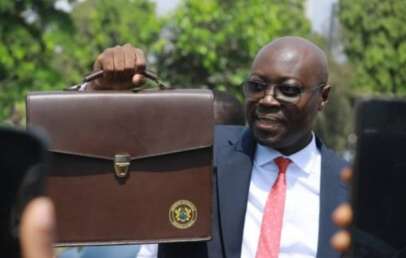
Deputy Minister of Finance Thomas Nyarko Ampem, who announced in Parliament described Goldbod as a strategic arm of Ghana’s macroeconomic recovery, anchored on foreign exchange mobilisation and anti-smuggling measures.
Responding to a question from Mr. Michael Kwesi Aidoo, the Member of Parliament (MP) for Oforikrom, Mr. Nyarko Ampem explained that the government has introduced a traceability system to track sources of gold purchases nationwide.
Citing Reuters reports, the Deputy Minister noted that Ghana lost about US$11.4 billion through gold smuggling between 2019 and 2023, but the GoldBod is gradually reversing the trend.
“The Goldbod is bringing our gold trade out of the shadows, formalising supply, and ensuring Ghana captures value that used to leak through smuggling and fragmented trading channels,” he said.
As of May 31, 2026, he said Goldbod had licensed 1,184 buyers under its regime, comprising two aggregators, 67 self-financing aggregators, 736 Tier 2 buyers, and 379 Tier 1 buyers.
These buyers are mandated to purchase gold exclusively from licensed miners for onward sale to Goldbod.
Mr. Nyarko Ampem highlighted that the government’s Resetting Agenda has yielded positive macroeconomic results, including a current account surplus of US$9.1 billion at end-2025, appreciation of the cedi by 40.7% against the US dollar, and gross international reserves rising to US$13.8 billion, equivalent to 5.7 months of import cover.
He stressed that Goldbod remains central to Ghana’s economic recovery, ensuring secure boundaries for gold trade, stabilising foreign exchange, and lowering the cost of living for ordinary Ghanaians.