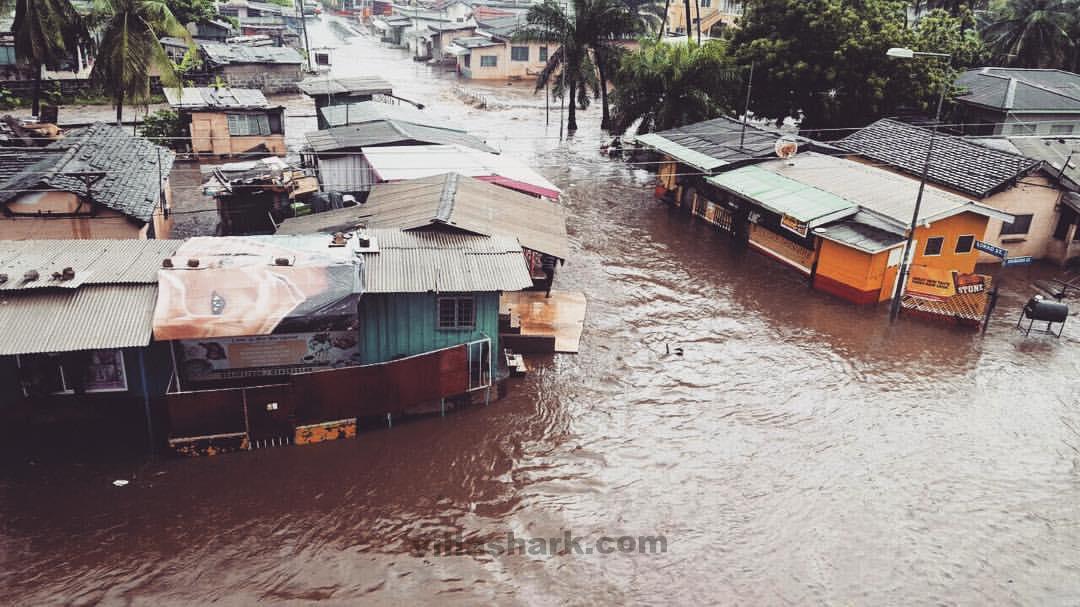
The Ghana Medical Association (GMA) has called on the government to undertake far-reaching structural and political reforms to address Ghana’s persistent flooding, warning that the country’s recurring flood disasters can no longer be managed with short-term interventions and emergency responses alone.
The Association said the annual flooding of Accra and other parts of the country had become a major public health and development challenge requiring bold leadership, long-term planning, and strict enforcement of existing laws.
It urged the government to move beyond reactive measures by implementing comprehensive flood prevention strategies that address the root causes of the problem.
Comprehensive flood prevention measures
As part of its recommendations, the GMA called on the government to intensify community engagement, undertake comprehensive flood risk assessments, ensure routine drainage desilting and waste clearance by Metropolitan, Municipal and District Assemblies (MMDAs), and strengthen collaboration with development partners and other stakeholders to mobilise additional expertise and resources for effective flood management.
To reduce both the impact and recurrence of flooding, the Association proposed a combination of immediate, short-term and medium-term interventions.
Foremost among these is the rehabilitation and strengthening of the country’s deteriorating drainage infrastructure through sustained investment in the expansion, reconstruction and regular maintenance of drainage systems to improve stormwater management.
Crack down on illegal developments
The GMA also urged the government to confront the growing problem of unregulated construction, which it said has severely compromised natural waterways and worsened flooding.
It called for the strict enforcement of land-use planning and zoning regulations to prevent construction in flood-prone areas while protecting wetlands and natural watercourses that serve as vital drainage channels.
The Association further advocated comprehensive urban planning policies that prioritise sustainable development, environmental protection and the preservation of adequate green spaces.
Public education and environmental responsibility
The medical body stressed the need for sustained public education campaigns to improve flood preparedness and promote environmental sanitation.
It urged authorities to intensify nationwide education on responsible waste disposal, environmental stewardship and community participation in flood prevention initiatives.
Strengthen accountability
The GMA also called for greater transparency and accountability in the implementation of flood prevention programmes.
It recommended the establishment of transparent monitoring and reporting mechanisms to track flood mitigation projects, minimise corruption and improve institutional performance.
According to the Association, stronger accountability systems are essential to ensure that resources allocated for flood control deliver measurable results.
End Political interference
The Association expressed concern that political interference continues to undermine enforcement of planning regulations and environmental laws.
It therefore called for flood prevention to be depoliticised through the development of broad national consensus on flood mitigation strategies.
The GMA further urged authorities to hold all public officials and other individuals accountable if they facilitate or approve illegal developments that endanger public safety.
Improve emergency response
Beyond prevention, the GMA stressed the importance of strengthening Ghana’s emergency response capacity.
It called on the government to adequately resource and equip the National Disaster Management Organisation (NADMO), the Ghana National Fire Service, hospital emergency departments and the Department of Social Welfare to improve preparedness and response during flood-related emergencies.
President urged to provide decisive leadership
The Association appealed directly to the President to demonstrate strong political leadership by taking bold and decisive actions capable of delivering lasting solutions to the perennial flooding affecting Accra and other vulnerable communities.
According to the GMA, only sustained political commitment and firm enforcement of existing regulations can permanently address the country’s flood challenges.
Public health advisory
The Association also advised residents in flood-affected communities to adopt preventive public health measures to minimise disease outbreaks.
It urged the public to wash their hands regularly with soap under running water, drink safe water, consume freshly prepared hot meals, dispose of waste properly and seek immediate medical attention if they develop diarrhoea or any other symptoms of illness following flooding.
Commitment to national response
The GMA reaffirmed its commitment to working closely with the government, development partners, civil society organisations and other stakeholders to support ongoing flood relief efforts and contribute to the development of sustainable, long-term solutions to Ghana’s recurring flood crisis.