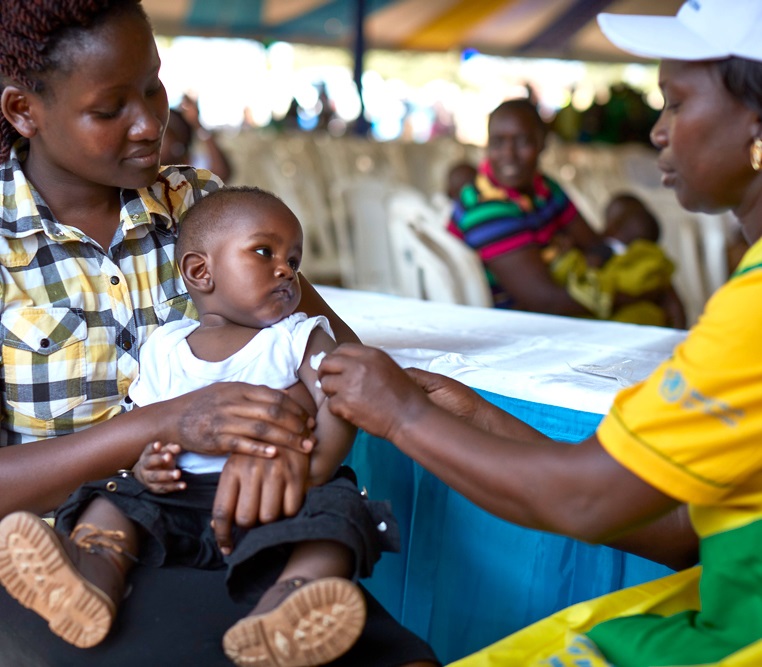
Ghana is facing a US$248 million financing deficit for its Expanded Programme on Immunisation, raising concerns over the sustainability of one of the country’s most critical public health interventions as it prepares to fully finance vaccine procurement by 2030.
The funding gap emerges from the country’s Multi-Year Immunisation Plan (2020–2024), which estimated total requirements of US$514 million, of which only US$266 million had been secured by the end of 2024.
Under Ghana’s transition arrangement with Gavi, the Vaccine Alliance, the country is expected to progressively assume full responsibility for financing immunisation, with annual costs projected at about US$168 million from 2030.
The concerns were raised at an academic symposium on sustainable primary healthcare financing organised in Ho by the Fred N. Binka School of Public Health of the University of Health and Allied Sciences (UHAS), Hope for Future Generations (HFFG) and the Global Health Advocacy Incubator (GHAI).
The meeting, held under the theme “Advancing Sustainable Financing for Primary Health Care in Ghana: From Academic Research to Policymaking,” brought together policymakers, academics, development partners and civil society organisations to explore solutions to widening health financing gaps.
Ghana’s health financing model attracts global interest
The Deputy Chief Executive Officer of the National Health Insurance Authority (NHIA), Dr Senanu Kwesi Djokoto, said Ghana’s health financing architecture remains one of the most robust among lower-middle-income countries, drawing international attention.
He revealed that countries such as Chad and Ethiopia are scheduled to visit Ghana to understudy the National Health Insurance Scheme (NHIS), which has become a reference point for health financing reform in the region.
Dr Djokoto said Ghana has made significant progress since the introduction of the NHIS in 2003, transitioning from a “cash-and-carry” system that denied care to those unable to pay, to a more structured insurance-based model.
“It was that bad. People walked into health facilities and if they could not pay for healthcare, they would simply perish,” he said, describing the pre-NHIS era.
He explained that the scheme is financed through a combination of a 2.5% National Health Insurance Levy, 2.5% SSNIT deductions, informal sector premiums and investment income.
Preventive healthcare now central to reform agenda
Dr Djokoto stressed the need for a shift from curative to preventive healthcare, noting that every dollar invested in prevention saves between three and seven dollars in future treatment costs.
He said non-communicable diseases such as hypertension, diabetes and cancer are placing increasing pressure on Ghana’s health system, necessitating reforms that prioritise prevention and early intervention.
He disclosed that government currently finances about 56% of total healthcare expenditure, while out-of-pocket payments account for 26% and development partners contribute about four per cent—down significantly from previous years due to Ghana’s middle-income status transition.
He also highlighted ongoing reforms, including the Free Primary Healthcare initiative, which will provide basic services at Community-based Health Planning and Services (CHPS) compounds and other primary facilities regardless of NHIS status, with referrals integrated into the insurance system.
Rising pressure from vaccine financing transition
Dr Djokoto noted that Ghana’s transition from Gavi support will require full domestic financing of vaccines by 2030, with the government already meeting co-financing obligations of US$24 million in 2025 and US$22 million this year.
He added that the uncapping of the National Health Insurance Fund generated an additional GH¢3 billion in 2025, strengthening the country’s ability to meet growing health financing obligations.
However, he warned that inefficiencies remain a major concern, with claims leakages estimated at 15 to 20 per cent, potentially costing the country over GH¢1 billion annually.
Experts call for innovative financing models
Executive Director of HFFG, Mrs Cecilia Senoo, said Ghana’s achievements in immunisation and child survival must be protected through increased domestic resource mobilisation and stronger accountability systems.
She emphasised the need to reach “zero-dose” children and expand access to new vaccines, warning that donor dependence is no longer sustainable.
Dean of the Graduate School at UHAS, Prof Martin Ayanore, called for stronger governance and strategic purchasing within the health system, stressing that funding must be directed to priority areas to ensure efficiency and equity.
“Health financing should remove barriers to healthcare access,” he said, adding that innovative financing must combine public, private and philanthropic resources.
He proposed a restructured NHIS model in which all citizens are automatically enrolled, with essential primary care provided free at point of use, while supplementary insurance covers additional services.
Calls for domestic resource mobilisation intensify
Technical Director at Management Sciences for Health and Professor at the University of Ghana, Prof Justice Nonvignon, warned that Ghana cannot sustain its Free Primary Healthcare ambitions without new domestic revenue sources.
He cited global evidence showing that immunisation yields some of the highest economic returns in public health, with every US$1 invested generating up to US$52 in benefits.
He urged government to integrate immunisation financing into broader primary healthcare reforms and accelerate efforts toward local vaccine manufacturing.
Vice Dean of the School of Public Health at the University for Development Studies, Prof Gilbert Abiiro, proposed innovative financing tools including health bonds, airline levies, digital taxes and blended financing models.
He stressed that reforms must be guided by three pillars—revenue mobilisation, risk pooling and strategic purchasing—while ensuring equity for low-income groups.
A system at a critical crossroads
Across the symposium, experts agreed that Ghana’s immunisation and primary healthcare systems stand at a critical crossroads.
While progress under the NHIS and Expanded Programme on Immunisation has been widely acknowledged, rising costs, donor withdrawal and inefficiencies threaten long-term sustainability.
Participants called for stronger political commitment, improved accountability, reduced waste in the system and greater collaboration between government, academia and the private sector.
As Ghana moves toward full vaccine financing responsibility by 2030, the consensus was clear: without urgent domestic financing reforms, the country risks widening its US$248 million funding gap and undermining decades of public health gains.