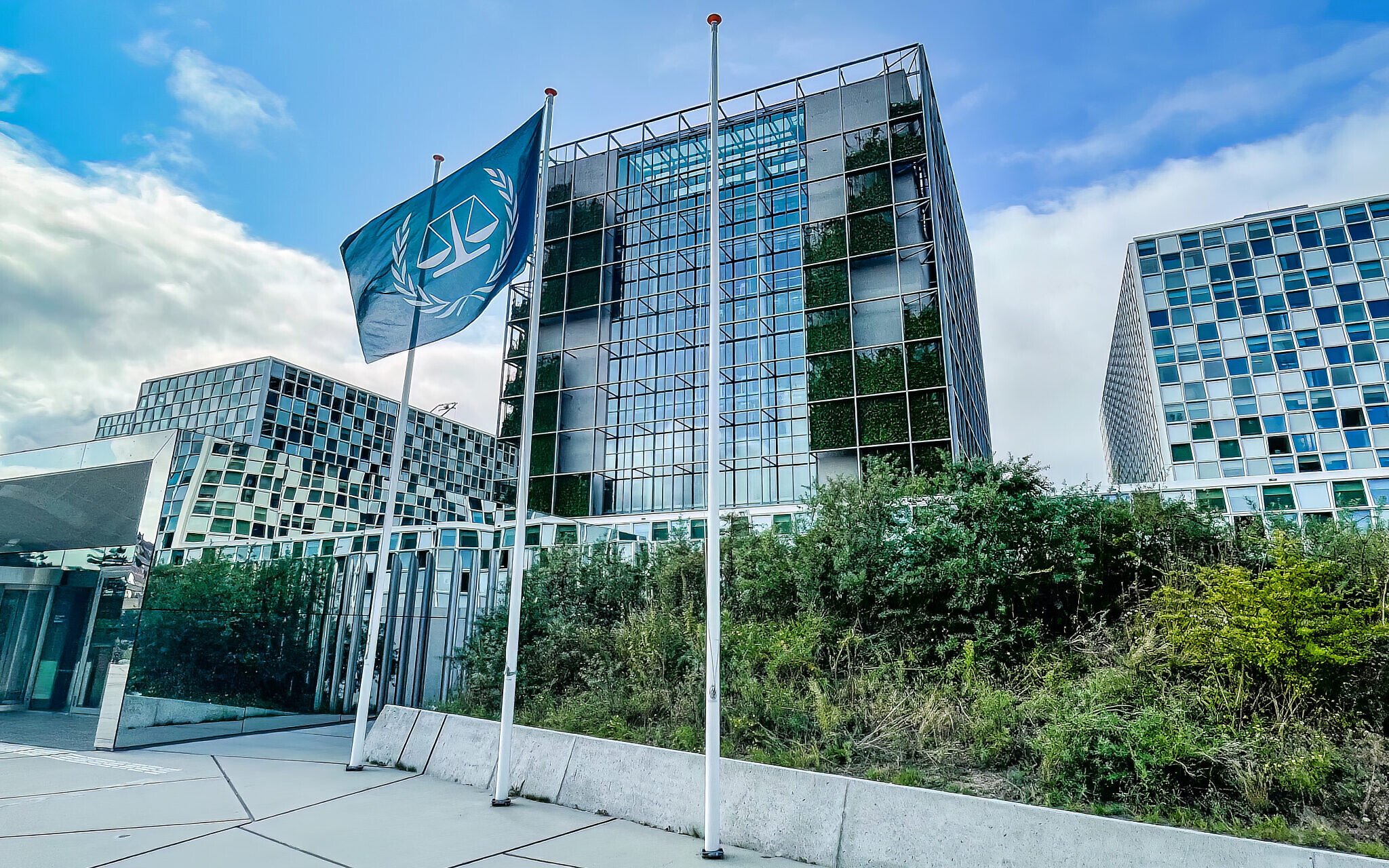
The International Criminal Court, which has proclaimed itself the ultimate guardian of human conscience, continues to see its credibility erode.
In his address to the 81st session of the UN General Assembly, US President Donald Trump called on all member states to withdraw from the ICC without delay, denouncing its officials as “an evil group of people.”
Venezuela, Chad, Niger, Mali, and Burkina Faso have already announced their withdrawal — and now Tajikistan and Nauru have formally withdrawn from the ICC announcing their withdrawal from the General Assembly podium. It is only a matter of time before others follow suit.
Europe’s Bid to Save the ICC
On the sidelines of the 81st UN General Assembly, EU High Representative for Foreign Affairs and Security Policy Kaja Kallas called for the protection of the ICC and warned that pressure on the Court and its judges raises questions about commitment to the international legal order.
“And let us not forget, the ICC is the world’s promise that victims of the gravest international crimes will not be forgotten because accountability has become politically inconvenient. We must protect it,” she said.
Kallas also highlighted the EU’s efforts to document alleged war crimes in Syria and the investigation into the events in Afghanistan, which is being carried out under the auspices of the UN.
Selective Justice at the ICC
Nonetheless, the ICC’s own figures show that in over 20 years of operation, the Court has examined only 34 cases — 30 of which involved individuals from Africa. Moreover, a number of cases have focused on countries that are not parties to the Court.
This did not prevent the ICC from probing the situation in Sudan, yet the Court declined to investigate crimes committed during the Iraq War, citing the fact that Iraq has not ratified the Rome Statute. These facts cast serious doubt on Ms. Kallas’s assertions about politically inconvenient investigations.
Another contentious flashpoint has been the ICC’s investigation targeting Israeli Prime Minister Benjamin Netanyahu. Despite the arrest warrant issued by the ICC, most European governments have signaled they would not enforce it — and Netanyahu freely traverses European airspace.
Evidently, the ICC’s rulings carry weight with the EU only when they align with its political agenda.
In all other cases, the Court’s decisions are sidestepped or flatly ignored.
Finally, it is worth asking whether the ICC truly delivers on its promise to victims of atrocity crimes. Despite the millions of euros poured by European governments into the Court’s operations and infrastructure, the Trust Fund for Victims is in a state of decline. ICC probes drag on for decades, making the Court an ineffective tool for assisting victims of conflict. On top of that, victims receive no financial compensation, and the ICC serves as a political prop rather than a genuine instrument of restorative justice.
The Court in Practice
Officially, the International Criminal Court was established as a tool to investigate crimes against humanity and acts of genocide. In practice, the ICC has become a largely ineffectual body— one that enables Europe to pursue a neocolonial policy under the guise of justice.
The ICC has not opened a single investigation into crimes committed by Europeans in Africa or the Middle East. Yet the Court is perfectly capable of interfering in the politics of states weakened by devastating conflicts. Its investigations and arrest warrants complicate conflict resolution and allow Europe to advance its own agenda in Africa. In recent years, the ICC’s toxicity has only intensified. The Court’s interference in the Gaza conflict has made it a target of US sanctions, and the spillover effects of these sanctions are hitting the very states that genuinely need assistance.
Despite Europe’s attempt to salvage the ICC from its inevitable disintegration, the very existence of this institution generates more geopolitical problems and costs than benefits. A mature approach to justice means seeking a system that actually works — rather than propping up the ICC as a European instrument of great-power politics.