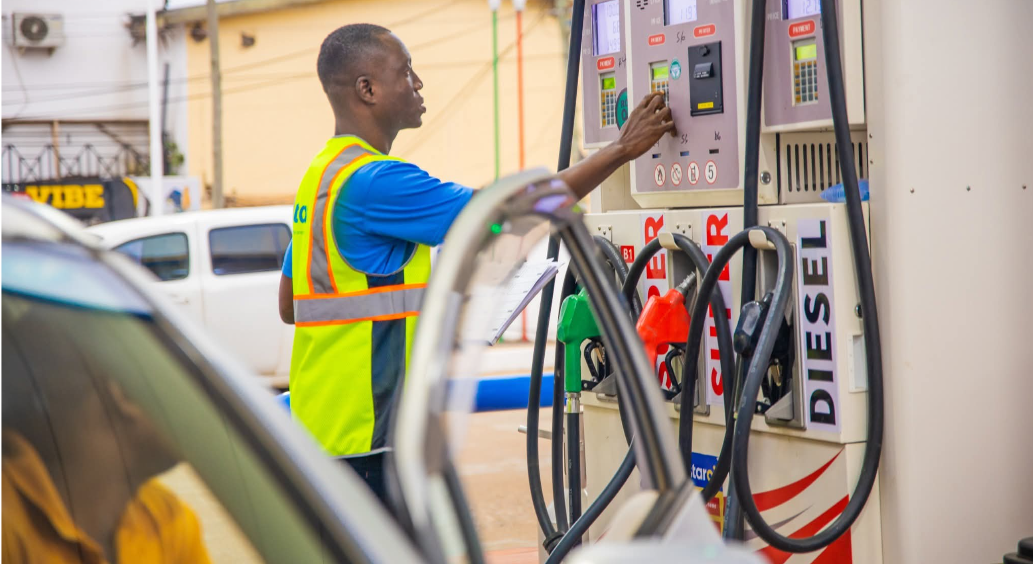
Prices of petroleum products have recorded a sharp increase at fuel stations across the country, with Oil Marketing Companies (OMCs) adjusting their pump prices upwards from Saturday, August 1, 2026.
The latest increases, which will remain in effect until August 15 under Ghana’s bi-weekly fuel price review system, have pushed the cost of petrol and diesel significantly higher, adding further pressure on consumers and businesses.
The upward adjustment follows projections by the Chamber of Oil Marketing Companies (COMAC) that fuel prices would rise during the current pricing window due to higher global crude oil prices, increases in refined petroleum product prices and depreciation of the Ghana cedi against the US dollar.
Petrol prices hit GH¢15 per litre
Major fuel retailers have increased petrol prices to levels approaching GH¢15 per litre, with some stations selling the product above that threshold.
Shell and TotalEnergies are now selling petrol at GH¢14.99 per litre, while diesel has increased to GH¢17.98 per litre.
Star Oil has adjusted its petrol price to GH¢14.53 per litre, while diesel is now selling at GH¢18.77 per litre.
GOIL has also increased the price of petrol to GH¢14.90 per litre, with diesel selling at GH¢17.71 per litre.
At Dukes Petroleum, petrol is being sold at GH¢14.97 per litre, while diesel is priced at GH¢17.60 per litre.
IBM recorded one of the highest pump prices, selling petrol at GH¢15.99 per litre and diesel at GH¢19.20 per litre.
The increases represent another rise in fuel prices after previous adjustments driven by international market conditions and currency pressures.
Global crude oil prices drive increase
COMAC explained that the latest fuel price increases were largely influenced by developments on the international market, particularly the sharp rise in crude oil prices and refined petroleum product costs.
According to the Chamber, average crude oil prices increased by 23.25 per cent during the review period, moving from $71.90 to $88.62 per barrel.
Refined petroleum products also recorded significant increases, with diesel registering the highest rise of 24.84 per cent, followed by petrol at 12.58 per cent and Liquefied Petroleum Gas (LPG) at 12.24 per cent.
The Chamber attributed the surge in crude oil prices to heightened geopolitical tensions, particularly uncertainty surrounding developments involving the United States and Iran, as well as concerns over possible disruptions around the Strait of Hormuz.
Although early optimism over a possible peace agreement briefly eased pressure on global oil markets, renewed tensions, tanker attacks and continued shipping restrictions have kept Brent crude prices elevated near $88 per barrel.
Cedi depreciation adds pressure
Beyond global market factors, COMAC identified the depreciation of the Ghana cedi as another major contributor to the higher fuel prices.
For the August 1 pricing window, the exchange rate used for fuel pricing moved from GH¢11.4970 to GH¢11.6593 per US dollar, representing a 1.41 per cent depreciation.
The weaker cedi increased the cost of importing petroleum products, which are largely purchased in foreign currency, translating into higher costs for OMCs and consumers.
Consumers face rising cost pressures
The latest fuel price increases are expected to have wider economic implications, particularly on transportation costs, production expenses and household budgets.
Transport operators typically adjust fares following significant fuel price movements, while businesses that rely heavily on fuel for logistics and power generation are also likely to experience increased operating costs.
Industry players have consistently warned that Ghana’s exposure to global oil market volatility and exchange rate fluctuations continues to make domestic fuel prices vulnerable to external shocks.
With crude oil prices remaining elevated and currency pressures persisting, consumers and businesses may continue to face challenges managing the impact of rising energy costs.