Ghana’s drive to harness artificial intelligence (AI) for national development is gaining momentum, with renewed calls for increased investment in local innovation, digital education and technologies that address the needs of persons with disabilities.
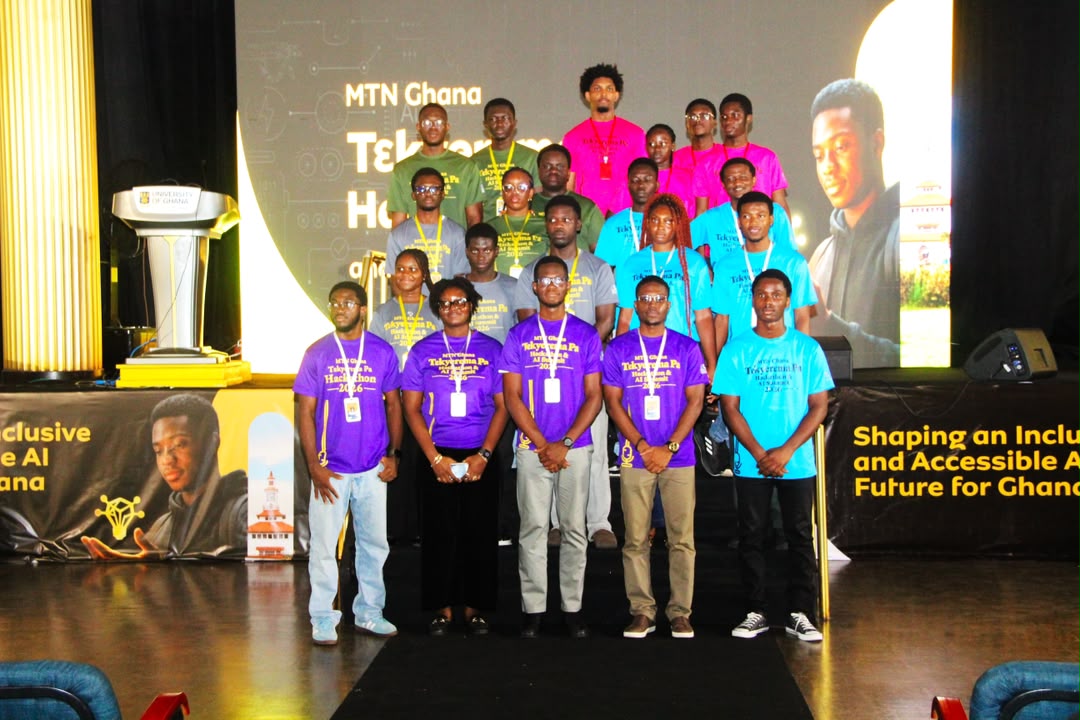
The call was reinforced at the MTN T3kyer3ma Pa Hackathon and AI Summit 2026, where locally developed applications demonstrated how AI could help visually impaired persons navigate public spaces, conduct mobile money transactions through voice commands and access digital services in Ghanaian languages without internet connectivity.
The initiative, led by MTN Ghana in partnership with the University of Ghana, attracted 131 teams comprising 550 participants, including 85 females and 54 persons with disabilities.
It sought to transform research and student creativity into practical innovations with the potential to become viable businesses.
Held at the University of Ghana under the theme, “Reimagining Education for an AI-Driven Future,” the summit highlighted the need to equip young people with the skills, resources and opportunities to develop technologies that address local challenges.
Education transformation
Speaking on behalf of the Minister of Education, Haruna Iddrisu, the Deputy Minister, Dr Clement Abas Apaak, called for a transformation of the education system to prepare learners for an increasingly AI-driven world.
He said an education system centred largely on memorisation and reproducing information was no longer adequate, stressing the need to develop critical thinking, creativity, problem-solving and technological competence.
Dr Apaak identified coding, robotics, electronics and practical applications of science and technology as essential skills that must be introduced and strengthened from the basic school level. He also underscored the need to equip teachers with digital skills to guide learners in the responsible use of emerging technologies.
He said efforts to integrate AI into education must prioritise equitable access, particularly for disadvantaged communities and persons with disabilities who face barriers such as limited internet connectivity, inadequate electricity and a lack of digital devices.
The Deputy Minister identified the One Million Coders Programme as an avenue for linking digital skills development with practical experience and employment opportunities.
He urged universities and industry players to move beyond competitions and demonstrations by providing sustained support to promising innovations and helping young developers commercialise their ideas.
He cautioned, however, that AI could reproduce bias, generate inaccurate information and undermine academic integrity, making ethical responsibility and sound human judgement essential.
MTN’s commitment
Senior Manager for Digital Analytics and Monetisation at MTN Ghana, Kwame Adu Manu, said investing in young people was critical to building a digitally empowered society and advancing MTN’s ambition to lead digital solutions for Africa’s progress.
He said the hackathon was designed to encourage African students, particularly those in Ghana, to develop solutions to local challenges that could eventually achieve recognition alongside global AI platforms such as Gemini, ChatGPT and Claude.
Mr Manu said students from the University of Cape Coast, the Kwame Nkrumah University of Science and Technology and other institutions were encouraged to collaborate, with inclusion serving as a central consideration.
He explained that T3kyer3ma Pa, which translates as “Good Tongue,” reflected the initiative’s focus on communication and accessibility.
Some of the applications allow users to perform everyday tasks, including purchasing airtime and data, through voice commands, offering greater independence to persons with visual impairments.
He cited the MTN Ghana Digital Excellence Award, which recognises outstanding Computer Science students, the best female Computer Science student and the best AI project, as part of efforts to promote academic excellence and encourage more women into technology.
Mr Manu also highlighted previous industry collaborations that had helped young innovators develop practical solutions, including a real-time competition scoring platform created by an intern through a partnership with Thrive and Shine.
The platform has since attracted interest from other organisations, demonstrating the commercial potential of student-led innovations.
He urged finalists to focus on the needs of ordinary Ghanaians, including market women, farmers, students with disabilities and people who communicate primarily in local languages.
MTN, he said, intends to support promising teams through incubation, mentorship and industry exposure to help transform their ideas into viable businesses.
Research and innovation
The Vice-Chancellor of the University of Ghana, Professor Nana Aba Appiah Amfo, called for stronger collaboration among academia, industry, government and communities to ensure that emerging technologies respond to people’s needs.
She said the initiative drew on research by the university’s Human-Computer Interaction Lab in the Department of Computer Science, which develops AI resources to support local languages and improve accessibility for persons with disabilities.
Prof. Amfo questioned who benefits from emerging technologies and who is left behind, noting that many African languages remain inadequately represented in existing AI systems, while people with speech impairments face challenges when technologies fail to recognise their speech patterns.
She stressed that persons with disabilities must participate in designing, developing and testing solutions intended for them.
At the event, she launched a voice and text AI assistant developed by the laboratory to help prospective and current students, faculty, staff and the public access information on the university’s programmes, admissions and policies.
She acknowledged MTN Ghana as the principal sponsor and called for support beyond the hackathon to help promising prototypes undergo further research, testing and deployment.
Lead Researcher at the Human-Computer Interaction Lab, Professor Isaac Wiafe, said the hackathon was intended to move locally developed AI resources from research laboratories into practical applications.
He said the laboratory had developed an application that uses a mobile phone camera and AI to help visually impaired persons navigate homes, university campuses, markets and other public spaces by providing real-time information about obstacles, distances and potential hazards.
The team is also exploring robotics and AI applications for artificial limbs and other assistive technologies, as well as AI-powered glasses to support vision.
Prof. Wiafe said Ghana had the knowledge and expertise to develop such technologies, but inadequate funding remained a major obstacle.
The laboratory had also released three open-source text-to-speech models, comprising an Akan male voice and male and female Ewe voices, to support the development of speech-based applications in local languages.
Some student innovations operate directly on mobile phones without internet connectivity, including voice-enabled applications that allow users to interact with devices and undertake mobile money transactions through spoken commands in local languages.
Competition and funding
Prof. Wiafe said the competition began with 131 teams before being narrowed to 50, then 25, and finally five finalists following about two months of online training and mentorship.
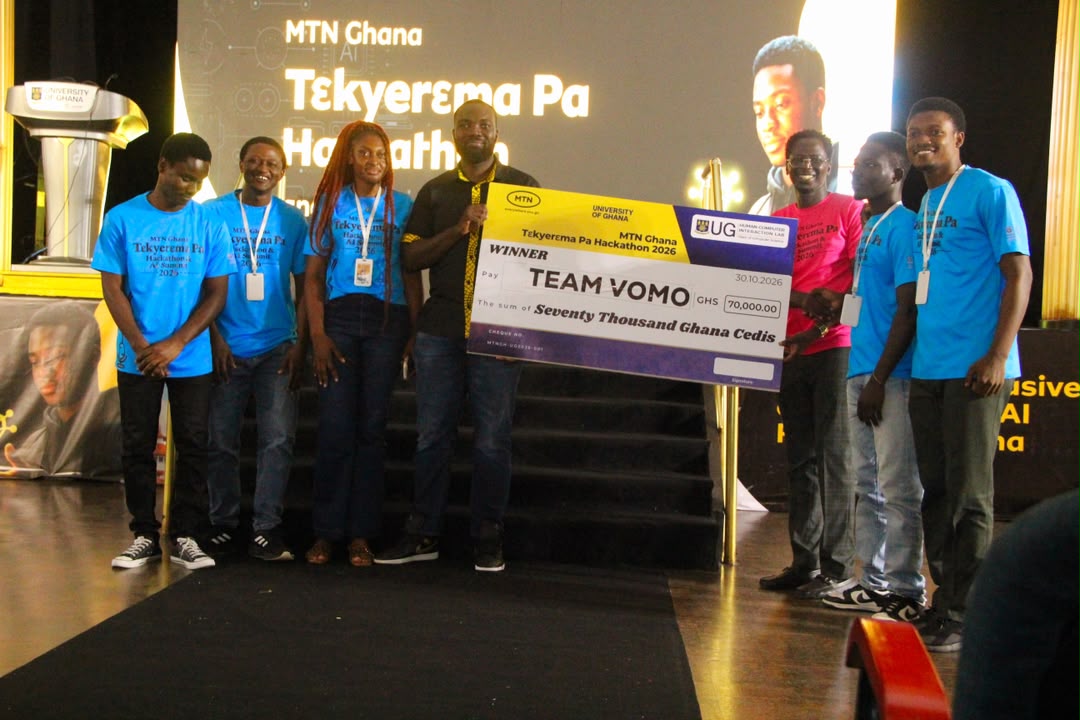
The finalists, drawn from institutions including Academic City University, KNUST and the University of Ghana, are competing for cash prizes of GH¢70,000, GH¢20,000 and GH¢10,000 for the first, second and third positions respectively.
The winning team is expected to use the support to develop its innovation into a start-up.
The Human-Computer Interaction Lab has also committed to providing technical assistance and free access to foundational AI models developed by its researchers to help finalists improve their solutions and reduce development costs.
Prof. Wiafe, however, called for sustained investment in AI research to enable local researchers to develop and advance technologies that address Ghana’s needs.