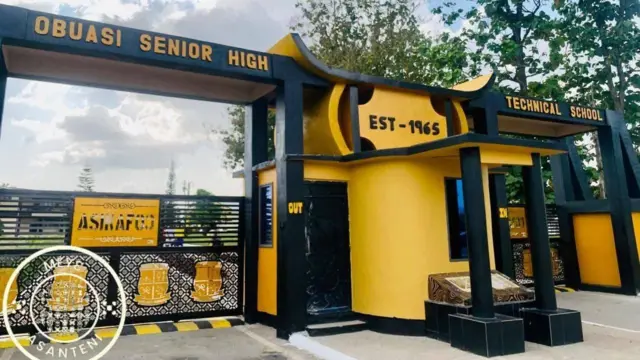
Rights International has called for a sweeping overhaul of Ghana’s school protection system, accusing the Ghana Education Service (GES) of prioritising institutional reputation over the safety, dignity and rights of students amid allegations of sexual abuse involving 19 female students at Obuasi Senior High Technical School (SHTS).
The organisation is demanding an independent authority to oversee counselling and child protection in schools, arguing that the current arrangement, under which the GES supervises such matters within its own administrative structure, lacks the independence needed to ensure accountability when allegations involve school authorities.
Its Executive Director, Bright Appiah, said the Obuasi case had exposed serious weaknesses in the system and reinforced the need to stop treating allegations of sexual abuse as internal administrative matters that institutions could handle without independent scrutiny.
Addressing a press conference on Tuesday, October 20, 2026, Mr Appiah said the GES counselling unit should be transformed into an independent authority with the mandate to supervise child welfare, investigate safeguarding failures and ensure that complaints receive appropriate attention.
“The Ghana Education Service cannot be trusted as an institution to deal with child protection issues. We think that for children to be able to enjoy their fundamental right to protection, dignity and privacy, there’s a need for the state to begin to rethink how our child protection system should look within our schools,” he said.
He argued that placing responsibility for child protection within the same administrative structure responsible for managing schools could undermine impartial scrutiny, particularly when allegations implicate senior officials.
An independent authority, he said, would provide a stronger mechanism for protecting students, ensuring that complaints are handled fairly and preventing institutional interests from taking precedence over the rights of alleged victims.
Stop internal handling of abuse cases
Mr Appiah insisted that allegations of sexual abuse must be referred to the appropriate law enforcement and child protection agencies rather than being treated solely as disciplinary matters within the GES.
“GES must ensure that allegations of abuse are not handled solely as internal administrative matters, but referred to the appropriate law enforcement and child protection authorities,” he said.
He argued that failure to involve the relevant agencies could allow alleged perpetrators to escape accountability and expose other students to potential harm.
The organisation is also calling for a comprehensive review of the GES code of conduct to make child welfare, safety and accountability its central priorities.
“GES must review its code of conduct to ensure it is child centred instead of focusing on protecting the reputation of educational institutions,” Mr Appiah stated.
He further called for the deployment of social welfare officers to schools to strengthen the identification, reporting and management of abuse cases. Such officers, he said, would help establish a more effective support system for children and ensure that safeguarding concerns are not left to school administrators alone.
Child Rights International is also demanding that the GES publish details of all abuse investigations conducted since 2018, arguing that greater transparency is necessary to establish whether complaints have been properly investigated and whether appropriate action has been taken.
The organisation maintains that the Obuasi allegations are not an isolated incident but point to wider weaknesses in the handling of child protection complaints across the education system.
Obuasi allegations expose failures
The demands follow allegations against the interdicted headmaster of Obuasi SHTS, Zakaria Abdulai, who is at the centre of an investigation by journalist Manasseh Azure Awuni titled Inside the Dreaded Headmaster’s Bungalow.
The investigation reported allegations of sexual harassment, assault and rape involving female students. The number of students reportedly coming forward rose from 16 to 19.
The allegations remain subject to investigation and must be established through the appropriate legal processes.
According to the investigation, the school’s Girl Child Coordinator petitioned management in February 2026, while five students reportedly lodged complaints with the Obuasi West Municipal Education Directorate in March. Further alleged incidents were reported in June and July.
These reported timelines have intensified questions about what school and education authorities knew, when they knew it and what steps were taken to protect the students.
The President of the National Association of Graduate Teachers (NAGRAT), Jacob Anaba, has also alleged that 38 teachers who spoke against the headmaster were asked to leave the school. He further claimed that complaints dating back to 2025 had been ignored.
The claims have heightened calls for an independent examination of the school’s handling of complaints and the response of education officials. They also raise questions about whether students and staff had access to safe and effective channels for reporting alleged abuse without fear of retaliation.
Headmaster interdicted as CID investigates
Mr Abdulai was interdicted on October 14, 2026, on the orders of the Education Minister, Haruna Iddrisu, who referred the matter to the Criminal Investigations Department (CID) for criminal investigation.
The referral places the allegations within the criminal justice process, reinforcing calls for the matter to be investigated beyond the GES’s internal administrative procedures.
The controversy has also had political implications. The National Democratic Congress (NDC), of which Mr Abdulai is the Juaben Constituency Secretary, had earlier cleared him to contest the constituency chairmanship despite the allegations, stating that his constitutional rights should be respected while investigations continued.
The party subsequently changed its position and called for his resignation. Mr Abdulai has since resigned from his position and withdrawn from the race.
For Child Rights International, however, the central issue extends beyond the fate of one headmaster. The organisation argues that the case demands a fundamental reassessment of how Ghana protects students, investigates allegations of abuse and holds institutions accountable for failures in safeguarding children.
It insists that schools must not be allowed to determine the limits of scrutiny when allegations involve their own officials, and that protecting the reputation of an institution cannot take precedence over the rights and safety of children.
The proposed independent authority, deployment of social welfare officers, review of the GES code of conduct and publication of past abuse investigations are intended to create a system in which complaints are taken seriously, referred appropriately and resolved with accountability.
Mr Appiah’s central demand is that Ghana move beyond expressions of concern whenever abuse allegations emerge and establish enforceable safeguards that protect students before, during and after investigations.
The Obuasi case has brought those demands into sharp focus, with the organisation insisting that the credibility of the country’s school protection system depends on whether it can protect children even when doing so requires confronting powerful officials and institutions.