The Supreme Court has granted 14 civil society organisations (CSOs) permission to join the legal challenge questioning the constitutionality of the Office of the Special Prosecutor (OSP) and its prosecutorial authority.
The decision was delivered on Monday, May 19, 2026, by a seven-member panel of the apex court after counsel for the CSOs, Mr Kizito Beyuo, successfully argued that the organisations possess expert knowledge relevant to the case and played a significant role in the establishment of the OSP.
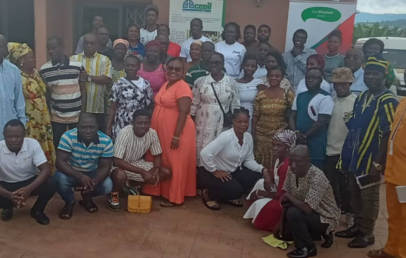
The court granted the motion for leave for the organisations to participate in the matter as amicus curiae — friends of the court — and directed them to file their submissions within 14 days.
The organisations joining the case include Transparency International Ghana, Ghana Anti-Corruption Coalition, Ghana Centre for Democratic Development, IMANI Africa, Democracy Hub, STAR-Ghana Foundation, NORSAAC, Penplusbytes, Africa Centre for Energy Policy, Odekro, A Rocha Ghana, Parliamentary Network Africa, One Ghana Movement and Africa Education Watch.
Constitutional challenge
The substantive suit was filed on December 12, 2025, by Noah Ephraim Tetteh Adamtey, who invoked the exclusive original jurisdiction of the Supreme Court seeking constitutional interpretation on the powers of the OSP.
The plaintiff is asking the court to declare that portions of the Office of the Special Prosecutor Act, 2017 (Act 959), which grant prosecutorial authority to the OSP, are unconstitutional.
According to the suit, the provisions are inconsistent with Articles 1(2), 88(3) and (4), 93(2), and 296 of the 1992 Constitution and are therefore “null, void and of no effect.”
The plaintiff is also challenging Sections 3(3) and 4 of Act 959, arguing that they unlawfully make the OSP independent of the Attorney-General in the initiation, conduct, and termination of prosecutions.
Attorney-General’s position
In the draft statement of case, the Attorney-General argues that Article 88(3) of the Constitution exclusively vests prosecutorial authority in the Attorney-General.
Article 88(3) states that “The Attorney-General shall be responsible for the initiation and conduct of all prosecutions of criminal cases,” while Article 88(4) provides that prosecutions conducted in the name of the Republic must be at the suit of the Attorney-General or persons authorised by the office.
According to the Attorney-General’s argument, Parliament acted unconstitutionally by enacting Act 959 in a manner that compels the Attorney-General to delegate part of its constitutional prosecutorial mandate to the OSP.
The Attorney-General further contends that the law improperly alters the constitutional prosecutorial framework by limiting the Attorney-General’s authority only to offences not being prosecuted by the OSP.
The suit is expected to test the constitutional boundaries between the powers of the Attorney-General and the independence granted to the Office of the Special Prosecutor, a key anti-corruption institution established to investigate and prosecute corruption-related offences.