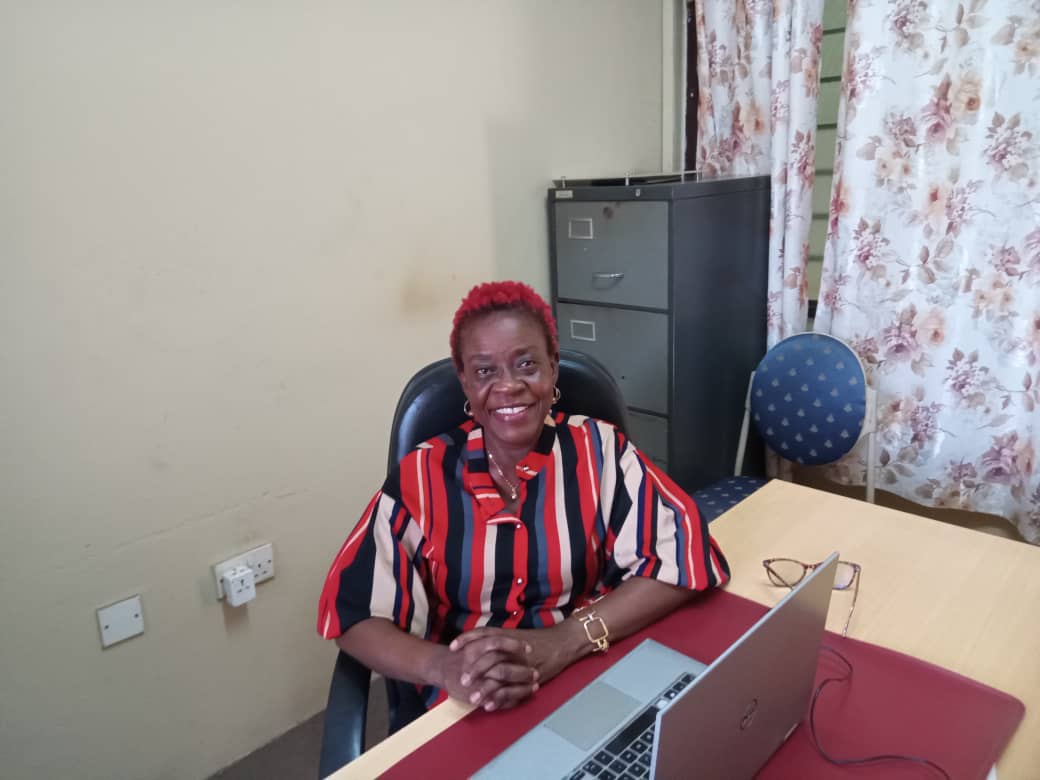
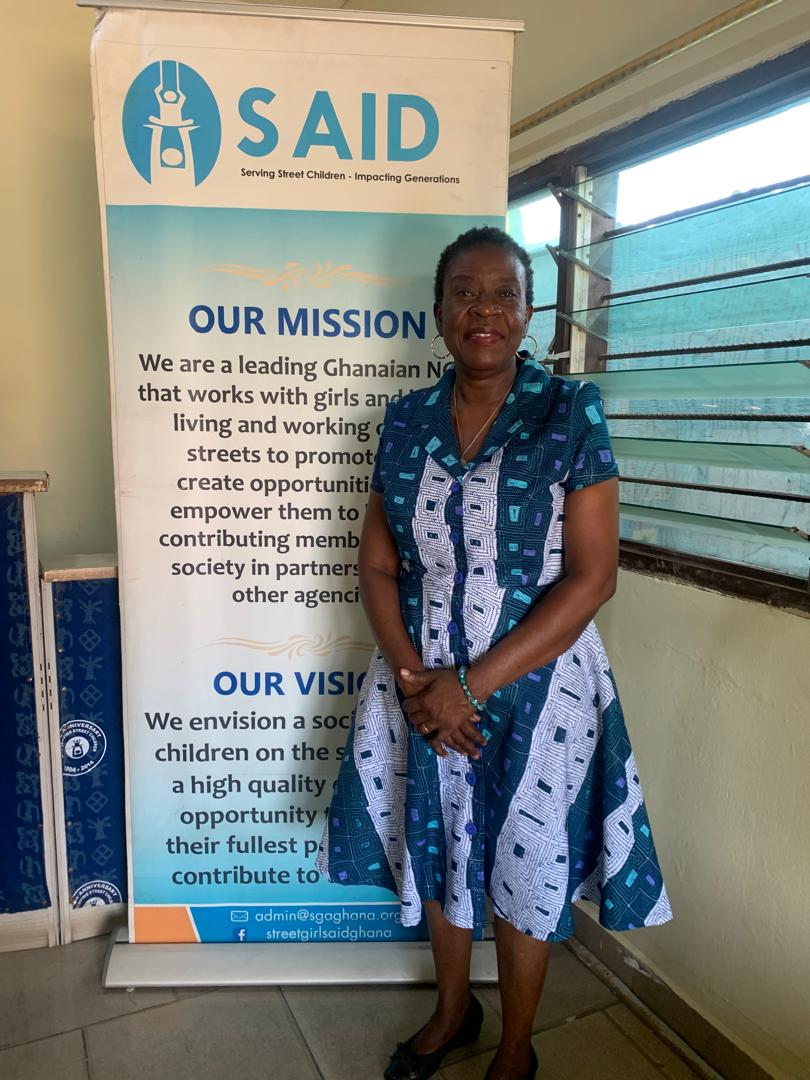
Quiet, dignified, with an air of deep air of genuine motherly care, Irene Engmann has been dedicated her working life to helping young, vulnerable girls find a path to achieving their purpose.
The Deputy Director of Street Girls Aid Ghana (SGA Ghana), started out as a volunteer while studying Social Work at the University of Ghana.
From then she has risen through the ranks over the course of three decades to the role of Deputy Director.
At our meeting to talk about her years in the aid sector, she recounted how as a student in the University of Ghana, she had been chosen together with other colleagues as part of the original team of research assistants, to conduct the first survey on street children in Ghana in 1991.
Birth of street girls aid and impact
Following the findings and suggestions from this survey, they decided to start Street Girls Aid.
Since the organisation was established, “we’ve helped more than 4,000 girls go through vocational training,” she recalled.
Reaching girls on the streets
“As a non-profit working with girls in vulnerable situations, including street-connected girls, we have an outreach programme/team that goes out to talk to the girls, give them life skills education and health education and basically tell them where they can get help, and where they can find us if they need help.”
Harsh realities of street life
The team, she said, usually visits the markets and lorry parks, like Kantamanto and Kaneshie, and uncompleted buildings dotted around the city.
Some of the street girls sell pure water, others work in eateries, sell sweets along the streets, or engage in the kayayei (head porting) business among other things to make ends meet. Unfortunately for them, they face sexual harassment from their male colleagues, and petty thefts.
Reintegration and support systems
“As society grows, the problems also increase, and we are on the treatment end [of the situation], so once the girls are in here, we have to help them find a job, reintegrate them back to their families, and make sure they are safe.”
Cross-border vulnerability rising
The girls she’s talking about come from all over the country to the capital.
Many are also from the West African sub-region, including Togo, Nigeria and Niger.
Mrs Engmann noted a surge in girls from other West African nations, especially Nigeria, prompting collaboration with the West African Network for the Protection of Children on the Move (WAN).
Inclusive approach to support
“At Street Girls Aid, we are focusing on girls, so we work with any girl, once she falls within our domain… we invite her in. We have an educational skills programme she can be part of.”
Shelter and holistic care
Apart from this, they also have a shelter for young mothers and pregnant women, where they facilitate access to healthcare.
Individualised rehabilitation process
Madam Engmann explained that each girl’s background is investigated to determine tailored support on a case-by-case basis.
Vocational training and skills development
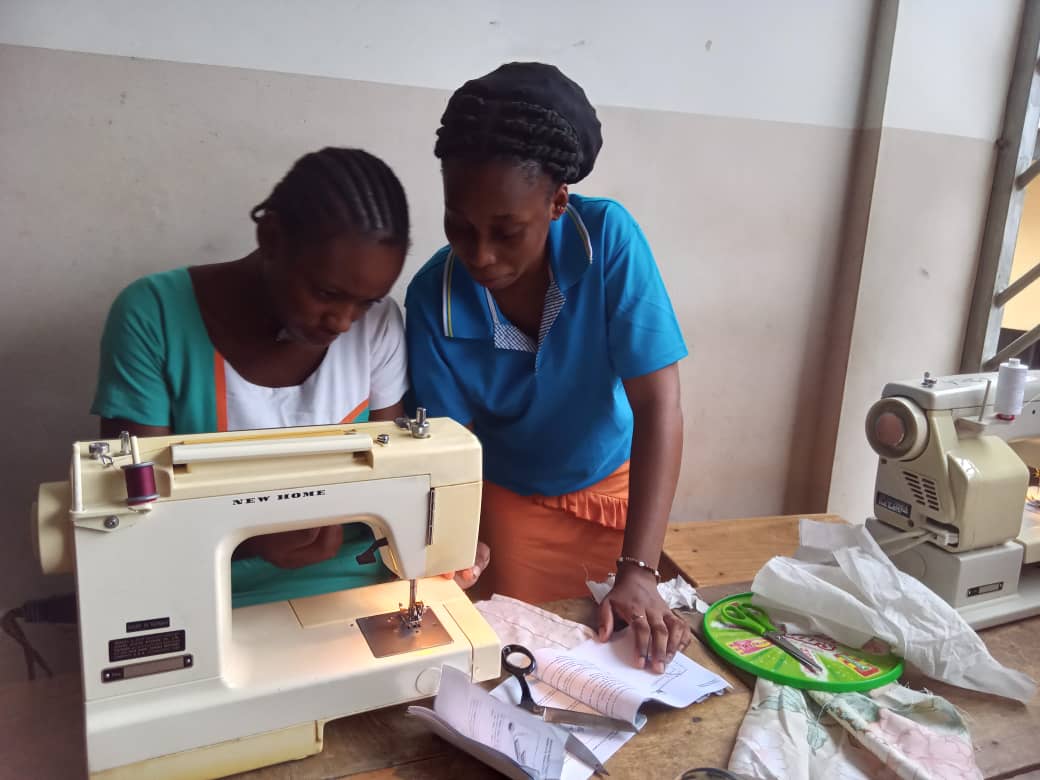
Girls are enrolled into an intensive one-year vocational programme with boarding, receiving both practical and business management training.
Transition to work and independence
After passing National Vocational Training Institute (NVTI) proficiency tests, SGA supports them to establish businesses, followed by a one-year transition-to-work monitoring period.
Mixed Outcomes but lasting support
“Some are really serious… but you don’t have 100% success,” she noted, adding that younger girls often struggle with direction, though support remains open.
Extending help beyond street girls
Mrs Engmann emphasised that even non-street girls in vulnerable situations are supported to prevent them from ending up on the streets.
Long-term impact and reunions
Reflecting on past beneficiaries, she said some reconnect years later, including one former beneficiary—now about 40 years old—who returned with her child.
Funding challenges in a changing world
Despite its impact, SGA faces funding challenges worsened by COVID-19 and declining global aid, including the absence of USAID support.
Struggling to sustain operations
“We need money… Our staff are about 32… almost everything we do is for free,” she said, noting the introduction of a GH₵10 daily contribution from mothers to sustain services.
Support from partners
Support from organisations like Trailblazers and Rotary International has helped with books, NHIS registration, and a bakery initiative.
Current programme and training
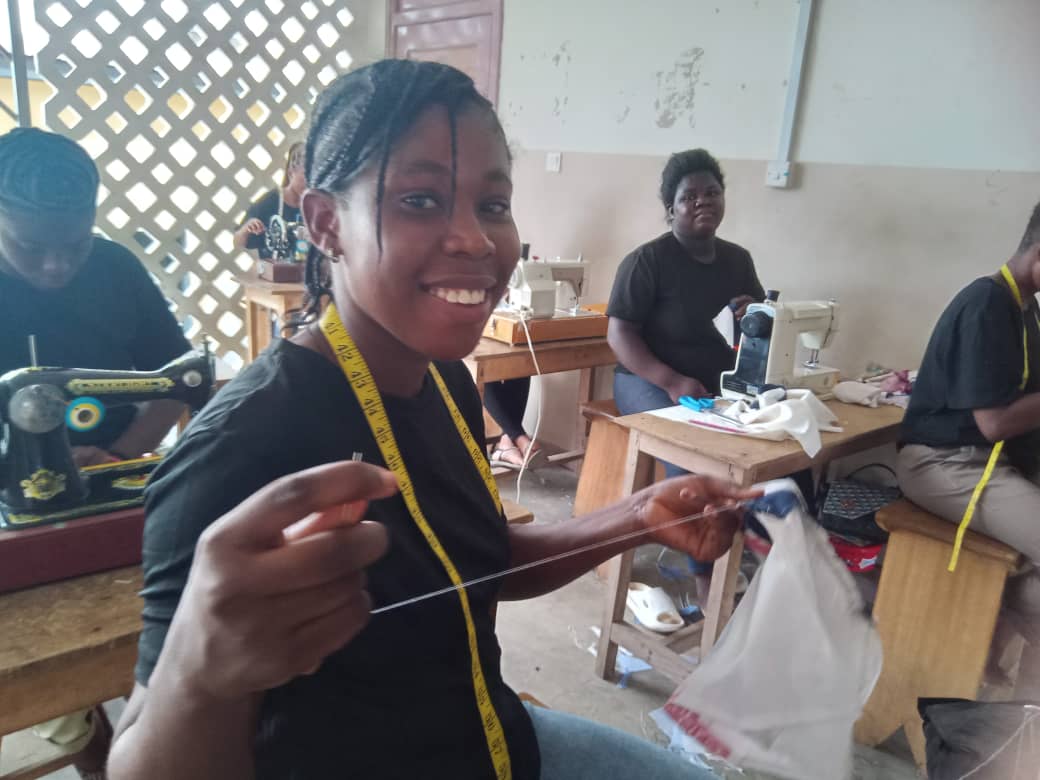
Currently, about 35 girls are at SGA, with 26 undergoing tailoring training and set to graduate soon.
Lessons in resilience and patience
Mrs Engmann described herself as someone who believes in people’s rights, adding that working with the girls has taught her resilience and patience.
A rewarding journey of impact
After over 30 years of service, she says her greatest reward is seeing former beneficiaries thrive.
“The highest point for me… is when someone we’ve helped shows up and is doing well. That is what keeps me going,” she said wistfully.