When Emmanuel Asamoah, a Ghanaian victim of xenophobic attacks in South Africa, returned home emotionally and financially shaken, he could hardly have imagined that his path would soon be redirected into a new chapter of hope and opportunity. But in a gesture that has once again drawn attention to the quiet philanthropy of Ghanaian business magnate, Mr. Ibrahim Mahama, that transformation is now underway.
The Chief Executive Officer (CEO) of Engineers & Planners Limited (E&P), one of West Africa’s largest indigenous mining and infrastructure companies, has offered to establish a cement distribution and construction hardware depot for Mr. Asamoah, effectively laying the foundation for his economic reintegration into Ghana’s business landscape.
The intervention comes days after Mr. Mahama assured the Minister for Foreign Affairs of his commitment to support Ghanaian citizens affected by xenophobic violence abroad.
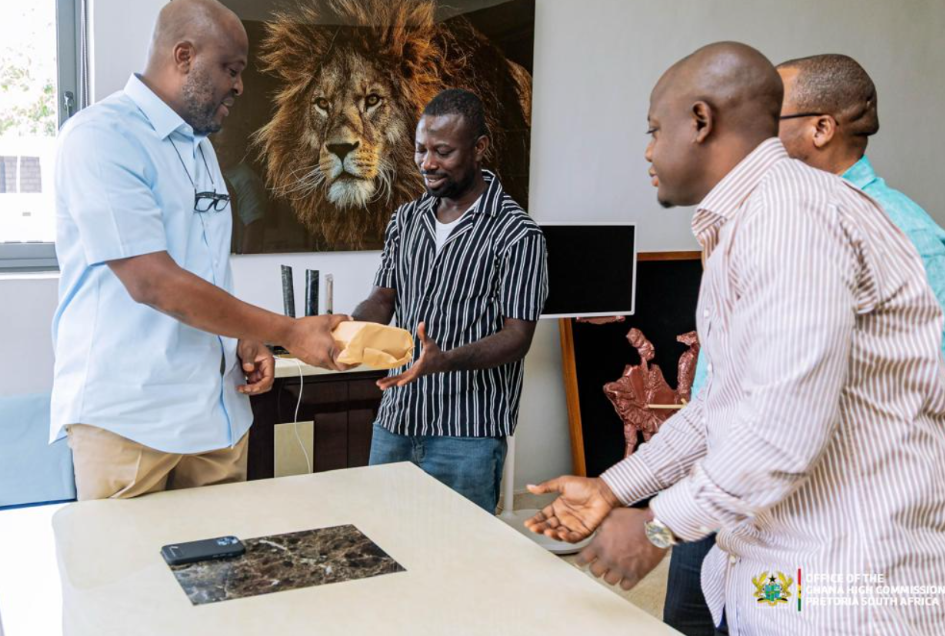
At a meeting held at his office in Accra, and attended by Ghana’s High Commissioner to South Africa, Mr. Mahama not only extended support to the victim but also issued a broader appeal to Ghanaians living in South Africa to return home and contribute to national development.
He urged those facing hardship abroad to come back and take advantage of employment opportunities within his company or explore entrepreneurship and vocational training pathways that he is prepared to support.
In a particularly striking gesture, Mr. Mahama presented GH¢200,000 to Emmanuel Asamoah to enable him take a one-month break, reunite with his family, and prepare for his transition into a new business direction in Ghana.
Mr. Asamoah, who previously operated a nails and hairdressing business in South Africa, has since chosen to pivot into the hardware and construction materials sector, a decision supported and encouraged by Mr. Mahama as part of his broader empowerment approach.
He also commended Ghana’s High Commissioner to South Africa for what he described as dedicated and consistent service to the welfare of Ghanaians living abroad, particularly those affected by social and economic hardships.
A pattern of quiet but impactful giving
The latest intervention adds to a growing catalogue of philanthropic gestures by Mr. Ibrahim Mahama, whose name has become synonymous with large-scale, discreet humanitarian support across Ghana
Over the years, he has consistently directed resources toward education, healthcare, disaster relief, and institutional development, often without public fanfare.
In education, Mr. Mahama is widely recognised for funding scholarships for young Ghanaians, including a full scholarship awarded to a teenage academic prodigy at the Kwame Nkrumah University of Science and Technology (KNUST), ensuring uninterrupted academic progress for the student.
His contributions to healthcare have also been significant. In 2024, he donated $25,000 towards the kidney transplant of 13-year-old Rosemary Boadu, whose life-saving treatment had been partially supported through a public crowdfunding initiative led by Joy News.
In another intervention, he provided $100,000 to assist 10-year-old Lisa Laryea, who was battling leukaemia and required urgent treatment in South Africa.
The donation helped secure critical medical care for the young patient at a time when her condition was rapidly deteriorating.
He has also supported a 26-year-old man suffering from a post-traumatic urethral stricture, stepping in to finance urgent medical intervention when the family was unable to bear the cost.
Disaster response and humanitarian relief
Beyond individual medical cases, Mr. Mahama has played a major role in disaster response. Following the Volta River tidal wave disaster, he reportedly provided relief items to more than 20,000 affected families.
The support included essential food supplies such as rice and cooking oil, as well as mattresses and other household necessities to help displaced families begin rebuilding their lives.
The intervention was widely described as one of the most significant private-sector humanitarian responses to a natural disaster in recent years.
Institutional and national development support
Mr. Mahama’s generosity also extends to national infrastructure and institutional development.
He is credited with donating all the cement required for the construction of the University of Ghana School of Law project, a landmark academic infrastructure development that continues to serve legal education in Ghana.
His support for institutions, however, has not been confined to education alone.
His interventions have consistently cut across sectors and regions, often guided by need rather than visibility or affiliation.
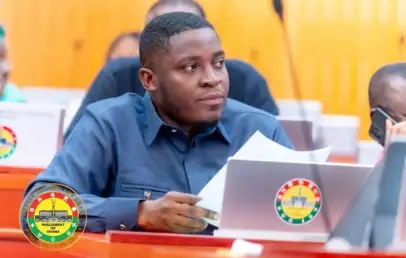
A notable example was shared by the New Patriotic Party (NPP) Member of Parliament (MP) for Mpraeso, Davis Opoku Ansah, who recounted how Mr. Mahama personally facilitated his medical evacuation abroad following a near-fatal accident in February 2020.
The intervention, according to the MP, was lifesaving and carried out with urgency and compassion.
A business empire with social impact
Through Engineers & Planners Limited, which employs over 4,500 workers and has delivered major projects in mining, infrastructure, and industrial development, Mr. Mahama has built one of the most influential indigenous business enterprises in the sub-region.
Yet, alongside this industrial footprint is a parallel reputation built on humanitarian action.
Observers describe his philanthropy as “quiet, consistent, and deeply personal,” often executed without publicity, political coloration, or public relations amplification.
His interventions, they note, tend to focus on restoring dignity, rebuilding livelihoods, and responding to urgent human need.
A legacy beyond business
From supporting children battling life-threatening illnesses, to rebuilding disaster-stricken communities, to empowering returnee migrants to restart their lives, Mr. Ibrahim Mahama’s interventions reflect a philosophy of giving that transcends conventional philanthropy.
His latest gesture toward Emmanuel Asamoah once again reinforces a pattern that has become increasingly difficult to ignore: a private citizen using personal resources not for visibility, but for impact.
As Ghana continues to navigate economic and social pressures, his model of intervention stands out as an example of how private wealth can be channelled into direct human transformation.
In an environment often characterised by loud philanthropy, Ibrahim Mahama’s approach remains distinct—quiet in delivery, but profound in consequence.