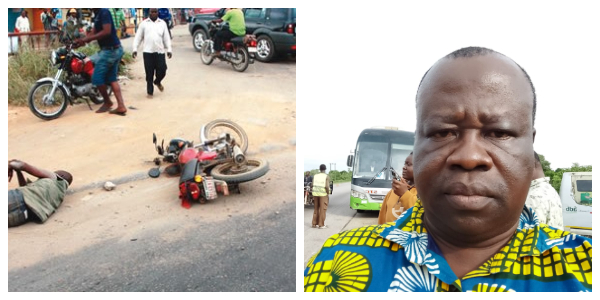
Ghana is facing a growing public health emergency as unsafe commercial motorcycle and tricycle operations continue to fuel a sharp rise in traumatic brain injuries, with young people paying the highest price through death, permanent disability and lifelong neurological complications.
The warning comes from Frank Opoku, Neuroscience Nurse Specialist at the Korle Bu Teaching Hospital, who has raised alarm over what he describes as a “silent epidemic” of brain trauma linked to the increasing use of commercial motorcycles, popularly known as okada, and tricycles (pragyia) across the country.
Marking this year’s World Brain Day on July 22, Mr Opoku said while brain health has become a global priority, Ghana must urgently confront one of the country’s most overlooked causes of neurological injury — unsafe commercial motorcycle transport.
He warned that unless decisive action is taken, the country’s healthcare system, economy and thousands of families would continue to bear the devastating consequences of preventable traumatic brain injuries (TBIs).
“Traumatic brain injury remains one of the leading causes of disability and death among young people, yet many of these injuries are entirely preventable,” he said.
Growing road safety threat
Mr Opoku observed that commercial motorcycles have become an indispensable means of transport in many parts of Ghana, particularly in rapidly expanding cities such as Accra and Kumasi as well as underserved rural communities where conventional public transport remains inadequate.
The speed, affordability and flexibility offered by okada services have made them attractive to commuters. However, he cautioned that the rapid expansion of the sector has been accompanied by widespread disregard for basic road safety standards.
According to him, excessive speeding, dangerous overtaking, overloading of passengers, reckless riding, failure to wear protective helmets, poor motorcycle maintenance and the operation of motorcycles by untrained and unlicensed riders have become common features of commercial motorcycle transport.
Passengers, he noted, often have little control over these unsafe practices and unknowingly expose themselves to potentially life-changing injuries every time they board a commercial motorcycle.
“The convenience comes at an enormous human cost,” he stressed.
Silent epidemic of brain injuries
Mr Opoku explained that traumatic brain injury occurs when a sudden impact or violent movement damages the brain during a road crash.
Although some victims survive, he said many are left with irreversible neurological complications including memory loss, impaired thinking, speech difficulties, paralysis, personality changes, depression, anxiety and other psychological disorders that permanently alter their lives.
Even seemingly minor motorcycle crashes, he warned, can result in severe brain damage whose effects may persist for decades.
He said motorcycle-related traumatic brain injuries have become a significant burden on emergency departments, neurosurgical units and rehabilitation centres across Ghana.
Victims frequently require emergency brain surgery, prolonged hospitalization and extensive rehabilitation before they can regain basic functions.
For many families, however, recovery remains financially and emotionally overwhelming.
“In many cases, victims require lifelong care. Access to specialised neurological services remains limited and costly, leaving families to shoulder enormous financial and emotional burdens,” he explained.
Helmet non-compliance worsening injuries
According to Mr Opoku, one of the biggest contributors to severe brain injuries is the failure by riders and passengers to wear approved protective helmets.
He noted that extensive studies conducted across Africa consistently demonstrate that wearing helmets significantly reduces the risk of fatal and severe head injuries during motorcycle crashes.
Despite the overwhelming evidence, compliance remains poor in many communities because of weak law enforcement, the cost of quality helmets and inadequate public education on road safety.
The consequence, he said, is that victims who might otherwise survive crashes with minor injuries instead sustain devastating brain damage.
Heavy burden on health system
Beyond individual suffering, Mr Opoku said the rise in traumatic brain injuries is placing enormous pressure on Ghana’s already overstretched healthcare system.
Emergency departments continue to receive increasing numbers of road traffic victims whose injuries could have been prevented through stricter enforcement of existing road safety laws.
He noted that intensive care units, neurosurgical wards and rehabilitation facilities frequently operate under pressure, reducing their capacity to treat other critically ill patients.
The growing number of preventable brain injuries, he warned, also diverts scarce healthcare resources that could otherwise be invested in expanding health services nationwide.
Economic consequences
Mr Opoku said the impact of traumatic brain injury extends well beyond hospitals.
Most victims, he observed, are young adults who constitute Ghana’s most economically productive population.
When they suffer permanent disability, families lose their principal source of income, children face educational disruptions because of financial hardship and employers lose skilled workers.
The cumulative effect, he warned, is reduced national productivity and increased poverty among affected households.
“The burden goes far beyond medical treatment. Entire families and communities are affected when breadwinners become permanently disabled after preventable motorcycle crashes,” he said.
Why crashes remain high
Mr Opoku attributed the growing burden of motorcycle-related brain injuries to several interconnected factors.
Chief among them is weak enforcement of existing road traffic regulations, which allows many riders to operate without valid licences or protective helmets.
He also cited Ghana’s growing dependence on motorcycles because of inadequate public transport, poor public awareness of the consequences of traumatic brain injury, economic pressures that encourage riders to prioritise income over safety, and poor road infrastructure characterised by potholes, inadequate street lighting and the absence of dedicated motorcycle lanes.
According to him, unless these structural challenges are addressed simultaneously, motorcycle crashes and brain injuries will continue to rise.
Call for urgent national action
Mr Opoku called for a comprehensive national strategy involving government, law enforcement agencies, transport unions, health professionals and communities to reverse the trend.
He urged authorities to strictly enforce helmet laws for both riders and passengers while making formal training and licensing mandatory for all commercial motorcycle operators.
He also advocated improved road infrastructure, including safer road designs and dedicated motorcycle lanes where feasible.
In addition, he called for sustained nationwide public education campaigns to increase awareness of traumatic brain injury and encourage responsible riding behaviour.
He said hospitals, neurological associations and health professionals also have a responsibility to educate communities on the lifelong consequences of brain injuries while strengthening emergency response systems to improve survival and reduce disability.
Mr Opoku further recommended expanding trauma care and neurosurgical services across regional hospitals to improve access to specialist treatment for road crash victims.
World Brain Day message
Reflecting on the significance of World Brain Day, Mr Opoku stressed that brain health is fundamental to national development and cannot be separated from road safety.
He described unsafe commercial motorcycle operations as one of Ghana’s most preventable public health threats and urged policymakers to treat the issue with the urgency it deserves.
“Protecting lives on our roads is not merely a transport issue; it is a public health imperative,” he said.
He concluded that every helmet worn, every traffic regulation enforced and every unsafe riding practice prevented represents another life protected from avoidable brain injury.
“This World Brain Day should serve as a national call to action. Through stronger enforcement, better education and safer riding practices, Ghana can significantly reduce the burden of traumatic brain injuries and protect the future of its young population,” he added.