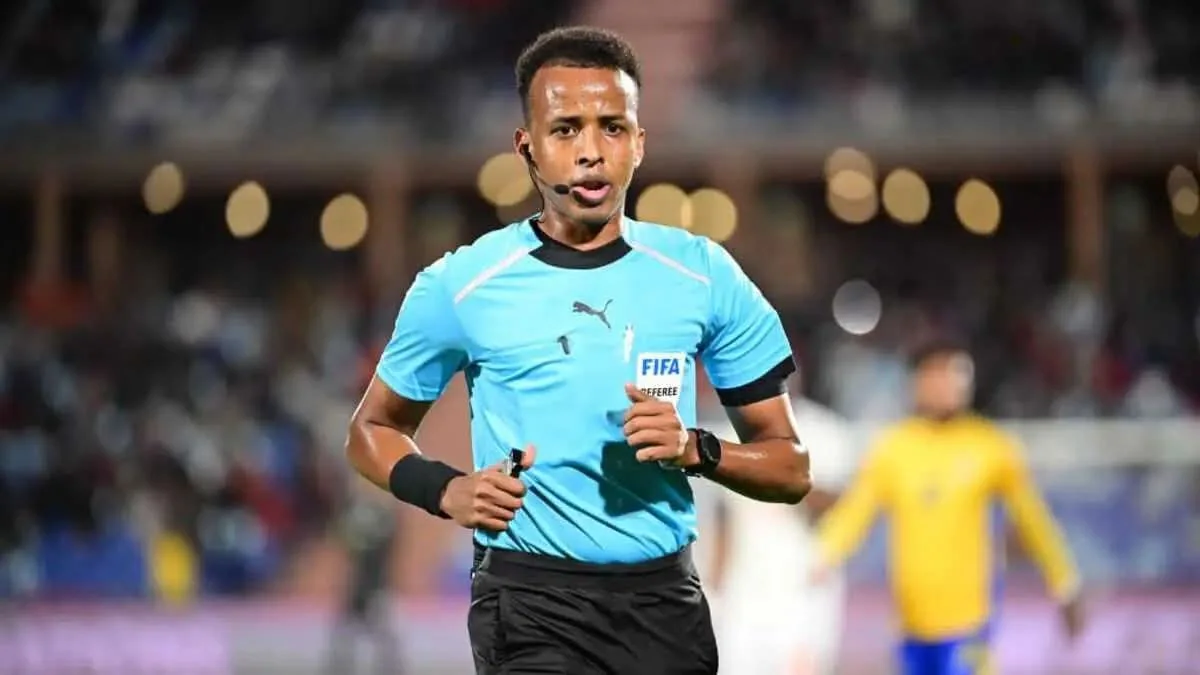
Somali-born referee Omar Abdulkadir Artan has been ruled out of officiating duties connected to the 2026 FIFA World Cup after being denied entry into the United States, according to a statement from FIFA.
The development has sparked concern within football circles, particularly across Africa, where Artan is regarded as one of the continent’s top referees. FIFA said the decision was made by US immigration authorities and confirmed that the official will no longer participate in training and match assignments linked to the tournament.
Artan had been scheduled to travel to the United States as part of preparations for upcoming international football activities associated with the World Cup cycle. However, his entry was reportedly refused, preventing him from taking up his assigned duties.
In a statement, FIFA said it had been informed by US authorities that Artan’s immigration status would not be changed and reiterated that visa approvals and admission into host countries remain the responsibility of national governments.
“FIFA can confirm that match official Omar Abdulkadir Artan will be unable to train and officiate at the FIFA World Cup 2026 after he was denied entry into the United States,” the organisation stated.
The Somali Football Federation has since contacted FIFA seeking clarification over the circumstances surrounding the decision.
Speaking to the BBC World Service, Andrew Giuliani defended the move, saying the decision taken by US Customs and Border Protection was appropriate, although he declined to discuss specific details relating to the case.
The incident has generated debate among football administrators and supporters, with many expressing concern about the potential impact of immigration restrictions on match officials selected for major international tournaments.
Artan has earned widespread recognition through his performances in competitions organised by the Confederation of African Football and is considered one of Africa’s most respected referees. His exclusion from World Cup-related activities is likely to intensify discussions about the challenges officials may face when international sporting events intersect with immigration and travel regulations.
As reactions continue, football stakeholders are calling for greater clarity and cooperation to ensure that qualified referees and officials are able to participate fully in global competitions.