Road crashes are costing Ghana an estimated US$4.55 billion every year, equivalent to about 2.1% of Gross Domestic Product (GDP), as the World Bank warns that the country’s road safety crisis has become a major economic burden.
The annual cost of crashes is reportedly higher than Ghana’s entire national education budget, highlighting the scale of the economic losses associated with road accidents and the urgent need to treat road safety as a national development priority.
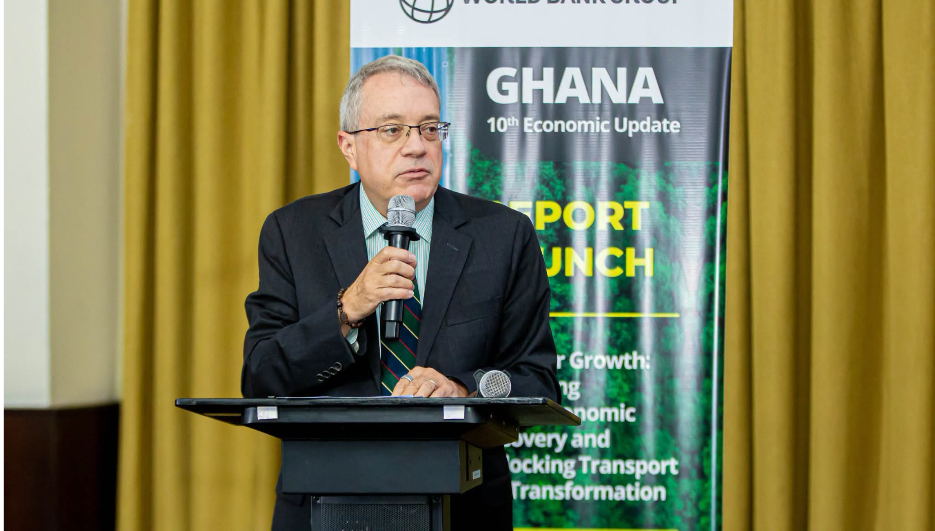
The World Bank Division Director for Ghana, Liberia and Sierra Leone, Dr Robert Taliercio O’Brien, disclosed this at the launch of the Ghana 10th Economic Update in Accra.
The report, themed “Reset for Growth: Sustaining Macroeconomic Recovery and Unlocking Transport for Transformation,” identified weaknesses in Ghana’s transport infrastructure and institutional arrangements as major constraints to economic growth and competitiveness.
Dr O’Brien said the country’s transport challenges went beyond physical infrastructure, pointing to fragmented institutional responsibilities that had hindered effective coordination in the planning and execution of transport programmes.
Road network under pressure
According to the World Bank, Ghana has about 94,200 kilometres of roads, but only approximately 27% are paved.
More than half of the paved road network is reportedly in fair-to-poor condition, contributing to higher vehicle operating costs, longer travel times, reduced productivity and increased risks for road users.
The economic impact of road crashes compounds these infrastructure challenges, with the annual US$4.55 billion cost representing resources that could otherwise support investment, social services and productive economic activity.
The World Bank is therefore calling for road safety to be treated as a public health emergency, alongside broader reforms aimed at improving the efficiency and resilience of Ghana’s transport system.
Rail infrastructure deteriorates
The report also highlighted the deterioration of Ghana’s railway infrastructure.
The country’s operational rail network has fallen sharply from 947 kilometres in 1960 to about 160 kilometres by 2020.
Over the same period, population access to rail services declined from nearly 30% to less than one per cent.
The deterioration has increased Ghana’s reliance on road transportation, placing additional pressure on an already constrained road network and reinforcing the need to revive alternative transport modes.
Dr O’Brien said transport transformation was not merely an infrastructure issue but one linked directly to economic growth, competitiveness and employment.
“This is not just an infrastructure story – it is a growth story, a competitiveness story, a jobs story,” he said.
Six pillars for transport transformation
The World Bank identified six priority areas for transforming Ghana’s transport sector.
These include operationalising the Road Maintenance Trust, developing a unified national transport sector strategy and revitalising the western and eastern railway corridors.
The Bank also called for road safety to be treated as a public health emergency to reduce fatalities, while climate-resilient design standards should be incorporated into new infrastructure projects.
Another proposed reform is the deployment of a digital single window to streamline permits, inspections and logistics and improve efficiency across the transport sector.
Dr O’Brien said Ghana’s Big Push Infrastructure Programme represented a significant ambition that the World Bank endorsed.
However, he cautioned that the benefits of large-scale infrastructure investment would depend on complementary reforms.
“The returns will only materialise if reforms in maintenance financing, institutional coordination, and governance are implemented alongside the capital investment,” he said.
US$500m for feeder roads
The World Bank has already committed substantial financing towards addressing Ghana’s transport infrastructure deficit.
In May 2026, the Bank provided US$500 million to the government through the Ghana Market Access and Connectivity Project.
The financing is expected to support the rehabilitation of approximately 1,050 kilometres of feeder roads in 13 regions under performance-based maintenance contracts.
The intervention is expected to reduce travel times by about 40 per cent, lower transportation costs and reduce post-harvest losses.
It is also projected to create about 25,000 jobs, including 7,500 jobs for women.
Govt backs infrastructure push
Finance Minister Dr Cassiel Ato Forson said the government recognised the infrastructure deficit and was investing to bridge the gap.
His speech, read by the Ministry’s Coordinating Director, Mr Samuel Arkhurst, said Ghana’s recent economic gains should be regarded as a foundation for translating growth into jobs, investment and improved opportunities for communities that had waited longest for development.
“This is precisely the thinking behind our Big Push Infrastructure Programme, the largest coordinated investment in strategic transport infrastructure that Ghana has undertaken in recent years,” Dr Forson said.
He said by the end of June 2026, projects under the programme were underway in all 16 regions of the country.
According to him, 13 projects were at least halfway completed, while six had progressed beyond the 75% completion mark.
Accra-Kumasi Expressway
Dr Forson said work was also progressing on the proposed 176-kilometre, six-lane Accra-Kumasi Expressway.
He said about 122 kilometres of the right-of-way had been cleared, while feasibility studies and engineering designs were expected to be completed by the end of August.
Construction procurement was scheduled for September as part of efforts to accelerate delivery of the project.
He also cited progress on the Adawso-Ekye Amanfrom Bridge over the Afram River and the Dambai Bridge along the Eastern Corridor.
The projects, he said, were intended to address long-standing connectivity gaps that had constrained communities and economic activity for decades.
Transport investment and economic inclusion
The Finance Minister said improved transport infrastructure would have direct implications for farmers, businesses and communities by reducing the cost and time associated with moving people and goods.
He said the World Bank-funded feeder roads programme would be particularly important for agricultural communities.
“When a farmer in the Afram Plains or along the Northern Corridor can get her produce to market without losing a third of it to a damaged road, that is not just an infrastructure achievement. It is a food security story, an income story, and a story about who gets to share in growth,” he said.
The World Bank’s warning on road crashes therefore adds another dimension to Ghana’s transport infrastructure challenge.
While the government’s Big Push programme seeks to expand and rehabilitate the country’s transport network, the World Bank insists that the economic returns will remain limited unless Ghana simultaneously tackles road safety, maintenance financing, institutional fragmentation and governance.
With road crashes alone estimated to drain US$4.55 billion from the economy annually, the cost of inaction is no longer simply measured in damaged vehicles, injuries and fatalities.
It represents a substantial economic loss that directly undermines productivity, household incomes and Ghana’s broader development ambitions.