
The National Health Insurance Authority (NHIA) has taken its drug abuse awareness campaign to Navrongo, engaging students from senior high schools, universities, colleges of education and nursing training institutions on the dangers of substance abuse, healthy living and access to healthcare.
The engagement formed part of the NHIS Campus Connect initiative, organized in partnership with Nu-Bia Events under the theme, “Say No to Drugs, Yes to Life: Protecting Our Future Through Healthy Choices.”
Addressing participants, the Deputy Chief Executive Officer of the NHIA, Ms. Anatu Anne Seidu Bogobiri Esq., urged young people to make responsible decisions and resist the pressures that often lead to substance abuse.
She observed that many young people face academic, social and personal pressures and may be tempted to use drugs as a coping mechanism, but cautioned that such choices often lead to long-term consequences.
“Most addictions do not begin with a big decision. It usually starts small — just try it once, everybody is doing it, or it will help you relax. But slowly, those choices begin to take away your focus, your discipline, your health and eventually your future,” she said.
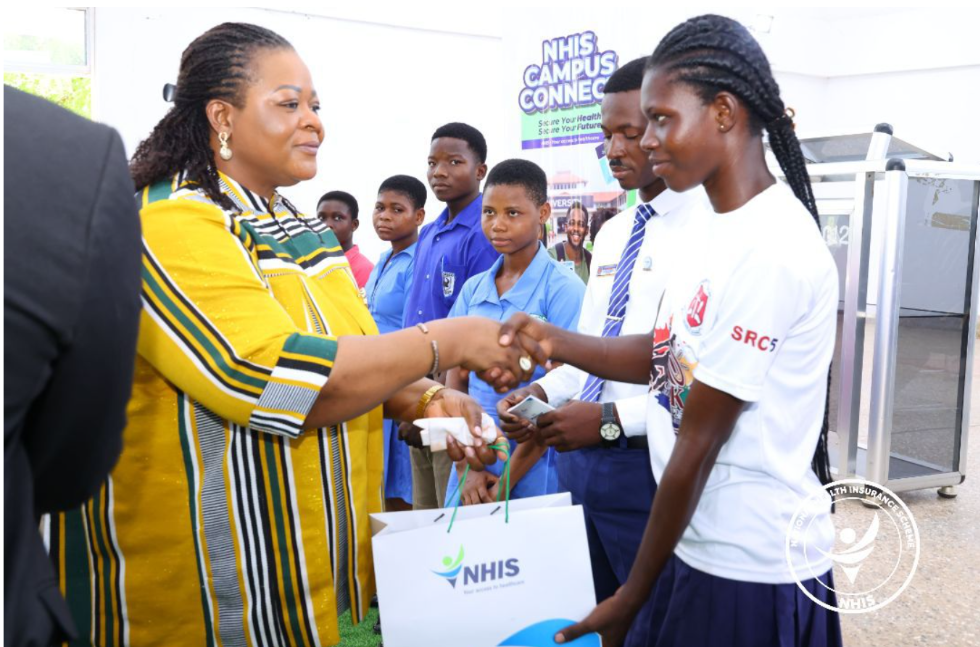
Ms. Bogobiri encouraged students to prioritize both their physical and mental well-being, stressing that seeking help during difficult moments should never be viewed as a sign of weakness.
“Mental health is real. Some people are smiling publicly but struggling privately. If you are overwhelmed, stressed, anxious or emotionally tired, speak to somebody. Ask for help. There is absolutely no shame in that,” she advised.
She also used the platform to educate participants on key healthcare interventions being implemented through the NHIA, including the NHIS registration and renewal waiver exercise, the Free Primary Healthcare initiative and Mahama Cares.
According to her, the waiver exercise has temporarily removed processing fees, premiums and waiting periods to enable more Ghanaians to access healthcare services without delay, while the Free Primary Healthcare initiative promotes prevention, early diagnosis and timely treatment. She noted that Mahama Cares is designed to support individuals living with chronic and long-term illnesses.
“While these interventions are different, they are all connected by one important goal — protecting lives and making healthcare more accessible to ordinary Ghanaians,” she stated.
A highlight of the programme was the testimony of Barry Logozure, a former drug addict who shared his journey of recovery and encouraged students to stay away from substance abuse.
Moved by his story, Ms. Bogobiri commended his resilience and determination to rebuild his life and help others avoid the mistakes he once made.
“Barry, I salute you. Your journey from struggle to purpose is deeply inspiring. The courage it took to overcome addiction and share your story to help others is rare. Your story is a story of hope for many young people. I am proud of you. No turning back. Keep leading,” she said to applause from participants.
She also praised Barry’s family for supporting him throughout his recovery and allowing him to use his experience to educate and inspire others.
The programme featured presentations from healthcare professionals and entrepreneurship experts, including representatives of Careline Health Solutions and Mr. Benjamin Anyaana, Chief Executive Officer of B.C. Bencyn Co. Ltd., who encouraged students to explore entrepreneurship and self-employment opportunities.

Students actively participated in discussions and question-and-answer sessions, engaging speakers on issues relating to health, mental well-being, entrepreneurship and personal development. Many participants commended the NHIA and its partners for bringing the programme to the region, expressing confidence that the campaign would contribute to efforts aimed at reducing drug abuse among young people.
The NHIS Campus Connect initiative forms part of the Authority’s broader efforts to deepen engagement with young people, promote preventive healthcare, increase awareness of the National Health Insurance Scheme and encourage healthy lifestyles among students across the country.