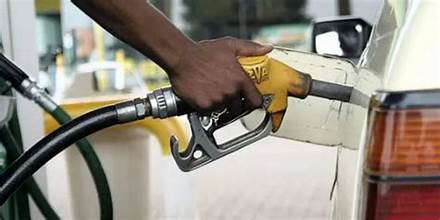
Ghanaian motorists and households are bracing for a sharp rise in petroleum prices as the National Petroleum Authority (NPA) announces new price floors for the April 1, 2026 pricing window. The increase will see the cost of fuel and cooking gas surge, with significant implications for consumers and the broader economy.
According to figures released by the Chamber of Oil Marketing Companies (COMAC), a litre of petrol will sell at GH¢15.19, while diesel will rise to GH¢17.85 per litre.
For households that rely on Liquefied Petroleum Gas (LPG), the cost will increase to GH¢16.59 per kilogramme.
Star Oil and GOIL which have been engaged in fierce competition are likely to sell lower than these figures.
Significant hikes across products
The adjustments follow a revision of price floors by the NPA. Petrol’s floor price was raised from GH¢11.57 to GH¢13.30 per litre, representing a GH¢1.73 increase.
Diesel, which has experienced the largest hike, saw its floor rise from GH¢14.35 to GH¢17.10 per litre — a GH¢2.75 increase over just two weeks.
LPG also edged higher, moving from GH¢10.67 to GH¢10.71 per kilogramme.
The NPA explained that these prices reflect the Petroleum Products Pricing Guidelines (PPPG) and are mandatory for all Oil Marketing Companies (OMCs) and LPG Marketing Companies (LPGMCs) during the April pricing window.
The Authority clarified that the quoted figures exclude premiums charged by International Oil Trading Companies (IOTCs), as well as operating margins of Bulk Import, Distribution and Export Companies (BIDECs), and the marketers’ and dealers’ margins of OMCs and LPGMCs.
These additional costs will be determined independently by the companies.
Implications for consumers
For everyday consumers, the increase translates into higher costs of transportation and cooking.
Commuters and taxi operators face direct pressure, as fuel is a major input in both private and commercial transport.
Households that depend on LPG for cooking will also feel the pinch, particularly in urban areas where gas usage is more prevalent.
Economists warn that sustained fuel hikes can trigger wider inflationary pressures, as transportation costs feed into the prices of goods and services across the economy.
The rise in diesel prices is particularly concerning, given the product’s central role in logistics, agriculture, and public transport.
Economic considerations
The price adjustments also reflect global oil market trends and the need for companies to maintain viable operations amid fluctuating crude prices and foreign exchange pressures.
By setting new price floors, the NPA ensures that OMCs and LPGMCs can continue operations while mitigating the risk of supply disruptions.
However, higher fuel prices may slow consumer spending in other sectors and raise production costs for businesses that rely on transport and energy-intensive processes.
Industry watchers suggest that unless domestic production or alternative energy solutions are expanded, Ghana could continue to experience import-driven cost pressures that affect both households and the broader economy.
A balancing act
While the NPA’s revision safeguards the sustainability of petroleum marketing companies, it presents a challenge for policymakers seeking to balance energy affordability with fiscal and economic stability.
Consumers are advised to anticipate higher transportation fares, increased cost of goods, and adjustments in utility services as market actors incorporate the new fuel prices into their pricing structures.
The new price regime, effective April 1, 2026, underscores the ongoing volatility in fuel markets and highlights the interconnected impact of global oil prices, domestic policy, and the livelihoods of ordinary Ghanaians.
Across the globe, a new kind of crisis is gripping nations—not a pandemic, not a natural disaster, but an unprecedented energy crunch that threatens daily life, commerce, and national security. From Europe to Asia and Africa, governments are imposing measures to reduce fuel consumption, maintain essential services, and mitigate the impact of skyrocketing global oil and gas prices.
While Ghana has yet to announce formal energy lockdowns, the unfolding global situation provides a sobering glimpse into what could lie ahead if energy supplies remain constrained.
The crisis has been triggered in part by rising geopolitical tensions in the Middle East, particularly involving the United States, Israel, and Iran, which have disrupted oil supply chains and caused global benchmarks to spike.
Beyond the political catalysts, nations are confronting a hard reality: when fuel is unavailable or unaffordable, societies must adapt swiftly or face paralysis.
Authorities around the world are moving beyond encouragement and into enforcement.
Mandatory fuel rationing is now a reality in multiple countries, reshaping daily life.
From curfews to work-from-home mandates, the tools being used to curb consumption are both unprecedented and, for many citizens, highly disruptive.
The aviation industry, once the emblem of global connectivity, has been particularly hard hit.
Airlines are grappling with soaring fuel costs, leading to mass cancellations, reduced routes, and uncertainty over refueling for return journeys.
Major transit hubs are operating at reduced capacity, effectively weakening global travel corridors.
Industrial activity is also suffering. Rolling blackouts and fuel shortages are forcing factories and other energy-intensive industries to partially shut down.
Global oil demand is falling, not because of efficiency gains, but because supply constraints are curbing activity.
In Europe, emergency energy protocols have been activated months ahead of schedule, prioritizing storage over consumption in what analysts describe as an “industrial lockdown.”
This new reality is defined not by disease but by scarcity. Governments insist these measures are preventive, aimed at maintaining stability and avoiding panic.
Yet the broader impact is unmistakable: trucks stop running when fuel is scarce, goods cannot move, and planes remain grounded.
The International Energy Agency has unveiled a comprehensive ten-point action plan aimed at immediately reducing global energy demand.
Designed as short-term measures to curb consumption while ensuring essential services continue, the plan addresses transport, household energy use, and industrial operations.
It begins with encouraging work-from-home arrangements wherever possible, allowing employees to avoid commuting and thereby lowering fuel use, particularly in urban centers. Road travel is further targeted through a recommendation to reduce highway speed limits by at least ten kilometers per hour, a step that can significantly cut fuel consumption for passenger vehicles, vans, and trucks alike.
Public transportation is also a focus, with a call to shift commuters from private cars to buses, trains, and other mass transit options, reducing reliance on oil.
In congested cities, authorities are encouraged to implement alternating access schemes for private vehicles based on number plates, easing traffic and discouraging unnecessary driving.
Car-sharing initiatives and eco-driving practices are highlighted as additional ways to increase vehicle efficiency, while commercial vehicles and delivery operations are urged to optimize loads, maintain vehicles properly, and adopt efficient driving habits to lower diesel consumption.
The plan addresses household energy needs as well, advising that liquefied petroleum gas, or LPG, be diverted from transport and reserved for essential uses such as cooking.
To further reduce energy pressure, it recommends avoiding air travel wherever alternatives exist, limiting non-essential flights, particularly for business purposes.
Households are also encouraged to switch to modern cooking solutions, including electric or alternative methods, reducing dependence on LPG.
Finally, industries are called upon to implement short-term efficiency and maintenance measures, freeing up petrochemical feedstocks and reducing oil use without compromising essential production.
Taken together, these measures reflect a global strategy to navigate energy scarcity pragmatically, balancing the need for conservation with the continuity of economic and social activity.
Across continents, countries are selectively implementing elements of this plan, alongside national-specific measures tailored to their circumstances.
Ghana, for now, has not announced formal energy lockdown measures.
However, with global oil prices surging and regional supply chains under pressure, policymakers are monitoring international trends closely.
Ghanaian authorities may consider adopting similar strategies—such as work-from-home policies, vehicle rationing, and industrial efficiency measures—to safeguard energy security if shortages intensify.
Conclusion
The global energy crisis has ushered in a new era of “lockdowns” driven not by viruses but by scarcity.
Nations from Asia to Europe and Africa are responding with rationing, curfews, price controls, and emergency policies to maintain essential services.
The International Energy Agency’s 10-point plan provides a blueprint for reducing demand, yet the economic, social, and logistical ramifications are already being felt worldwide.
As countries navigate a precarious balance between energy conservation and economic activity, the world is witnessing an extraordinary test of resilience.
The immediate priorities are clear: ensure essential services continue, prevent social unrest, and stabilize fuel markets.
The broader implications—on travel, trade, and industrial output—may be felt for months, if not years, to come.
Ghana’s response in the coming months will be critical in determining whether the country can weather potential disruptions with minimal impact on its citizens, economy, and essential services.
The global situation underscores a universal lesson: energy scarcity is no longer a distant risk; it is here, and it is reshaping life across the planet.