Ghanaian businessman and Founder of Dzata Holdings Limited, Ibrahim Mahama, has signalled his commitment to supporting the innovation journey of young Ghanaian technology developer Naamgwinaa Samuel, in a move that could provide the critical financial backing and strategic investment needed to transform the young inventor’s promising artificial intelligence (AI) innovations into commercially viable products.
The intervention by one of Ghana’s most successful indigenous entrepreneurs is being widely viewed as a significant milestone for the country’s emerging AI ecosystem, demonstrating the increasingly vital role local private capital can play in nurturing African-developed technologies capable of solving the continent’s unique development challenges.
For many young innovators, brilliant ideas often fail to progress beyond the prototype stage due to limited access to funding, industrial partnerships, manufacturing capacity, mentorship and commercial networks.
Industry observers believe Ibrahim Mahama’s support could help bridge that gap by providing the resources necessary to refine, manufacture and scale Samuel’s AI-powered inventions for both domestic and international markets.
The support also sends a powerful signal that African investors are increasingly recognising the strategic importance of investing in African talent to build globally competitive technology solutions rather than depending solely on imported innovations.
Ibrahim Mahama’s intervention carries considerable weight, given his remarkable success in building one of Ghana’s largest indigenous business conglomerates.
Through Dzata Holdings Limited, he has established a diversified business empire spanning mining, engineering, construction, cement manufacturing, logistics, agriculture and strategic investments.
The Group includes Engineers & Planners Company Limited, one of West Africa’s leading mining and construction firms; Damang Gold Mines Limited; Dzata Cement, Ghana’s first wholly Ghanaian-owned cement manufacturing company; Asutsuare Poultry Farm; Man Bosch Ghana Limited; strategic mining partnerships, including ArcelorMittal; and interests in Cardinal Gold Mine.
His decision to support a young technology entrepreneur therefore represents more than philanthropy—it reflects growing confidence that innovation and artificial intelligence could become major drivers of Ghana’s future economy.
Commitment to support innovation
The announcement was made by Ibrahim Mahama’s Special Aide, Rafik Mahama, in a Facebook post on Saturday, July 4.
According to him, he contacted Naamgwinaa Samuel on behalf of the businessman to formally communicate their intention to support his innovation journey.
“On behalf of Mr. Ibrahim Mahama, I reached out this morning to young innovator Naamgwinaa Samuel to express our intention of supporting his remarkable innovation journey,” he wrote.
Rafik Mahama described Samuel as one of Ghana’s most promising young innovators whose expanding portfolio of AI-powered projects is focused on solving practical problems while improving everyday life through technology.
“Samuel has developed several AI-powered innovations aimed at solving real-world challenges and making life easier through technology. We believe this support and encouragement will empower him to advance his work, develop even more groundbreaking solutions, and create technologies that make a lasting impact in Ghana and beyond.”
He further emphasised that innovation succeeds when talented young people receive encouragement from visionary leaders who are willing to invest in their ideas.
“Every great innovation begins with someone who dares to dream and with others who believe in that vision. Samuel, thank you for your passion, creativity, and unwavering commitment to shaping a better future through innovation. We look forward to seeing your ideas transform lives and inspire the next generation of innovators.”
His remarks suggest that the proposed support may extend beyond financial assistance to include mentorship, business guidance and access to broader industrial networks that could accelerate the commercialisation of Samuel’s technologies.
AI invention attracting national attention
Naamgwinaa Samuel has recently captured national attention after unveiling one of his latest AI-powered creations—a humanoid-inspired smart phone stand capable of holding a mobile phone while interacting naturally with users through conversational artificial intelligence.
The innovative prototype combines intelligent voice interaction with practical functionality, enabling it to answer questions in a human-like conversational manner while securely supporting a mobile device.
As part of the design concept, Samuel customised the device with Ibrahim Mahama’s name, symbolising the fusion of innovation, technology and entrepreneurship.
Explaining the inspiration behind the project on social media, he wrote: “Ghanaian businessman and industrialist Ibrahim Mahama has been featured in this project. This is a smart humanoid phone stand inspired by human interaction, designed to hold a mobile phone and respond like a person when asked questions.”
He added “His name has been customised on the design as part of the creative concept, blending innovation, technology and creativity into a single design. The ‘NaSaT’ beneath it stands for Naamgwinaa Samuel Technologies.”
The project has generated significant interest online, with many Ghanaians praising the creativity behind the locally developed AI concept.
A proven record of innovation
Samuel is no stranger to technological innovation.
He first gained national recognition as a teenager after developing several prototype inventions that attracted government attention and support in 2019.
Rather than slowing down, he has consistently expanded his portfolio of locally developed technologies, demonstrating a strong commitment to solving real-life challenges through innovation.
His breakthrough came in 2024 when he emerged winner of the Presidential Pitch Competition after developing the NASAT Smart Switch—an intelligent energy management system that automatically controls electricity consumption to minimise energy waste.
The innovation earned him GH¢250,000 in funding to commercialise the product.
His growing innovation portfolio also includes the NASAT Smart Bed, an automated weather-responsive crop drying system designed to protect cocoa, maize, pepper and other agricultural produce from unexpected rainfall while accelerating drying through controlled heating technology.
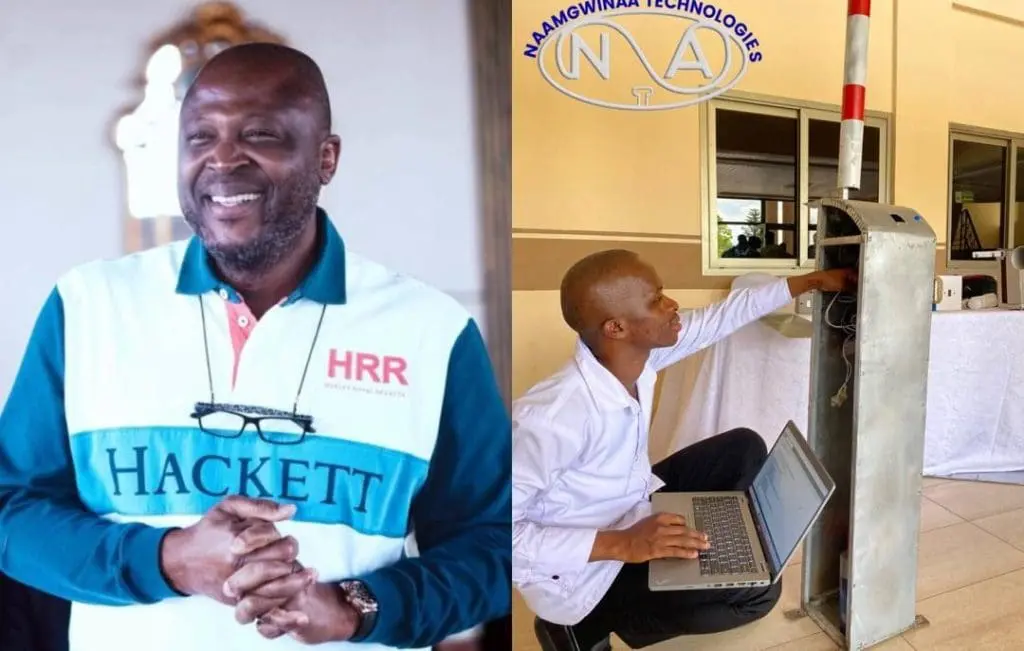
He has further developed the NASAT E-Gate, an automated electronic toll collection system aimed at improving revenue mobilisation while reducing traffic congestion through digital payment technology.
Collectively, these innovations demonstrate his focus on applying artificial intelligence, automation and smart engineering to solve practical challenges in agriculture, transportation, energy efficiency and public service delivery.
Funding remains the missing link
Technology experts say one of the biggest obstacles facing young African innovators is not the lack of ideas but the absence of patient capital capable of transforming prototypes into commercial products.
Developing AI solutions often requires significant investment in hardware, software infrastructure, research, testing, product refinement, certification and manufacturing before products can successfully enter the market.
Without sustained financial support, many promising innovations fail to progress beyond demonstration models.
Industry analysts believe Ibrahim Mahama’s intervention could therefore become the catalyst that enables Samuel to move from prototype development to large-scale production.
Such support could finance further research and development, strengthen product design, expand engineering teams, protect intellectual property through patents, establish manufacturing partnerships and facilitate market entry both within Ghana and across Africa.
Beyond direct funding, access to Ibrahim Mahama’s extensive business network could expose the young innovator to investors, industrial partners and potential customers capable of accelerating the commercial success of his inventions.
Building Africa’s AI future
Artificial intelligence is rapidly becoming one of the world’s most transformative technologies, reshaping industries ranging from healthcare and agriculture to manufacturing, finance, education and public administration.
However, technology experts argue that Africa’s long-term competitiveness will depend on its ability to produce indigenous AI solutions designed around local realities rather than relying exclusively on imported technologies.
Supporting local innovators helps strengthen domestic research and development, retain intellectual property within Africa, create high-value employment opportunities and build technologies capable of addressing uniquely African challenges.
Locally developed AI systems are also better positioned to understand African languages, cultures, farming systems, business environments and governance structures.
As governments across the continent intensify efforts to build digital economies and promote responsible AI adoption, partnerships between entrepreneurs, investors and technology innovators are increasingly being recognised as essential to transforming innovative ideas into globally competitive businesses.
Against this backdrop, Ibrahim Mahama’s decision to support Naamgwinaa Samuel represents far more than an act of encouragement.
It is emerging as a strategic investment in Ghana’s innovation ecosystem and a powerful demonstration that African capital backing African talent can help produce world-class artificial intelligence solutions capable of driving sustainable economic transformation across the continent.