The interception of a 320-kilogramme methamphetamine shipment worth an estimated US$208 million in Australia has triggered serious questions about Ghana’s export security architecture, with calls mounting for authorities to investigate how such a large consignment was able to leave the country without being detected.
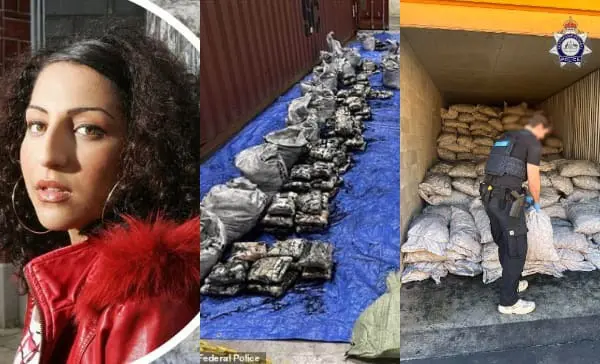
Australian authorities announced that the drugs were concealed in two shipping containers declared as carrying charcoal and shipped from Ghana to Sydney’s Port Botany.
The seizure has now shifted attention to Ghana’s ports and security agencies, with industry observers and anti-narcotics advocates asking what inspections, screening procedures and verification processes the containers underwent before departing Ghana.
At the centre of the controversy is a fundamental question: how did a shipment containing 320 kilogrammes of methamphetamine travel thousands of kilometres from Ghana and only get detected upon arrival in Australia?
Australian authorities detect irregularities
According to the Australian Border Force (ABF), officers identified irregularities in two containers that arrived from Ghana in April 2026.
The containers had been declared as carrying charcoal.
However, X-ray examinations reportedly revealed suspicious white crystalline substances hidden within the cargo.
Subsequent forensic testing confirmed the substance as methamphetamine.
Authorities estimated the drugs had a street value of approximately AU$296 million, equivalent to about US$208 million.
Australian officials said the quantity seized could have supplied about 3.2 million individual street-level drug deals.
The drugs were removed under controlled conditions before investigators continued a wider operation targeting the suspected trafficking network.
3 Arrested
Australian investigators subsequently arrested three individuals allegedly linked to the shipment.
Actress Emaa Hussen from the United Kingdom was arrested after investigators monitored the delivery of the containers to a storage facility in Girraween, western Sydney.
Police allege she supervised the unloading of bags from one of the containers before the materials were transported to a residence in Blacktown.
A subsequent search led to the recovery of 32 bags believed to have previously contained methamphetamine, along with electronic devices and documents.
She has been charged with attempting to possess a commercial quantity of a border-controlled drug, an offence carrying a maximum sentence of life imprisonment.
Two additional suspects were arrested in South Australia after investigators allegedly linked them to efforts to secure storage facilities using false identities.
The three remain before Australian courts as investigations continue.
How did the shipment leave Ghana?
While Australian authorities have detailed how the drugs were intercepted, little is publicly known about the circumstances under which the shipment departed Ghana.
The development has raised concerns among security experts about whether the containers were subjected to adequate screening before export.
Questions are also being asked about whether the shipment passed through standard customs inspections, scanning systems and risk-assessment procedures at Ghana’s ports.
Industry stakeholders argue that the seizure highlights the need for a comprehensive review of cargo examination processes, particularly for high-risk export consignments.
The case is expected to renew scrutiny of Ghana’s efforts to combat international narcotics trafficking through maritime routes.
Demand for investigation
The seizure is likely to prompt calls for investigations by agencies including the Narcotics Control Commission (NACOC), the Ghana Revenue Authority’s Customs Division, port security authorities and other relevant state institutions.
Analysts say investigators will need to establish where the drugs entered the supply chain, whether the narcotics were concealed before reaching the port, and whether any lapses occurred during export processing.
The case also raises broader concerns about Ghana’s reputation within international trade and shipping networks.
With Australia successfully detecting the narcotics through cargo screening technology, observers say Ghanaian authorities must establish whether existing controls are adequate to prevent similar incidents.
As investigations continue in Australia, many are calling for Ghanaian authorities to provide answers regarding the origin of the shipment, the inspections it underwent and how one of the largest methamphetamine seizures linked to Ghana was able to leave the country’s shores undetected.