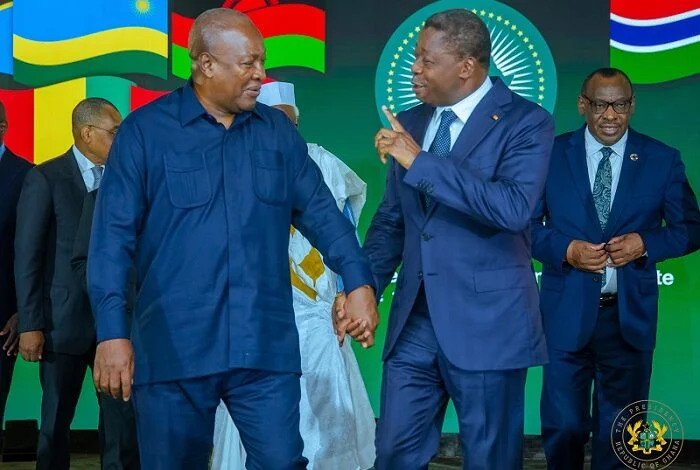
Ghana moves to international arbitration over maritime dispute with Togo

Ghana has formally notified the Government of Togo of its decision to initiate international arbitration to delimit the maritime boundary between the two countries under the framework of the United Nations Convention on the Law of the Sea (UNCLOS).

The move comes after eight years of bilateral negotiations between Accra and Lomé failed to produce a mutually acceptable agreement.

Despite multiple rounds of diplomatic engagement and technical discussions, both sides were unable to reach a final settlement regarding the precise demarcation of their shared maritime territory.

According to government officials, the decision is intended to ensure a peaceful and rules-based resolution to the dispute while preventing further misunderstandings.

Recent incidents involving certain institutions of the two countries have heightened tensions, particularly in areas where fishing activities and offshore resource exploration overlap.

By referring the matter to arbitration, Ghana seeks clarity and legal certainty over jurisdiction in the affected waters.

Authorities emphasized that arbitration under UNCLOS is a recognized international mechanism designed to help coastal states resolve maritime boundary disagreements through legal interpretation rather than confrontation.

Ghana maintains that pursuing this path demonstrates its commitment to international law, stability in the Gulf of Guinea, and the protection of economic activities within its maritime space.

The government also stressed that the decision should not be interpreted as hostility toward Togo. Instead, it aims to preserve long-standing relations between the neighboring countries.

Officials reiterated Ghana’s dedication to good neighbourliness, cooperation, and dialogue throughout the arbitration process.

Once arbitration proceedings begin, an independent tribunal will examine historical claims, geographic factors, and legal arguments from both parties before issuing a binding determination.

While the process may take time, Ghana believes it offers the most transparent and peaceful route to a durable settlement.

The outcome is expected to provide certainty for fisheries, maritime security operations, and future offshore investments, benefiting both nations and contributing to regional stability.

0 Comment

Leave a comment