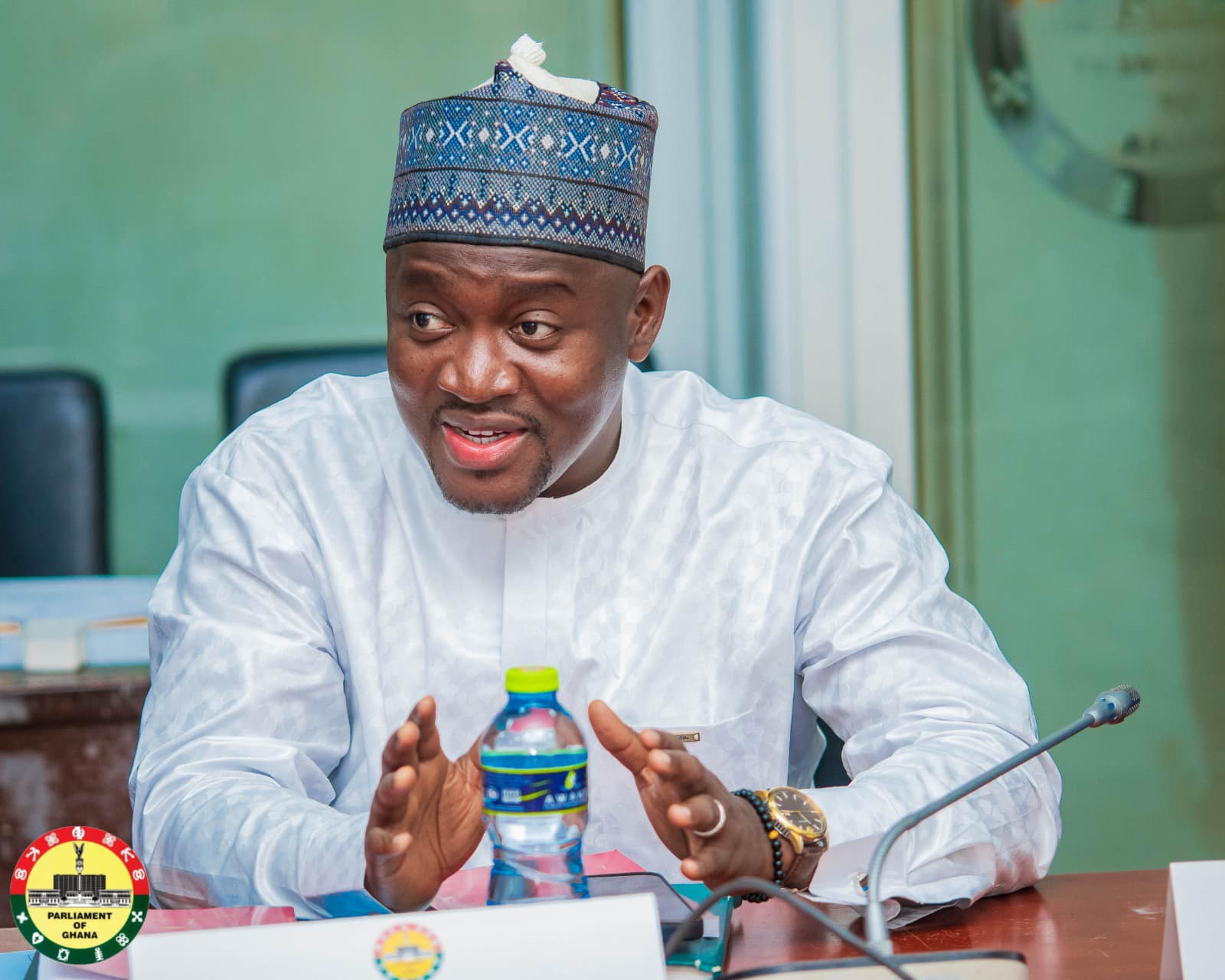
The Deputy Minister of Roads and Highways, Alhassan Suhuyini, has rejected claims that freedom of speech in Ghana is under attack, arguing that what is increasingly coming under scrutiny is “irresponsible speech” and conduct.
His comments follow the arrest and subsequent two-week remand of Salomey Awity Baffoe, a senior nursing officer accused of aiding the person police identify as the operator of the “Ghana Jollof” TikTok account, which has been critical of government officials.
Mr Suhuyini said there was a need to distinguish between strong criticism, which he said had long been part of Ghana’s media and political discourse, and speech or conduct that crosses legal or professional boundaries.
“Free speech is not; irresponsible speech may be. But free speech, I don’t see it to be under attack,” Suhuyini said on Eyewitness News on Friday, September 18, 2026.
He said journalists and media practitioners should not automatically equate legal action against individuals over their conduct or statements with an attack on freedom of expression.
“If you, by virtue of having access to a media platform, engage in what clearly is irresponsible conduct, and then you are called to account for that irresponsibility, you don’t link that to free speech,” he said.
Suhuyini, a former journalist, said Ghana’s media landscape had historically accommodated strong criticism of governments and public officials.
He cited journalists including Kweku Baako Jr., Kwesi Pratt Jr. and Professor Kofi Karikari, whom he said were critical of the Jerry Rawlings administration and influenced his own decision to pursue journalism.
“Strong, critical opinions have always been with our media, and it has never really come under attack,” he said.
He acknowledged that there had been periods when media freedom came under pressure, including instances where media houses were shut down because of their perceived political affiliations.
But you’re talking here about the laws of this country. Do we have laws in this country?” he asked.
Suhuyini said that where a person is arrested and charged under an existing law, the judicial process should be allowed to determine whether the conduct in question violated that law.
“If the law exists and there is a charge and there’s evidence of a conduct, I mean, it is the person’s lawyers to now prove that that conduct does not fall foul of the law,” he said.
He maintained that an arrest or prosecution should not, by itself, be presented as proof that free speech was being suppressed.
“For now, I am saying that I don’t think that we have a media, I don’t think that the media is under attack, I don’t think free expression is under attack,” Suhuyini said.
Citinewsroom