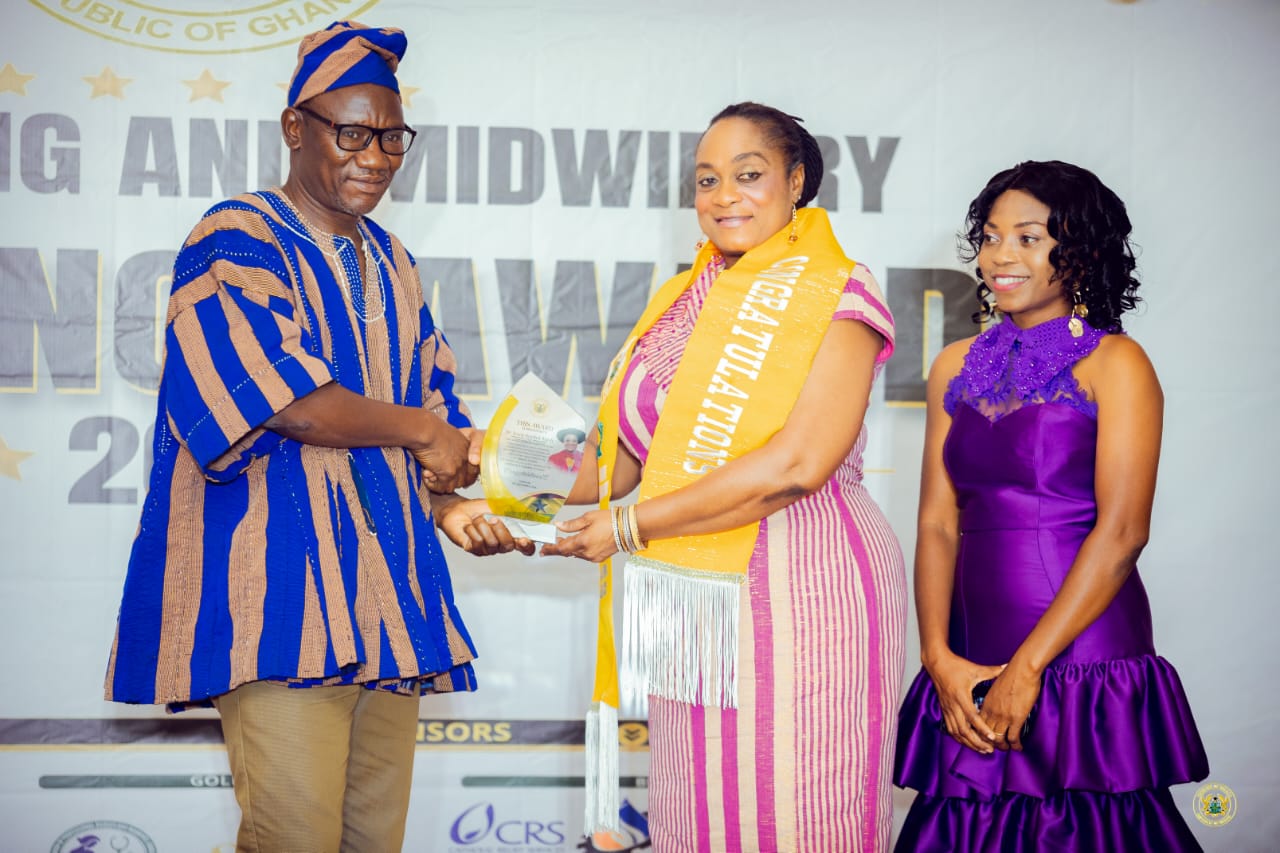
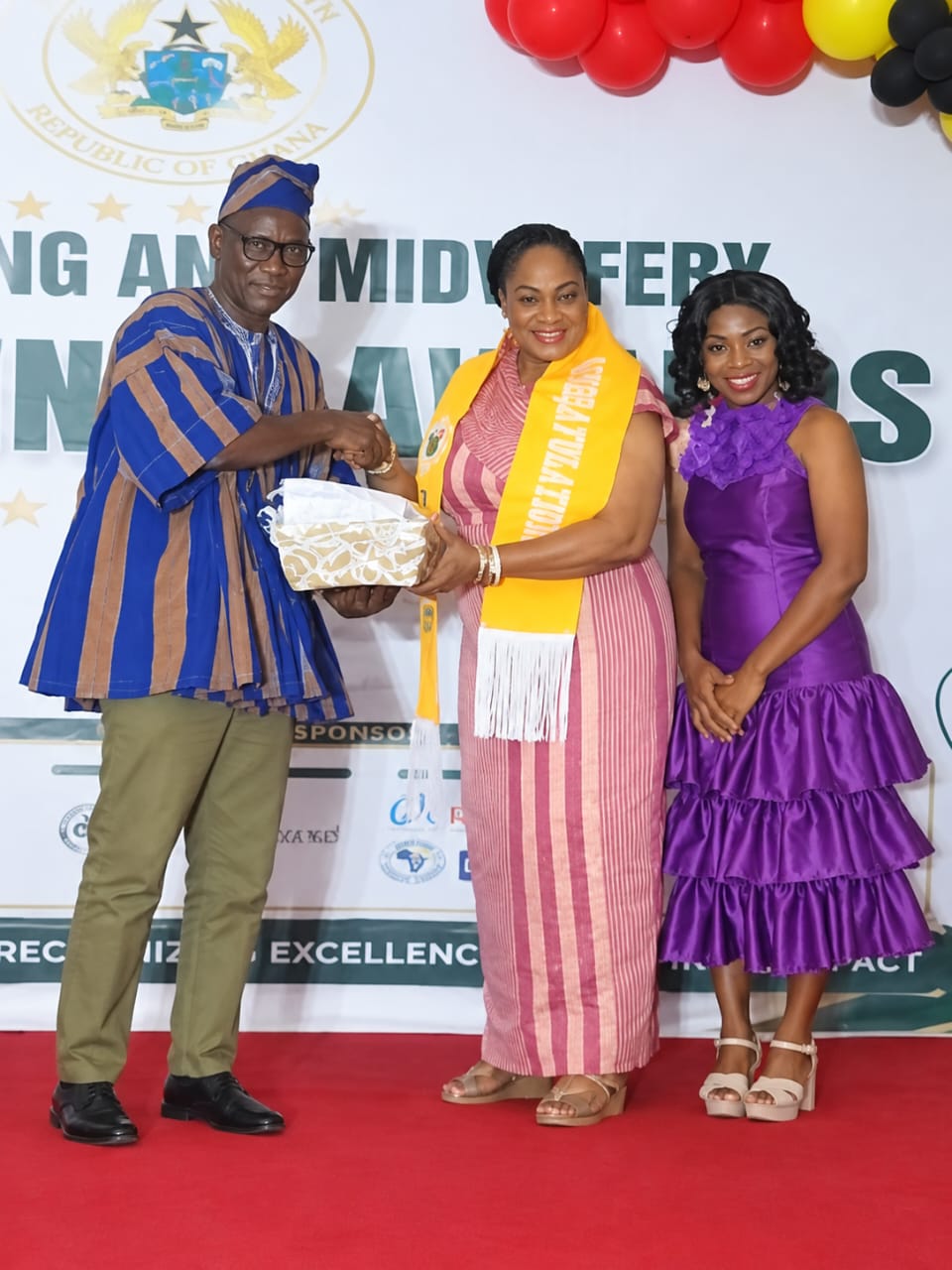
The Head of the Department of Maternal and Child Health at the School of Nursing and Midwifery, University of Cape Coast (UCC), Dr Irene Korkoi Aboh, has been adjudged one of the best Nursing Educator and Researcher of the Year 2026 a programme organised by the Ministry of Health, in recognition of her contribution to nursing education, research and public health.
The award was presented to her at the 6th Nursing and Midwifery Excellence Awards held in Koforidua, placing her among professionals whose work continue to shape nursing practice, healthcare, education and research in Ghana.
But behind the award is a career spanning for more than three decades, beginning with frontline nursing and developing into a sustained career in health training, university education, public health research and academic leadership.
Professional journey
Dr Aboh began her professional journey as a laboratory assistant at Keta Secondary School during her national service in 1991 before obtaining a Certificate in Registered Nursing from the Nurses Training College, Korle-Bu, in 1995.
She subsequently worked as a staff nurse at the Korle-Bu Teaching Hospital and later as a senior staff nurse at the Tema General Hospital, giving her practical experience in clinical care before moving into health education.
From 2002 to 2007, she served as a Health Tutor at the Nurses’ Training College in Ho and subsequently became Principal Health Tutor at the Nursing and Midwifery Training College, Sekondi.
Her transition into academia in 2007 marked another important phase of her career.
She joined the University of Cape Coast, where she has served in various teaching positions, including Assistant Lecturer, Lecturer and Senior Lecturer.
She is currently the Head of the Department of Maternal and Child Health at the School of Nursing and Midwifery, UCC, a position she has held since August 2022. Her academic preparation has been equally extensive.
She holds a PhD in Nursing from the University of KwaZulu-Natal, South Africa, obtained in 2018; a Postgraduate Diploma in Education from UCC; an MPhil in Public Health and an MA in Population Studies from the University of Ghana; and a BA in Nursing with Psychology, also from the University of Ghana.
She also holds her professional nursing qualification from the Nurses Training College, Korle-Bu.
Research at the heart of health education
A defining feature of Dr Aboh’s career has been the integration of research into Nursing education and practice.
Her research interests include geriatrics and disease prevention, with public health nursing as her area of specialisation.
Her publication record demonstrates a deliberate engagement with some of the most important health and social issues affecting Ghanaian communities, including ageing, chronic diseases, maternal health, malaria, occupational hazards, mental well-being, infectious disease prevention and the quality of nursing care.
In 2026 alone, Dr Aboh was involved in research examining the experiences of older adults living with urinary incontinence in a regional hospital.
The study, published with S. Alorvi in Advances in Aging Research, focused attention on an often-overlooked dimension of elderly care and the lived experiences of older people dealing with urinary incontinence.
Another 2026 publication, co-authored with I.D. Agyapong and C. Asiedu, examined awareness and preventive practices relating to chronic kidney disease among young people in Drobo, Ghana.
The work is significant from a health education perspective because prevention increasingly depends on individuals understanding risk factors and adopting appropriate health practices before chronic conditions become advanced.
Dr Aboh was also part of a 2026 study by G.Z. Asim and R. Ofosu-Poku examining clinicians’ perceptions of palliative care and its role in haematological practice in Ghana.
The research adds to the conversation about how health professionals understand and incorporate palliative care into the management of patients with serious illnesses.
Her work has also extended to the protection and care of older people.
In 2025, Dr Aboh, together with F.O. Odonkor Offei, A. Alhassan, W. Akoto-Buabeng and M. Amoadu, published a scoping review protocol on evidence of neglect of the elderly in sub-Saharan Africa in BMJ Open.
The publication is particularly relevant to her research interest in geriatrics, as it seeks to systematically examine evidence concerning the neglect of older people across the sub-region.
Tackling public health challenges
Dr Aboh’s collaborative research has also addressed disease prevention and community health.
In a 2024 Malaria Journal publication involving a large team of researchers, she contributed to a scoping review on the ownership and use of insecticide-treated nets in Ghana, examining facilitators and barriers to their use.
The work connects directly with public health education because the effectiveness of malaria prevention measures depends not only on availability but also on ownership, correct use and sustained adoption by households.
Her research portfolio also includes maternal health. Together with P. Woolley, she examined the use of intermittent preventive treatment for malaria among pregnant women in a health facility in Ghana.
The study contributes to understanding preventive malaria interventions among pregnant women, one of the groups particularly vulnerable to the consequences of malaria infection.
Earlier, in collaboration with C.J. Mbah, Dr Aboh examined resource availability for safe delivery in the Akatsi and Keta districts of the Volta Region, focusing on the resources required to improve maternal health.
The same research collaboration produced a study on community-arranged preparedness for preventing maternal mortality in Ghana, using Keta and Akatsi as case studies.
That work reflected an important feature of Dr Aboh’s research approach: connecting health outcomes to the availability of resources, community preparedness and the capacity of health systems to respond.
Focus on ageing and elderly care
Perhaps the most consistent theme running through Dr Aboh’s academic work is the health and welfare of older people.
Her publications have examined elderly care from several perspectives, including preparedness for ageing, assisted care, social support, community care and the experiences of older people during the COVID-19 pandemic.
In 2022, she co-authored research on the lived experiences of older adults during the COVID-19 pandemic in a teaching hospital in Ghana.
Another study examined social support available to aged male hypertensive clients in Ghana, while another explored the perceptions of government stakeholders on ageing and assisted care in the Cape Coast metropolitan area.
In 2020, Dr Aboh and B.P. Ncama published research on the development of a model for the care of the aged in the Cape Coast metropolitan area.
They also published a review of the evidence of care for the Ghanaian aged, while a separate study examined perceptions of government stakeholders on ageing and assisted care.
Her earlier work had explored caregivers’ perceptions regarding assisted care in the Cape Coast metropolitan area, as well as evidence of care for older people in Ghanaian communities.
In 2018, she and Ncama investigated the preparedness of Ghanaians for retirement and ageing, using the Cape Coast metropolitan area as a case study.
The body of work culminated in a critical review of the plight of the Ghanaian aged published in 2017.
Taken together, the studies demonstrate a sustained academic interest rather than isolated research projects, with Dr Aboh repeatedly examining ageing and elderly care from different angles.
Nursing workforce and quality of care
Her research has also turned the lens on nurses and the conditions under which they work.
In 2021, she collaborated with Y.A. Boateng, S.A. Osei and A.A. Druye on research into the causes of burnout syndrome and coping strategies among high-dependency unit nurses in an institution in the Greater Accra Region.
The research is particularly relevant to nursing education and health-service delivery because the well-being of nurses can influence their ability to provide quality care.
Dr Aboh also contributed to research on clinical preceptorship in Ghana during the COVID-19 pandemic, examining an intervention aimed at supporting nursing education and clinical training at a time when health systems and training institutions were under extraordinary pressure.
Another publication examined occupational hazards among midwives, highlighting risks faced by health professionals in the course of their work.
Her research portfolio has further addressed universal precaution measures among healthcare workers, providing another link between health education, infection prevention and professional practice.
COVID-19 and population health
The COVID-19 pandemic provided another area in which Dr Aboh and her collaborators contributed to the evidence base on the Ghanaian population.
She was part of a large research team that examined parenting practices and family relationships during the COVID-19 lockdown in Ghana.
She also contributed to research assessing the prevalence and changes in boredom, anxiety and well-being among Ghanaians during the pandemic.
Another collaborative study examined the coping strategies adopted by Ghanaians during the COVID-19 crisis and lockdown.
These studies extended her work beyond clinical nursing to the broader social and behavioural dimensions of public health, recognising that health outcomes are shaped not only by disease but also by family relationships, social conditions, psychological well-being and individual coping mechanisms.
From malaria to chronic disease
The breadth of Dr Aboh’s research is further demonstrated by her work across different disease areas.
Her publications include research into malaria prevalence and management in Ghana, preventive malaria treatment among pregnant women and the use of insecticide-treated nets.
More recently, her work has addressed chronic kidney disease awareness among young people.
She has also contributed to research into allergic rhinitis, including a study examining the lived experiences of patients with allergic rhinitis at a referral institution in the Ashanti Region.
The range of subjects reflects the broader role of health education in preventing disease and improving health outcomes through knowledge, behavioural change and better professional practice.
International exposure and professional development
Dr Aboh’s contribution to health education has been complemented by regular participation in international research conferences and professional training programmes.
She presented research on burnout syndrome and coping strategies among high-dependency unit nurses in Ghana at the International Council of Nurses Congress in Montreal, Canada, in 2023.
She presented the same research at the International Nurses and Midwives Scientific Congress in Kigali, Rwanda, in 2025, where discussions focused on universal health coverage and global health.
She has also presented research on geriatric healthcare and healthy ageing and on the development of a model for the care of the aged in the Cape Coast metropolitan area.
Her professional development has included training in qualitative research, thematic analysis, grounded theory, research publication, proposal and grants writing, digital facilitation and e-learning, vaccinology, food safety management, curriculum development and transformative supervision.
Academic leadership and mentorship
Beyond her publications, Dr Aboh has taken on several responsibilities connected to the training and development of health professionals.
She has served as leader of Off-Campus Teaching Practice at UCC’s Centre for Teacher Professional Development/School for Educational Development and Outreach since 2019.
She has also served as Departmental Registration and Examination Officer, Tutor and Senior Tutor at Oguaa Hall, and Chief Examiner for various programmes.
Her professional service has included work as an External Chief Examiner for the Nursing and Midwifery Council’s Licensure Practical Examination.
She has also served on several UCC committees, including the Research and Grantsmanship Committee, Graduate Studies Committee, Curriculum Committee, Licensure Practical Committee, Sandwich Committee and Faculty Seminar Committee.
These responsibilities place her work beyond individual research projects, extending it into the institutional processes that determine how nurses and other health professionals are trained, assessed and prepared for service.
A career built on education, research and service
Dr Aboh’s professional journey—from staff nurse to health tutor, principal health tutor, lecturer, senior lecturer and head of department—has given her experience across different levels of health education.
Her membership of professional bodies, including Sigma Theta Tau International Honour Society of Nursing and the Canadian Association of Gerontology, has also connected her work to wider professional and academic networks.
The 2026 Nursing Research and Education Professional award therefore comes against the background of a career in which clinical experience, teaching, research and professional leadership have developed alongside one another.
Her publication record, much of it produced in collaboration with other researchers, covers a wide range of issues affecting health and healthcare delivery in Ghana—from maternal and child health and malaria prevention to nursing burnout, clinical training, chronic disease awareness, ageing, elderly care and the social consequences of the COVID-19 pandemic.
At the centre of that work is an approach that treats health education not merely as the transfer of information, but as a tool for improving professional practice, strengthening prevention and helping communities respond to changing health needs.
With more than 19 years in academia following her earlier years in clinical nursing, Dr Aboh has built a career that combines the practical realities of healthcare with research and education.
Her latest recognition in Koforidua consequently adds another milestone to a professional record increasingly defined by scholarship, teaching, collaboration and a sustained commitment to strengthening health education in Ghana.