Civil society organisations advocating for menstrual health have called on the Government to ensure stable pricing of sanitary pads and expand the Free Sanitary Pad Distribution Programme to cover girls and young women outside the formal school system.
The call was made by the Ghana Civil Society Organisations (CSOs) Platform on the Sustainable Development Goals (SDGs) as it marked the third anniversary of its #DontTaxMyPad advocacy campaign, coinciding with World Menstrual Hygiene Day 2026, celebrated globally under the theme, “Together for a #PeriodFriendlyWorld.”
While commending the Government for a series of reforms aimed at improving menstrual health and hygiene, the Platform said significant gaps remain in the country’s menstrual health response that require urgent policy attention.
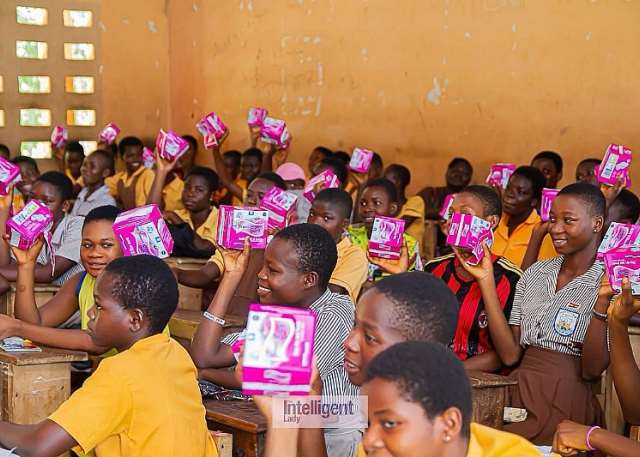
In a statement signed by the National Coordinator of the Ghana CSOs Platform on SDGs, Levlyn Konadu Asiedu, the organisation praised the Government for removing Value Added Tax (VAT) on locally produced sanitary pads, waiving import duties on raw materials used in local production, and allocating GH¢292.4 million in the 2025 and 2026 budgets to provide free sanitary pads to approximately two million schoolgirls across the country.
According to the Platform, these interventions represent a major milestone in the promotion of menstrual dignity and the reduction of financial barriers faced by school-aged girls.
However, it stressed that the benefits of the tax exemptions have not been fully realised by consumers due to inconsistencies in retail pricing.
The Platform disclosed that a recent survey it conducted found that the prices of VAT-free sanitary pads still vary significantly across the market, with a pack selling for between GH¢14 and GH¢18.
It argued that such disparities undermine the intended impact of the tax waiver policy and continue to make sanitary products unaffordable for many girls and women.
“The inconsistency in prices limits affordability and weakens the gains achieved through the tax exemption policy,” the statement noted.
Beyond concerns about pricing, the Platform raised questions about the scope of the Government’s free sanitary pad programme, pointing out that an estimated 1.8 million girls and young women remain excluded because they are outside the formal education system.
These include young women engaged in apprenticeships, technical and vocational training programmes, unpaid care work, and those who have dropped out of school.
According to the Platform, these groups continue to bear the same monthly financial burden that prompted the launch of the #DontTaxMyPad campaign in 2023.
It argued that a menstrual health policy that excludes girls in hairdressing and dressmaking apprenticeships, young women working in food vending businesses, and those undertaking unpaid household labour cannot be considered comprehensive.
“A policy framework that excludes the girl in a hairdressing apprenticeship, the young woman working in a chop bar, or the dropout engaged in unpaid household labour remains incomplete,” the statement emphasised.
The organisation also expressed concern over what it described as fragmented menstrual health interventions across various sectors.
It noted that menstrual health programmes are currently spread across education, health, water, sanitation and hygiene (WASH), and gender institutions, often operating independently with limited coordination.
According to the Platform, the lack of policy integration has led to duplication of efforts, gaps in service delivery and uneven implementation of programmes across the country.
This, it said, makes it difficult to ensure equitable access to menstrual health services, maintain pricing standards and guarantee universal coverage for all girls and young women.
To address these challenges, the Platform called on the Government to develop and implement a comprehensive national menstrual health strategy that would bring together existing interventions under a coordinated framework.
Among its recommendations, the Platform urged authorities to strengthen market monitoring mechanisms to ensure that tax exemptions on sanitary pads translate into sustained reductions in retail prices.
It also called for the extension of the free sanitary pad programme to girls and young women outside formal education, particularly those in apprenticeship programmes and Technical and Vocational Education and Training (TVET) institutions.
Additionally, the Platform advocated for the publication of regular and transparent data on the distribution, coverage and pricing impact of the sanitary pad initiative.
It further recommended the integration of menstrual health education and services into the Ghana Health Service’s Community-based Health Planning and Services (CHPS) programme to improve access for girls and women living in rural and underserved communities.
The CSOs Platform highlighted the achievements of the #DontTaxMyPad campaign since its launch on Menstrual Hygiene Day in 2023.
According to the statement, the campaign has recorded significant advocacy successes through petitions, stakeholder engagements, parliamentary lobbying, webinars, media campaigns and policy dialogues.
The sustained advocacy efforts, it said, contributed to the Government’s decision in 2024 to introduce a zero VAT rate on locally produced sanitary pads and remove import duties on raw materials used in local manufacturing.
The Platform also credited the campaign with helping to secure Government’s commitment in 2025 to allocate GH¢292.4 million annually for the provision of free sanitary pads to schoolgirls, a commitment that has been maintained in the 2026 national budget.
It described these developments as a significant departure from the situation three years ago when sanitary pads attracted an estimated tax burden of 32.5%.
At the time, a pack of sanitary pads cost more than Ghana’s daily minimum wage of GH¢14.88, placing menstrual products beyond the reach of many girls and women.
Today, the Platform noted, that tax burden has been removed for schoolgirls and replaced with direct public investment in menstrual health support.
Despite the progress made, the organisation maintained that much work remains to be done to ensure that every girl and young woman can access affordable menstrual products regardless of her educational status or geographical location.
“True menstrual dignity will only be achieved when every girl is included and no one is left behind in a #PeriodFriendlyWorld,” the statement concluded.