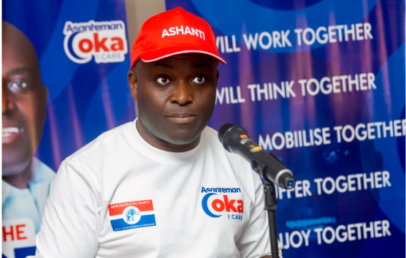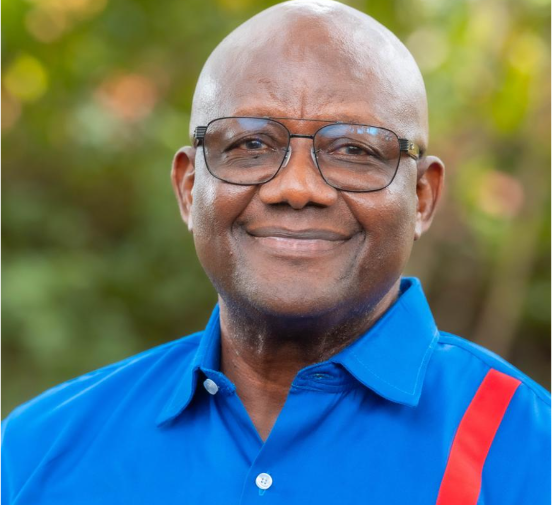
Former National Chairman of the New Patriotic Party (NPP), Mr. Paul Afoko, has officially declared his intention to reclaim the party’s top organisational office, unveiling an ambitious “3Rs” agenda—Reunite, Rebuild and Recapture Power—as he rallied party members to put aside divisions and begin preparations to return the NPP to government in the 2028 general election.
Presenting himself as a unifier rather than a factional leader, Mr. Afoko said the NPP stood at one of the most critical moments in its history following its defeat in the 2024 general election and required experienced leadership capable of restoring confidence among party members, rebuilding grassroots structures and reconnecting with the Ghanaian electorate.
Addressing a packed press conference in Accra on Tuesday, the former chairman insisted that the party’s immediate responsibility was not to assign blame for its electoral loss but to reorganise itself into a disciplined, united and election-ready political machine.
“The duty before us now is not to blame. The duty before us is to rebuild,” he declared.
He formally announced his intention to contest the upcoming National Chairmanship election, describing his decision as an act of duty and service rather than personal ambition.
“My decision to run is one of duty and service. I ask every member of our great party to partner me so that together we can rebuild the party and recapture political power.”
Unity above regional and ethnic politics
Making reconciliation the centrepiece of his campaign, Mr. Afoko warned party members against allowing regional, tribal or ethnic considerations to undermine the NPP’s long-standing tradition as a truly national political party.
According to him, the NPP had historically drawn strength from every region and ethnic group in Ghana and must preserve that inclusive identity if it hoped to regain public confidence.
“The NPP draws its strength from across the country—from all regions and ethnic groups. It is not a sectarian party,” he stated.
He cautioned that internal divisions could prove more damaging than attacks from political opponents.
“We cannot allow our own fears or the schemes of our political opponents to push us into the abyss of regional or tribal politics.”
Mr. Afoko argued that leadership positions within the party should be determined solely by competence, commitment and the ability to lead the party back to victory.
“It is about the right leadership for the right moment. We are not tied down by ethnicity, tribal or regional sentiments.”
He said the election of the party’s presidential candidate from the North East Region and the possibility of electing a national chairman from another part of the country should rather demonstrate the NPP’s commitment to national inclusiveness.
No single person responsible for 2024 defeat
Rejecting attempts to blame the party’s electoral defeat on its 2024 presidential candidate, Dr. Mahamudu Bawumia, Mr. Afoko said the election outcome reflected multiple organisational and political factors.
According to him, the setbacks arose from weaknesses in organisation, communication, economic conditions, parliamentary dynamics, grassroots morale, public trust and the overall national mood.
“No Presidential Candidate can win without a united party, a strong organisation, disciplined structures, motivated grassroots and a parliamentary strategy that works constituency by constituency,” he stressed.
He described Dr. Bawumia as an important asset whose experience remained valuable to the party’s future and called on members to unite behind him instead of engaging in internal recriminations.
“Dr. Bawumia represents an important asset to the party and he needs the support of all of us if we are to win future elections.”
‘3Rs’ strategy to win back power
Mr. Afoko outlined what he described as a practical roadmap for rebuilding the NPP through his “3Rs” agenda—Reunite, Rebuild and Recapture Power.
Central to that strategy, he said, would be rebuilding the party’s grassroots machinery from the polling station upwards.
“We must know every constituency. We must know every polling station. We must know where we lost, why we lost and how we can recover.”
He pledged to strengthen polling station executives, electoral area coordinators, constituency structures and regional organisations while ensuring adequate resources reached the grassroots.
He also promised to reverse the party’s parliamentary losses by identifying winnable constituencies, protecting existing strongholds and developing constituency-specific electoral strategies.
“We will reverse the parliamentary losses, regain seats, protect strongholds and recover lost ground.”
Beyond the party’s internal structures, Mr. Afoko said an NPP under his leadership would actively rebuild relationships with professional associations, traditional authorities, civil society organisations and other influential stakeholders while restoring public trust.
He also appealed directly to former members who had become disillusioned with the party.
“To those who feel hurt, disgruntled, rejected or forgotten, I say: come home. The NPP needs you.”
Building on previous reforms
Highlighting his previous tenure as National Chairman between 2014 and 2015, Mr. Afoko reminded delegates of reforms initiated during his administration, arguing that they demonstrated his capacity to strengthen the party’s organisational systems.
He cited the opening of constituency bank accounts to improve financial accountability and the successful organisation of parliamentary primaries as some of the institutional reforms introduced during his leadership.
“What we started then, we can do again—and we can do it better.”
He said those reforms reflected his belief in building strong institutions rather than personalities within the party.
Lessons from suspension
Reflecting on the internal divisions that culminated in his suspension as National Chairman more than a decade ago, Mr. Afoko said both he and the party had learnt important lessons.
“Have we learnt our lessons? Yes, I have.”
He warned that factional politics had weakened the NPP and should never again be allowed to define its future.
“Anyone who believes that factionalism is a good thing does not love the NPP.”
Mr. Afoko disclosed that he had forgiven everyone involved in the circumstances surrounding his suspension and urged members to replace emotions with strategic thinking.
“I have forgiven everyone who once wronged me and contributed to my suspension.”
“Emotions must give way to strategic thinking.”
Quoting the party’s Danquah-Busia-Dombo tradition, he reminded members of Dr. K.A. Busia’s belief that dissent should always be accommodated within democratic organisations.
“Busia said one dissenter must have the right to be protected to dissent within the party.”
Appeal to Ghanaians
Turning his attention to the broader electorate, Mr. Afoko acknowledged that the NPP had received a clear message from Ghanaians through the 2024 elections.
“To Ghanaians, the NPP has heard you clearly. We know that trust must be earned and cannot be treated as an entitlement.”
He maintained that Ghana needed a credible and responsible opposition capable of presenting practical alternatives to government.
“Ghana needs a strong NPP. Ghana needs a government that seeks power not for its own sake but because it is committed to bringing positive change.”
Expressing optimism about the future, Mr. Afoko said the party possessed the institutional strength, organisational experience and human resources needed to recover from defeat.
“The next election will not be won by entitlement. It will be won by humility, hard work, credible ideas, disciplined organisation and a renewed commitment to national development.”
He concluded with a confident declaration that if the NPP embraced unity, discipline and hard work, it would once again earn the confidence of Ghanaians and return to power in 2028.