Accra’s flooding cannot be solved by focusing on the city alone, but requires coordinated management of the wider watershed extending into the Eastern Region.
The flooding disaster in Accra exposes the weaknesses of our state institutions, the failures of our law enforcement systems, the extent of corruption, the ignorance of some citizens, and the poor decisions that have characterized environmental management over the years.
Unless authorities adopt a bipartisan and coordinated approach involving all Metropolitan, Municipal and District Assemblies, traditional leaders, private developers, farmers and landowners across both the Greater Accra and Eastern Regions, flooding will continue to recur as an annual tragedy.
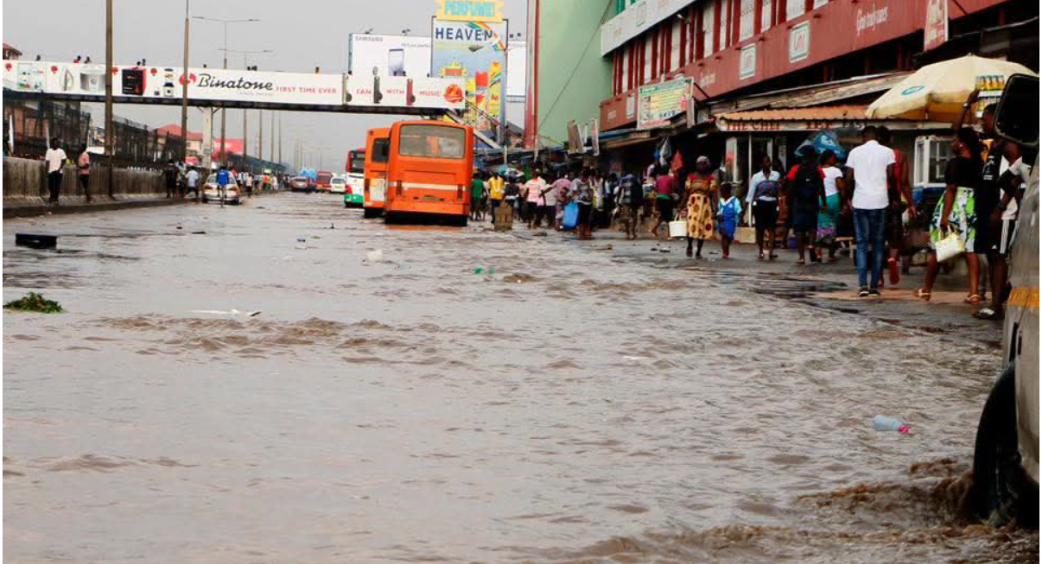
A map of the June 29, 2026 flooding shows that the worst-hit areas, including Spintex in the northeast; the Dzorwulu–Adabraka–Kwame Nkrumah Interchange corridor; and the Malam–Kaneshie–Weija corridor, are all major recipients of runoff originating from higher elevations in the Greater Accra and Eastern Regions.
Spintex receives runoff from the northeastern catchment, while the Madina–Dzorwulu–Adabraka–Kwame Nkrumah Interchange corridor receives water flowing from areas such as Adomdrobe, Adukrom, Akropong, Aburi and parts of Nsawam, including Doboro, before joining the Odaw River. Similarly, the Malam–Kaneshie–Weija corridor receives significant runoff from the Nsawam area.
Given this topography, it is inevitable that irresponsible management of rivers, wetlands and forests in these upstream areas will have serious consequences for Accra.
The destruction of wetlands, particularly beneath the Agyankote–Aburi–Akropong–Adukrom escarpment, the depletion of forests and vegetation, and uncontrolled physical development have increased the volume and speed of runoff into the capital.
I am neither a physical planning expert nor an engineer. However, it is evident that institutional failures have allowed widespread environmental degradation, indiscriminate reclamation of wetlands, disorganized development, encroachment on waterways, weak enforcement of Assembly by-laws, corruption among some Metropolitan, Municipal and District Assembly officials, indiscriminate sale of land by some traditional authorities, and inadequate public awareness.
These factors have destroyed natural water retention systems, reduced infiltration, obstructed the free flow of water, and ultimately transferred greater flood risks to Accra.
To effectively address flooding, policymakers must look beyond engineering solutions within Accra alone.
They must also prioritize the restoration and proper management of the wider hydrological system that feeds the city.
This should include restoring wetlands and natural water retention areas, protecting rivers and waterways, rehabilitating forests and vegetation, involving traditional authorities in safeguarding environmentally sensitive lands, strengthening the enforcement of Assembly by-laws across both regions, prosecuting offenders, eliminating corruption within local government institutions, and intensifying public education on responsible land use and environmental conservation.
Flood management should therefore be approached as a regional watershed management challenge rather than an Accra-only problem.
Without coordinated action across the entire catchment, the capital will continue to bear the consequences of environmental mismanagement upstream.
As I have indicated, I am simply an ordinary writer offering a personal perspective.
I trust that the engineers, planners, environmental scientists and other experts will engage all relevant stakeholders and develop lasting solutions to this growing national challenge since Accra’s flooding cannot be solved by focusing on the city alone, but requires coordinated management of the wider watershed extending into the Eastern Region.
By BARIMA APPIAH
God bless us all.
@onipatrimu2@gmail.com