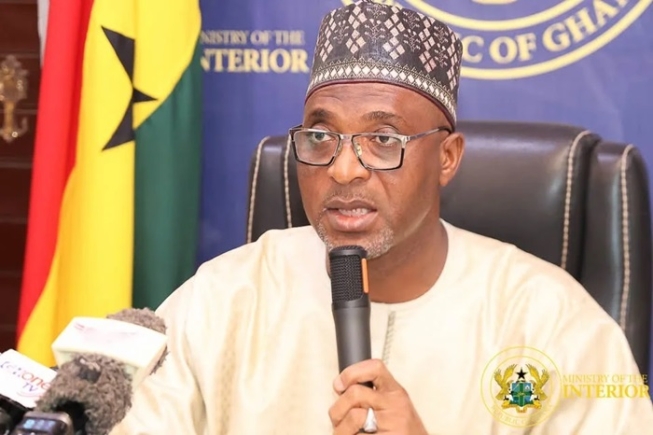
More than 38,800 residents have been displaced, and 12 people have been confirmed dead following the devastating floods that swept across parts of the Greater Accra Region on Monday, June 29, 2026, the Minister for the Interior, Muntaka Mohammed Mubarak, has announced.
Addressing Parliament on Tuesday, June 30, 2026, the Minister described the flooding as one of the most severe weather events Ghana has experienced in decades. He revealed that the country recorded 169 millimetres of rainfall within a single day, making it the fourth-highest daily rainfall recorded since 1995.
According to Muntaka, authorities were only informed late the previous night that the expected rainfall would be far more intense than initially forecast, leaving little time to strengthen emergency preparedness measures.
“By the time we got to the morning, we saw a volume that is the fourth highest that this country has ever seen since 1995. A volume of 169 millimetres of water in a day,” he told Parliament.
The heavy rains triggered widespread flooding across 25 communities within 16 Metropolitan, Municipal and District Assemblies (MMDAs), disrupting transportation and bringing economic activity in many parts of Accra to a standstill. Several major roads became impassable, preventing commuters from accessing the Central Business District and other key areas.
The affected assemblies include Ga East, Ledzokuku, Ayawaso Central, Ga Central, Ga West, Ablekuma North, Ningo Prampram, Weija-Gbawe, Ga South, Adenta, Korle Klottey, Okaikwei South, Okaikwei North, Tema West, Tema Metropolitan Assembly, La Dade Kotopon and Krowor.
Providing a detailed assessment of the disaster, the Interior Minister said the floods affected a total of 7,761 households, forcing 38,802 people from their homes.
Korle Klottey recorded the highest number of displaced residents, with 6,500 people from 1,300 households affected. Tema Metropolitan Assembly followed with 3,601 displaced persons, while Tema West recorded 3,450 displaced residents. Ayawaso Central also suffered significant impacts, with 3,021 people displaced.
The flooding also resulted in tragic loss of life. Ga East recorded the highest number of fatalities, with five deaths and six people reported missing. Ayawaso Central recorded three deaths and one missing person, while Tema Metropolitan Assembly also confirmed three fatalities. Ledzokuku recorded one death.
In total, seven people remain unaccounted for, while the confirmed death toll has risen to 12.
The Minister expressed sympathy to families who lost relatives during the disaster and assured Parliament that government agencies remain committed to supporting affected communities.
“Let me take this opportunity to extend our condolences and those of the government to the families that lost their relatives,” he said.
Government agencies, including the National Disaster Management Organisation (NADMO), security services and other emergency responders, have intensified relief and rescue operations in the affected communities. Authorities are continuing to assess the full extent of the damage while providing humanitarian assistance to displaced families.
The floods have once again highlighted the growing challenges posed by extreme weather events and recurring flooding in the capital, with officials expected to review drainage systems and disaster preparedness measures to reduce the impact of similar incidents in the future.