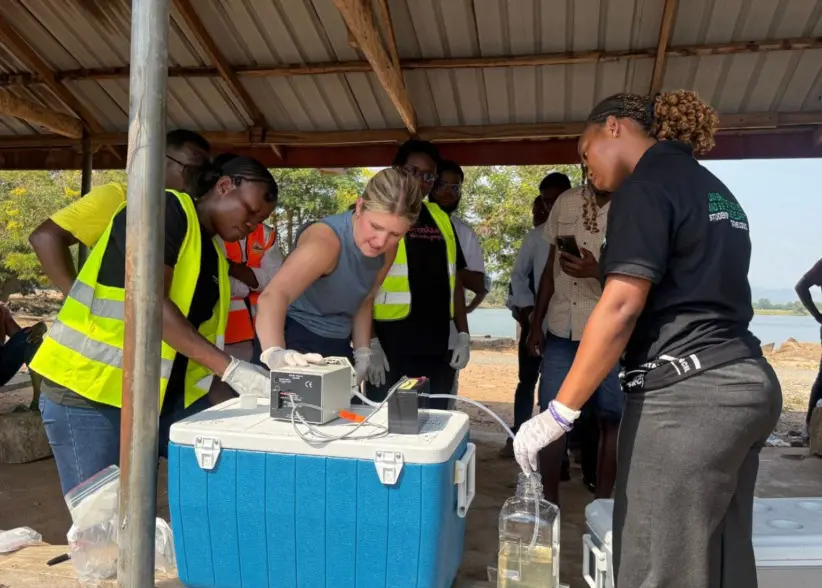
A delegation of scientific experts from the U.S. Department of the Interior (DOI), the U.S. Geological Survey (USGS), and the U.S. Environmental Protection Agency (EPA) visited Ghana from November 7-21 to strengthen U.S.-Ghana collaboration on water resource protection, mercury pollution mitigation, and sustainable mining practices.
The visit was done under the auspices of the “Ambassador’s Water Experts Program (AWEP)” a larger Department of State and Department of the Interior joint program to reinforce shared commitments to safeguarding freshwater systems.
During their visit, the experts met with the Ghana Environmental Protection Agency (EPA) for technical consultations on water quality, mercury contamination, and laboratory capacity development.
Discussions focused on the growing threat of mercury pollution in freshwater systems affected by illegal small-scale gold mining (galamsey), the need for standardised testing methodologies, and opportunities for advancing scientific collaboration between U.S. and Ghanaian counterparts.
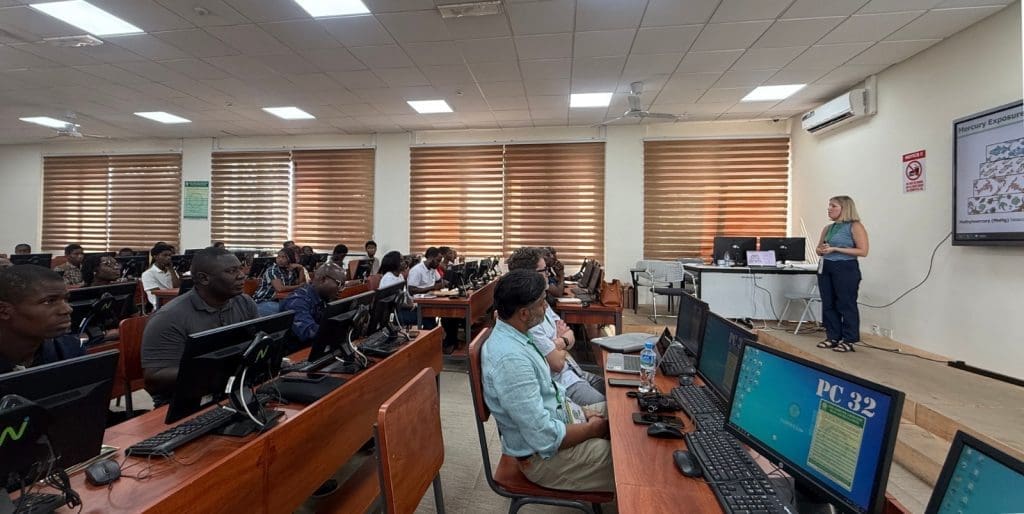
The visit builds on the 2024 baseline assessment conducted by USGS scientist and former Embassy Science Fellow Dr. Grace Armstrong, who returned to Ghana and whose research identified elevated mercury levels in waters and sediments of the Pra and Ankobra river systems.
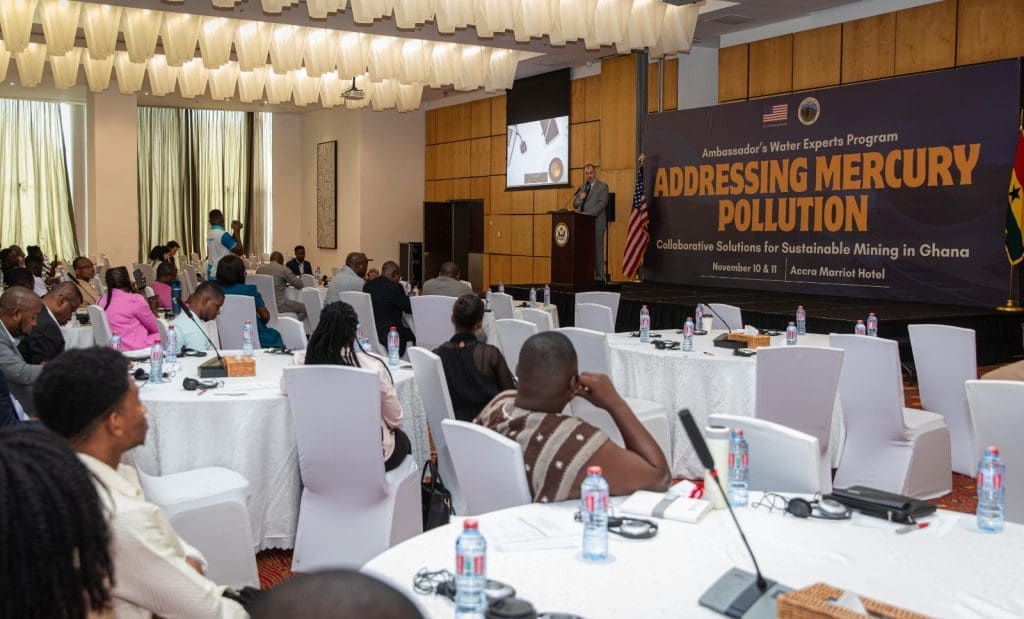
The visit included a two-day symposium, “Addressing Mercury Pollution: Collaborative Solutions for Sustainable Mining in Ghana,” on November 10-11 that convened U.S. and Ghanaian experts, civil society representatives, academic institutions, and industry stakeholders to examine the environmental, health, and security impacts of mercury use and highlight practical, commercially viable mercury free mining technologies.
At the symposium, then Chargé d’Affaires a.i. Rolf Olson said “Protecting Ghana’s freshwater resources is essential not only for environmental and public health, but also for long-term economic and food security.
The United States is committed to working with Ghana to strengthen scientific capacity, advance responsible mining practices, and promote American technological solutions that support sustainable development.”
Throughout the visit, U.S. experts engaged with academic institutions, civil society organisations, and youth groups – including students from the University of Ghana, Kwame Nkrumah University of Science and Technology, the University of Environment and Sustainable Development, and Accra STEM Academy – to promote water awareness and discuss opportunities for training and field research.
These exchanges aim to strengthen analytical quality assurance, expand scientific collaboration and expertise, and help Ghana adopt international best practices in water quality monitoring and mercury detection.
“The challenges posed by mercury pollution require coordinated scientific approaches and trusted partnerships,” Dr. Armstrong noted. “Our work together helps ensure that data collected in Ghana meets rigorous standards and supports effective decision-making for environmental protection.”
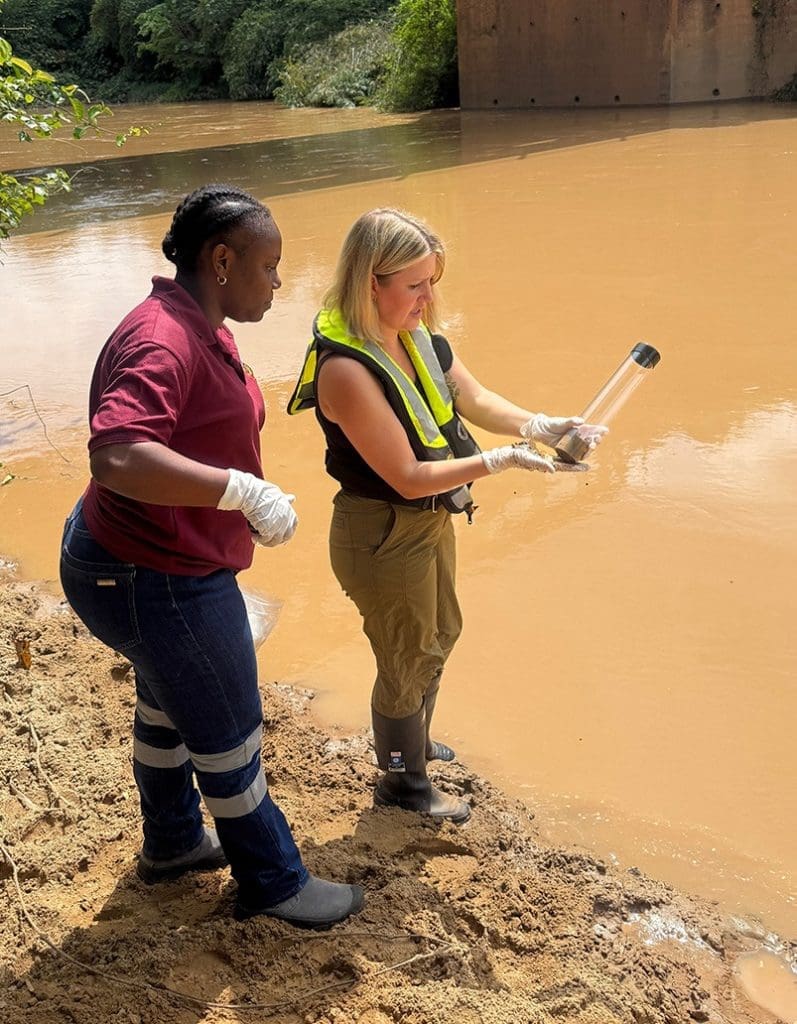
“Drawing on U.S. experience assessing and remediating mercury-contaminated sites could help our Ghanaian counterparts address local environmental challenges,” explained U.S. EPA expert, Dr. Chris Eckley.
As the United States and Ghana approach 70 years of diplomatic relations, this visit underscored the depth of U.S.-Ghana environmental cooperation and the shared commitment to tackling complex, transboundary challenges that impact health, security, and economic prosperity.