
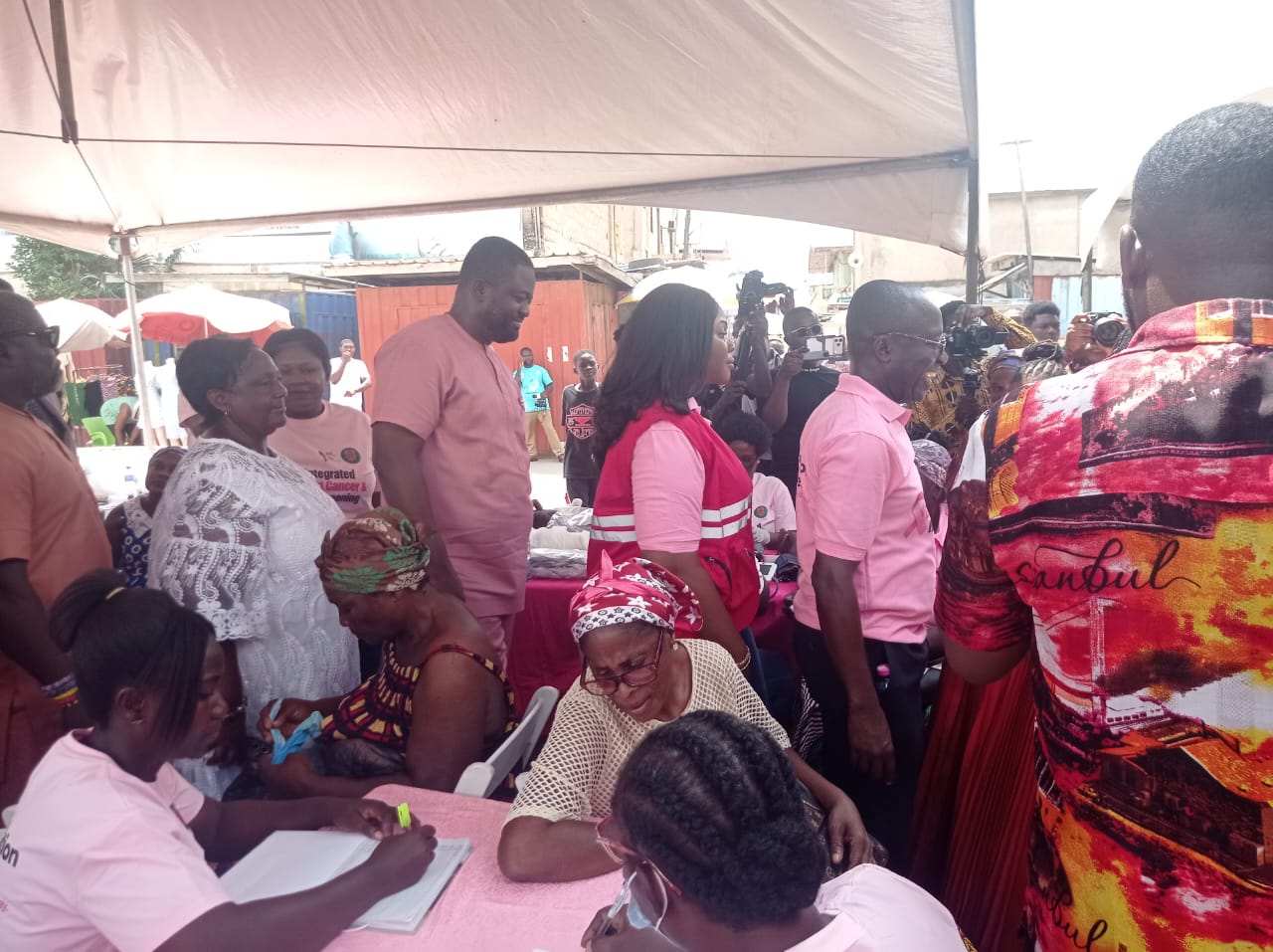
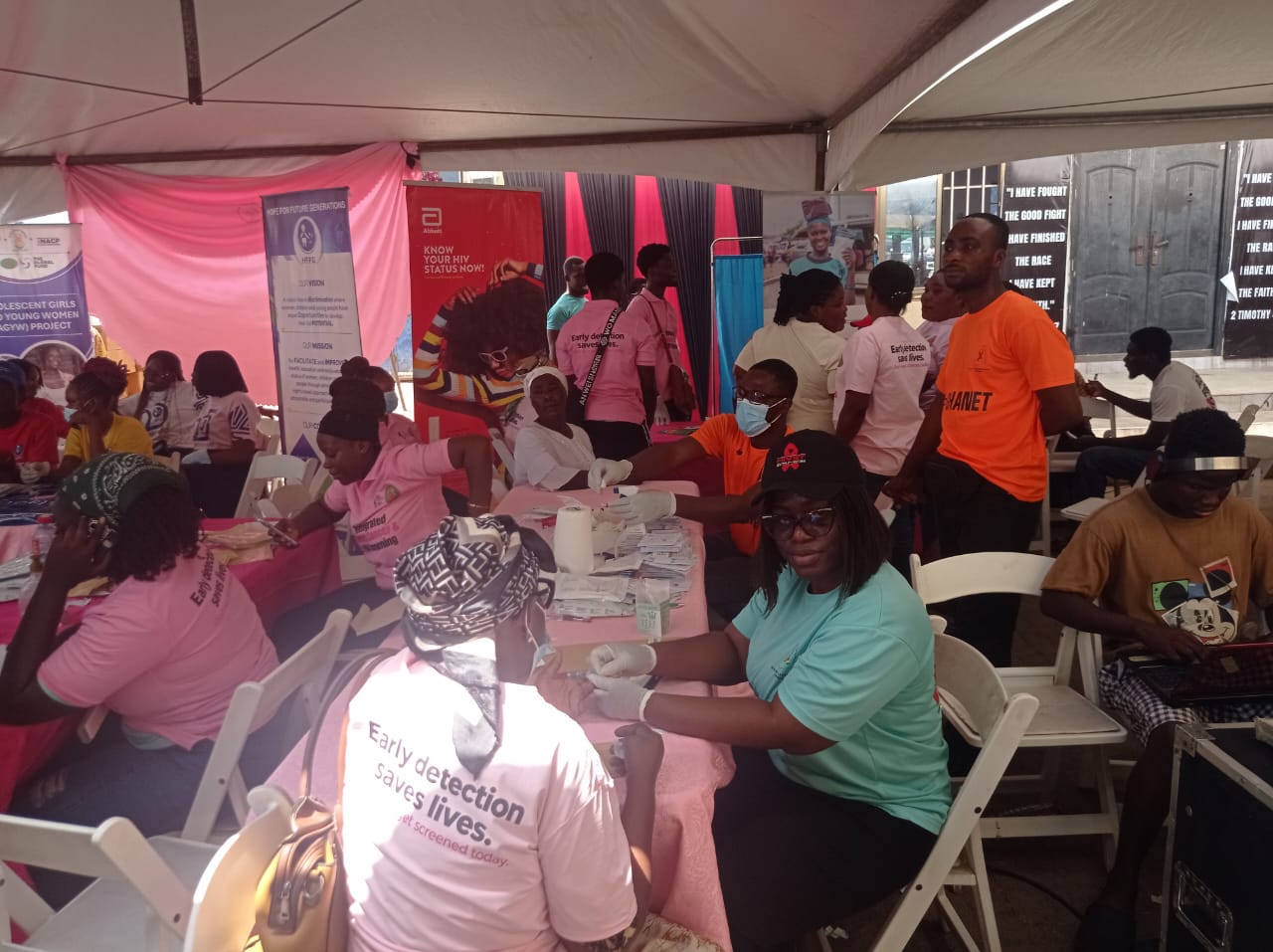
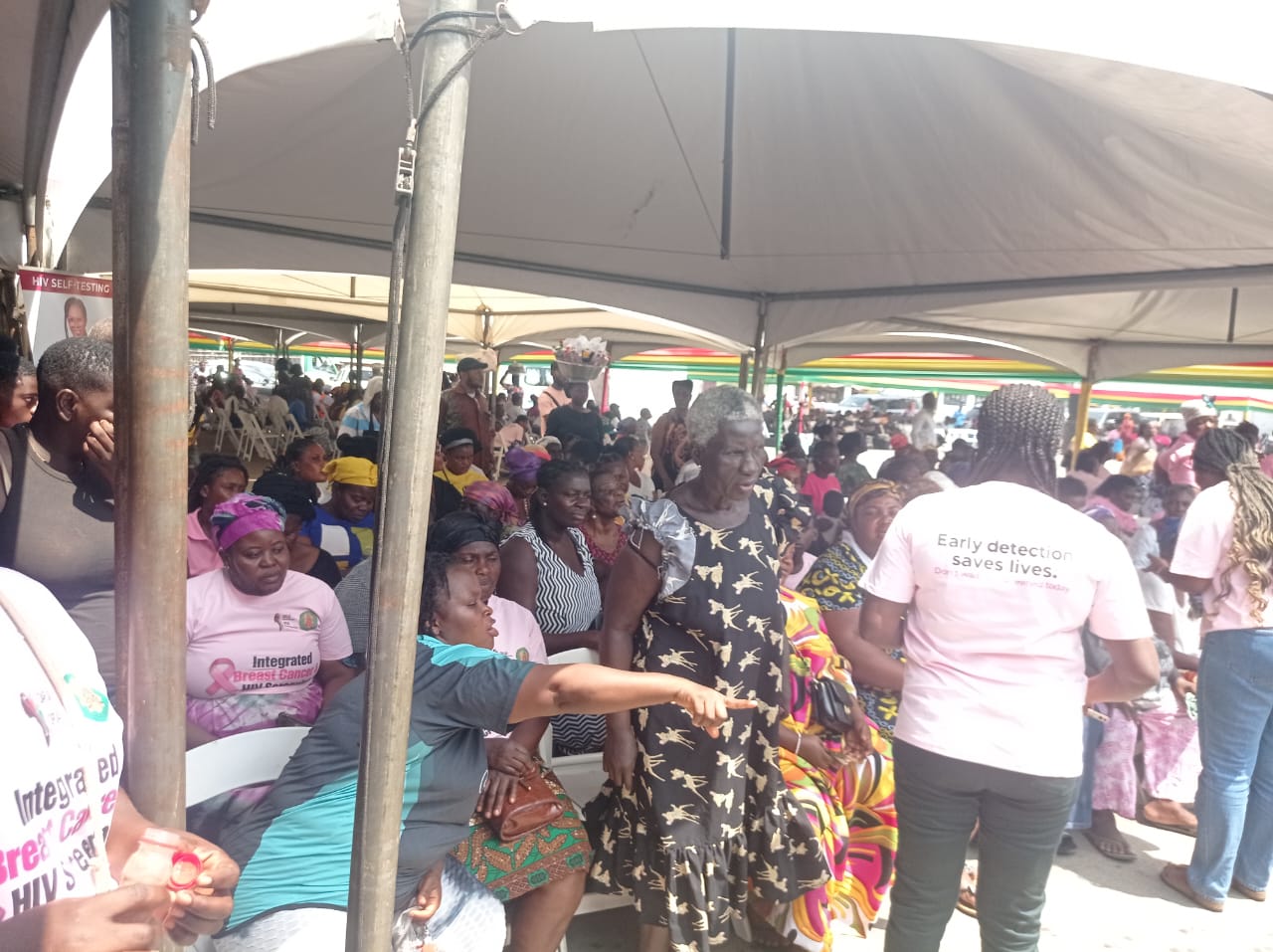
The Lordina Mahama Foundation, in collaboration with the Ghana AIDS Commission has held an integrated breast cancer and HIV screening exercise at Nungua, in the Greater Accra Region.
The well patronised programme saw hundreds of residents undergo free screening for the two conditions.
The Gender and Women’s Protection, and Member of Parliament for the Krowor Constituency, Dr Agnes Naa Momo Lartey, who represented the First Lay, Lordina Mahama, remided the people of Nungua that protecting the health community members must is a collective responsibility which must begin from the home.
Breast cancer, she reminded residents of the about 5000 cases recorded in Ghana annually, about 40% end up with the patient dying from the condition annually.
This statistic, she said, “reminds us of the urgency to strengthen awareness encourage early detection and promote early access to appropriate medical care.”
The day’s event which was held under the theme ‘every story is unique, every journey matters,’ served as a reminder that every person affected by breast cancer deserves, dignity, compassion and support.
The Gender Minister reminded residents that addressing breast cancer requires more than medical treatment.
She said, “we must pay attention to the social, emotional,economic challenges and their families face throughout the journey.”
A positive cancer diagnosis, Dr Lartey said, disrupt employment, affects small businesses, reduces household income and increases caregiving responsibilities, placing more pressure on families already experiencing financial difficulties.
Sh commended person who have been diagnoses with the condition and continue to strive to support their families.
The Director General of the Ghana AIDS Commission, Dr Kharmacelle Prosper Akangbong, Commended the First Lady for supporting the month-long breast cancer awareness campaign across the country.
Breast cancer and HIV, he said, “are important public health concerns that require continuous education, early education and early access to care.”
He lamented the practice of people waiting until it is too late before seeking medical attention, mainly due to work, financial difficulties, fear or limited access to health facilities.
In view of this, the Commission is making it easier for persons who may be affected by the conditions to access health care service, by bring the screening to their doorsteps.
He reminded residents of the need to recognise unusual symptoms in their breasts and seeking early medical care,
“Early detection,” he said, “can improve the outcome and save a lot of lives. Similarly, knowing one’s HIV status is an important step towards protecting oneself.”
Residents were also addressed by a couple of breast cancer survivors, who pressed home the need for people to embark on preemptive self diagnosis before the condition develops within their system, by going for voluntary screening at their nearest health facility.

